Every expanding IP reaches a point where a single product category just isn’t enough anymore.
Maybe you started three years ago with a single 5-inch soft vinyl art toy. It sold out in minutes at DesignerCon. Your fan base exploded, your Instagram follower count doubled, and suddenly your inbox was flooded with requests for more. Your fans didn’t just want another vinyl figure. They wanted plush plushies to hang on their backpacks, die-cast metal keychains, 1/6 scale resin statues for high-end collectors, printed acrylic standees for desk displays, and custom magnetic packaging boxes to tie the whole collection together.
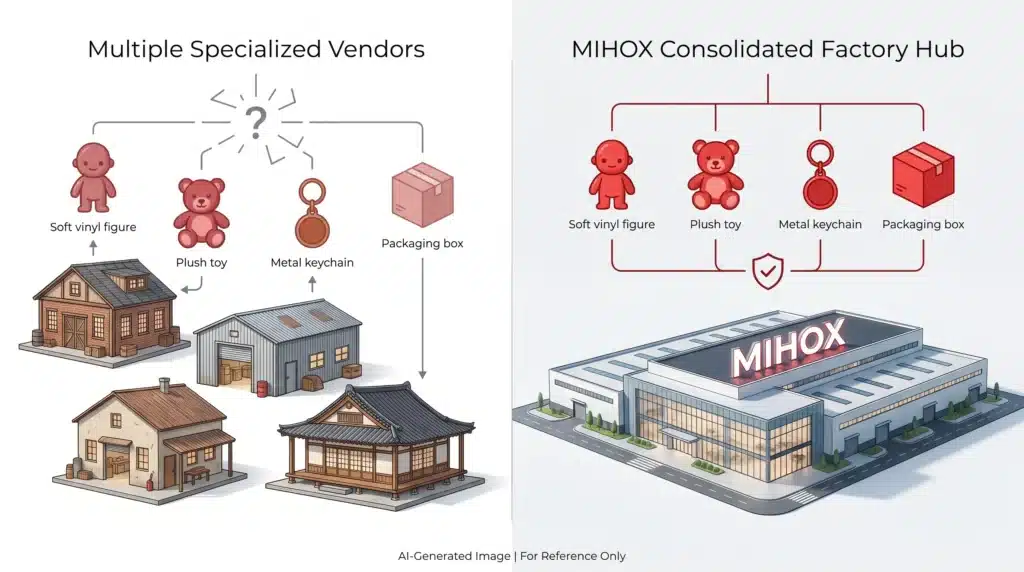
When you decide to launch a full-scale merchandise line, you immediately run headfirst into a massive strategic crossroads: Do you split your merchandise across five different specialized factories, or do you consolidate production with a single, comprehensive B2B manufacturing partner?
On paper, splitting your orders sounds logical. You might think, “I’ll send my plush toys to a plush workshop in Yangzhou, my vinyl figures to a soft vinyl factory in Dongguan, my acrylic standees to a printer in Zhejiang, and my enamel pins to a metal shop.” After all, conventional wisdom claims that specialized hyper-niche vendors do one thing best.
In reality, running a fragmented supply chain across four different factories often degenerates into an operational nightmare. You suddenly find yourself acting as an unpaid full-time logistics manager, tracking six separate shipping containers, resolving petty blame games between vendors when parts don’t fit together, and staring at four totally different shades of “Pantone 186C Red” across your product line.
Today, as manufacturing veterans behind the scenes at MIHOX, we are going to strip away the industry fluff and give you an honest, hard-data breakdown of supply chain consolidation versus multi-vendor sourcing. We’ll look at communication friction, color matching physics, joint tolerance math, logistics costs, and the true hidden overhead of managing overseas toy production.
The Multi-Vendor Nightmare: What Actually Happens When You Split Your Supply Chain?
To understand why so many mature IP brands eventually move toward consolidated manufacturing, we have to look closely at what actually happens when you manage multiple specialized vendors simultaneously.
When you run an IP drop with three or four separate factories, you aren’t just buying products; you are multiplying your management friction by every new vendor you onboard. Let’s dissect the four biggest breakdown points that occur in a fragmented supply chain.
(Vinyl)
(Plush)
(Metal)
(Resin)
“Why does my merch kit look like
4 completely different brands?”
1. The “Communication Tax” and Time-Zone Fatigue
Managing overseas production requires intense attention to detail. Every technical specification sheet—or Tech Pack—contains dozens of critical parameters: shore hardness, draft angles, paint formulas, packaging tolerances, and safety compliance certifications.
When you work with a single dedicated partner like MIHOX, you communicate with one project manager. That project manager coordinates internally with the tooling team, the airbrush department, the sewing line, and the packaging division.
Now imagine doing that across four independent factories:
Expects ZBrush STL files with pre-calculated 4% shrinkage allowances.
Needs 2D vector pattern layouts with seam allowance margins in millimeters.
Demands STEP 3D files with draft angles built for high-pressure zinc injection.
Demands CMYK AI vector templates with specific dieline bleed margins.
Instead of focusing on marketing, IP licensing, and creative development, your team spends eight hours a day responding to WeChat messages and emails from four separate account reps. When a design change occurs—for instance, slightly tweaking a character’s arm pose—you have to manually translate that change across all four technical teams. If you forget to inform just one vendor, you end up with keychains or accessories that match a character pose you discarded three weeks ago.
2. The Color Discrepancy Catastrophe Across Mixed Media
Color consistency is the soul of any recognizable character IP. Whether it’s the iconic yellow of a famous cartoon sponge or the specific neon pink of a cyberpunk character, your fans expect absolute visual harmony when they unbox a multi-item collection.
Achieving perfect color matching on a single plastic material is already a complex battle of chemistry and optics. When you try matching colors across four different factories using four completely different raw materials, the difficulty increases tenfold.
Here is why raw material science makes cross-factory color matching so notoriously difficult:
If Factory A mixes their paint under a cheap 4000K warm fluorescent bulb in Guangdong, and Factory B dyes their plush fabric under a cold 7500K LED light in Jiangsu, both vendors will swear on their lives that they matched your requested “Pantone 186C” perfectly.
Yet, when the final products arrive at your fulfillment warehouse and you place them side-by-side on a table, the tragedy becomes instantly apparent. The vinyl figure looks dark cherry red, the plush toy looks muted salmon pink, the metal pin looks vibrant crimson, and the box looks slightly orange.
When you complain, each specialized factory will point fingers at the others: “We matched the Pantone code on our material! It’s not our fault the plush factory doesn’t know how to dye polyester!”
3. Assembly Fitment and Joint Tolerance Blame Games
The ultimate risk of multi-factory manufacturing arrives when you create hybrid merchandise—products that combine components made from different materials.
Consider a popular trend in modern designer collectibles: an articulated 1/12 scale action figure wearing real fabric clothing, holding a die-cast metal sword, standing on a heavy polystone base with an embedded acrylic background.
If you source the plastic body from Factory A, the fabric clothes from Factory B, the metal sword from Factory C, and the base from Factory D, who guarantees that all these pieces will fit together smoothly during final assembly?
In manufacturing, every material carries a physical tolerance margin:
If Factory A makes the figure’s torso slightly too thick, and Factory B sews the fabric jacket slightly too tight, the jacket simply won’t zip up. When you confront Factory A, they will measure the plastic body with digital calipers and show you that it falls within their contractually agreed ABS tolerance. Factory B will do the exact same thing with their fabric measurements.
Neither factory made an outright mistake according to their individual contracts, yet you are left holding 5,000 plastic figures and 5,000 fabric jackets that are completely unusable together. You are forced to pay thousands of dollars in emergency manual rework fees just to force the pieces to fit.
4. Freight, Customs, and Shipping Multipliers
Logistics costs can quietly destroy your profit margins if you don’t calculate them carefully.
Shipping four separate LCL (Less than Container Load) freight shipments from four different factory locations across China costs significantly more than shipping one consolidated FCL (Full Container Load) shipment from a single factory hub.
Every separate shipment incurs its own baseline administrative overhead:
- Export Customs Declarations
- Port Origin Handling
- Bill of Lading (BOL) Issuance
- Destination Customs Clearance
- Brokerage Administrative Fees
- Warehouse Minimum Pickup Charges
Furthermore, if Factory C suffers a two-week delay due to a broken metal stamping die, your entire merchandise launch stalls. You cannot ship your pre-ordered “Merch Bundles” to eager fans because you are missing one single keychain that was supposed to go inside the box. Your fulfillment center ends up charging you storage fees for the other five items while they sit idly on pallets waiting for the final delayed component to arrive.
The Single Factory Advantage: How Consolidated Manufacturing Works at MIHOX
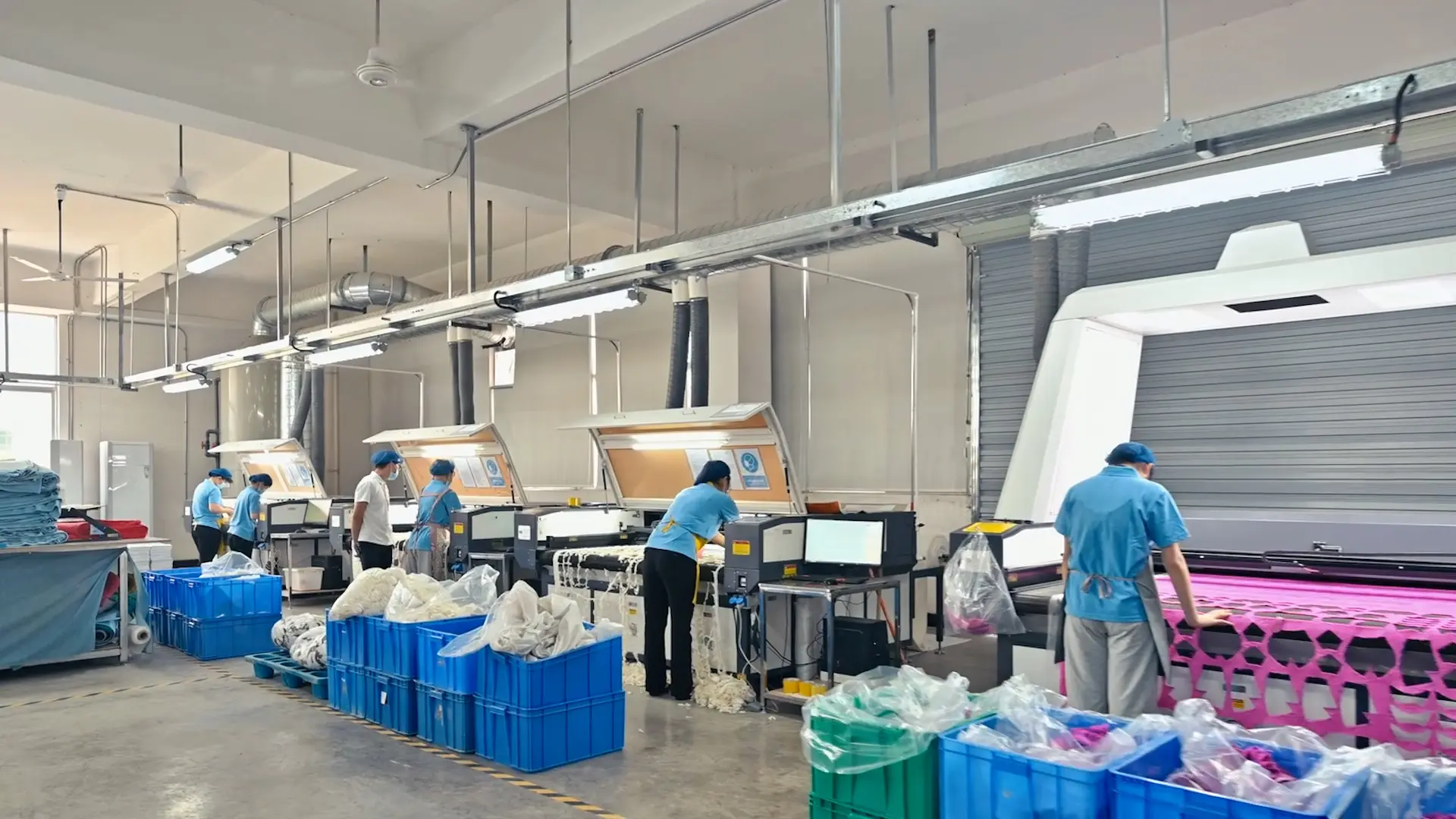
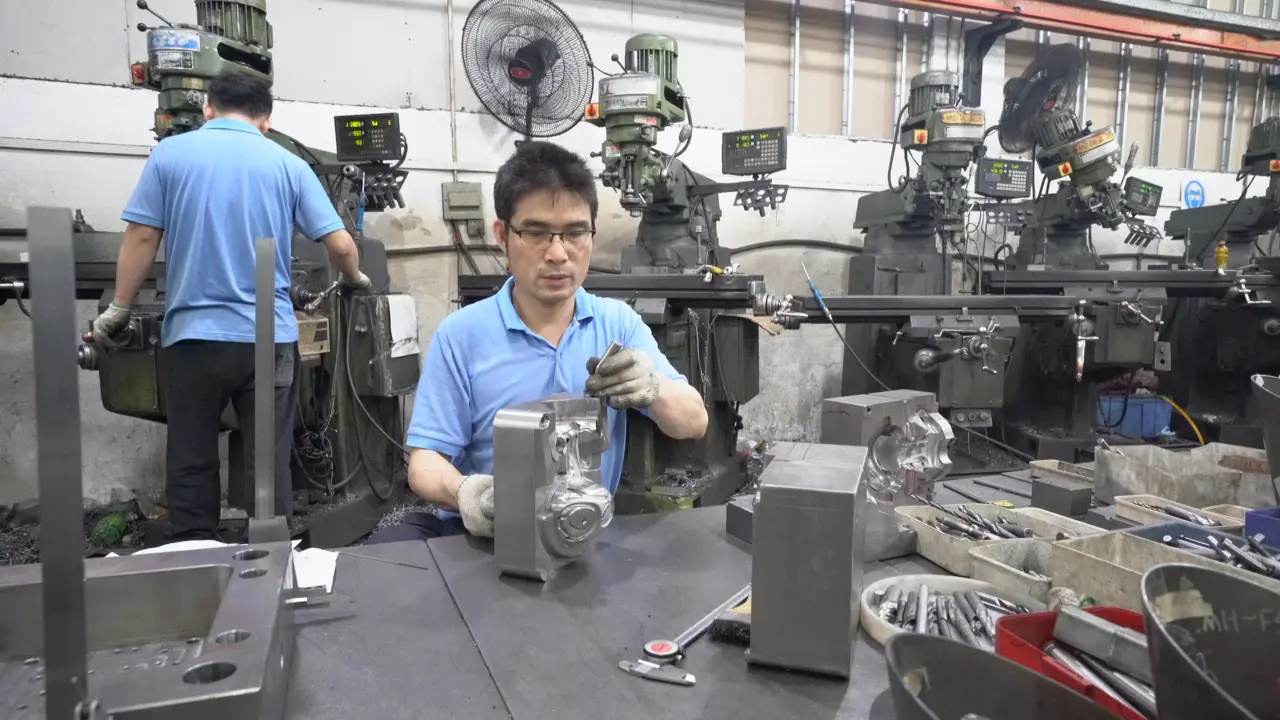
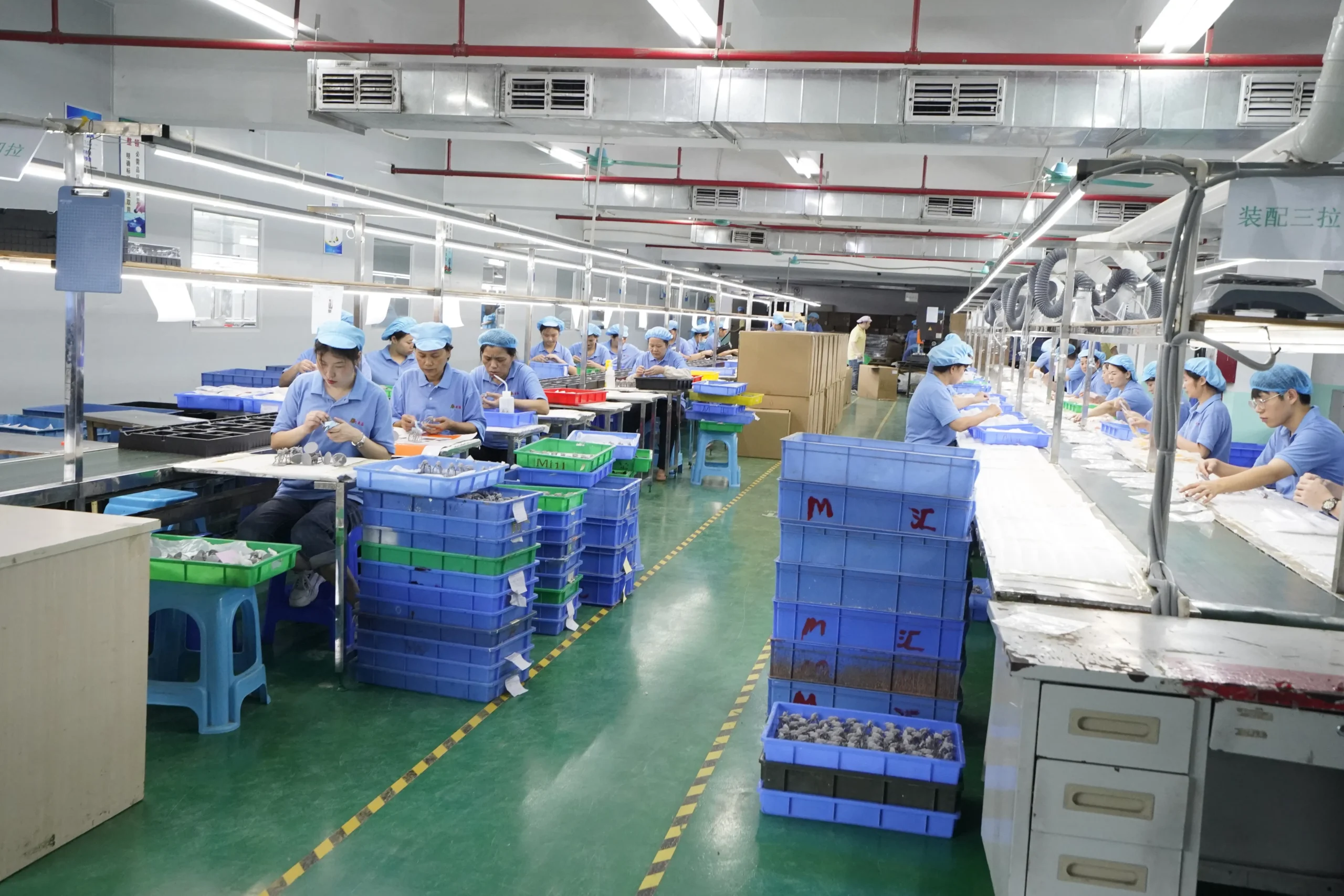
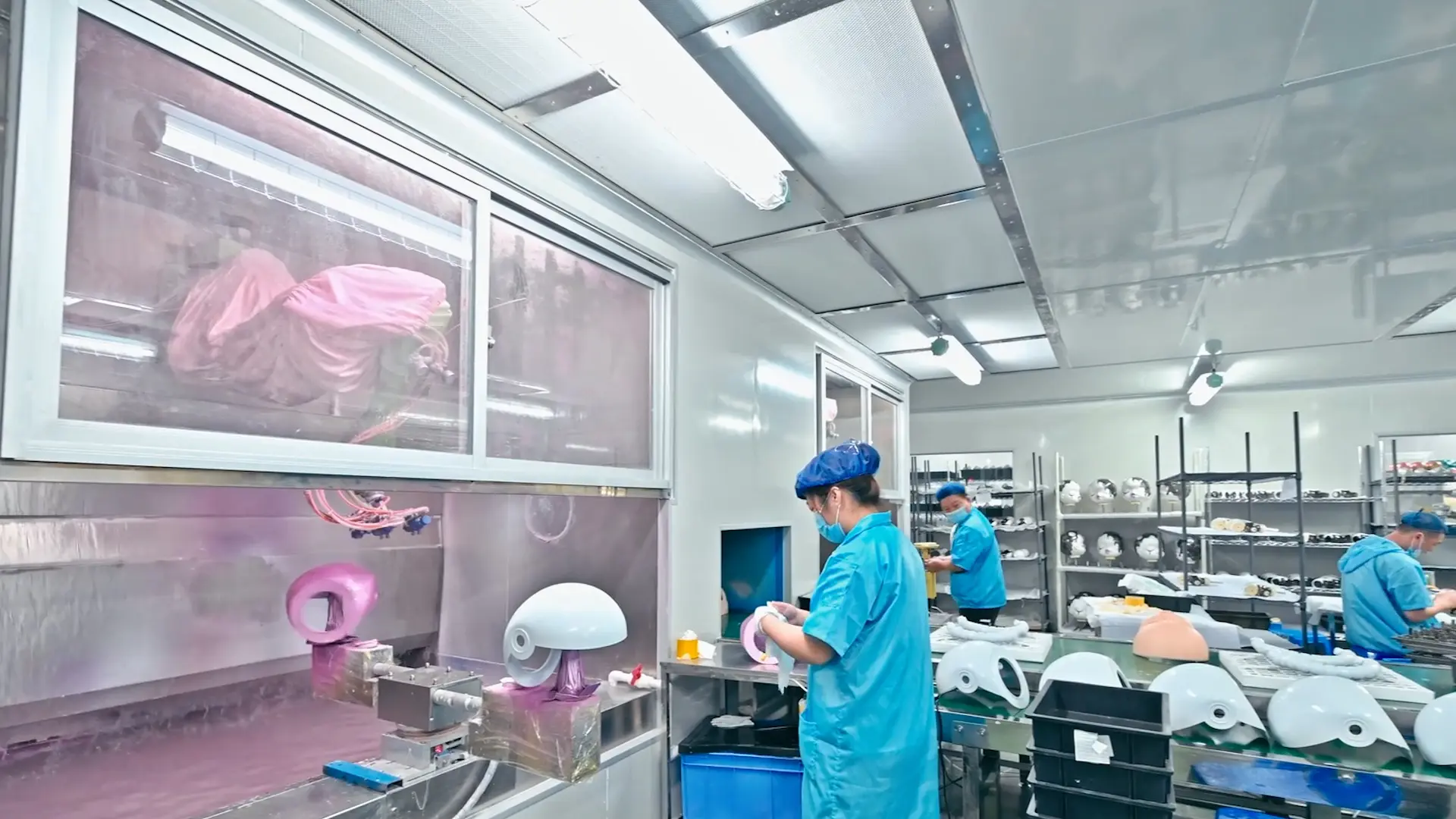
When you consolidate your merchandise manufacturing with a comprehensive B2B partner like MIHOX, the entire operational dynamic flips from reactive troubleshooting to streamlined execution.
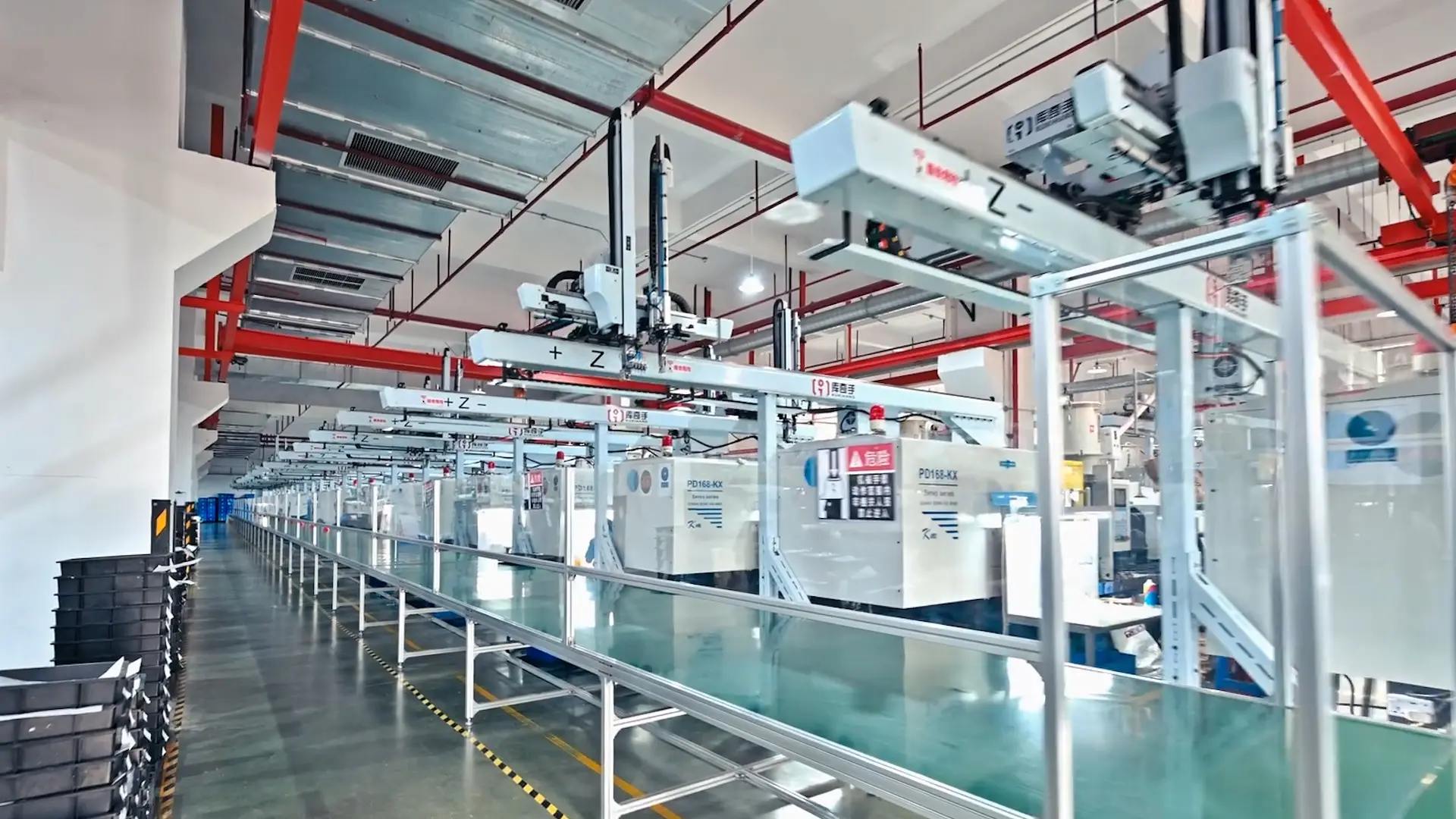
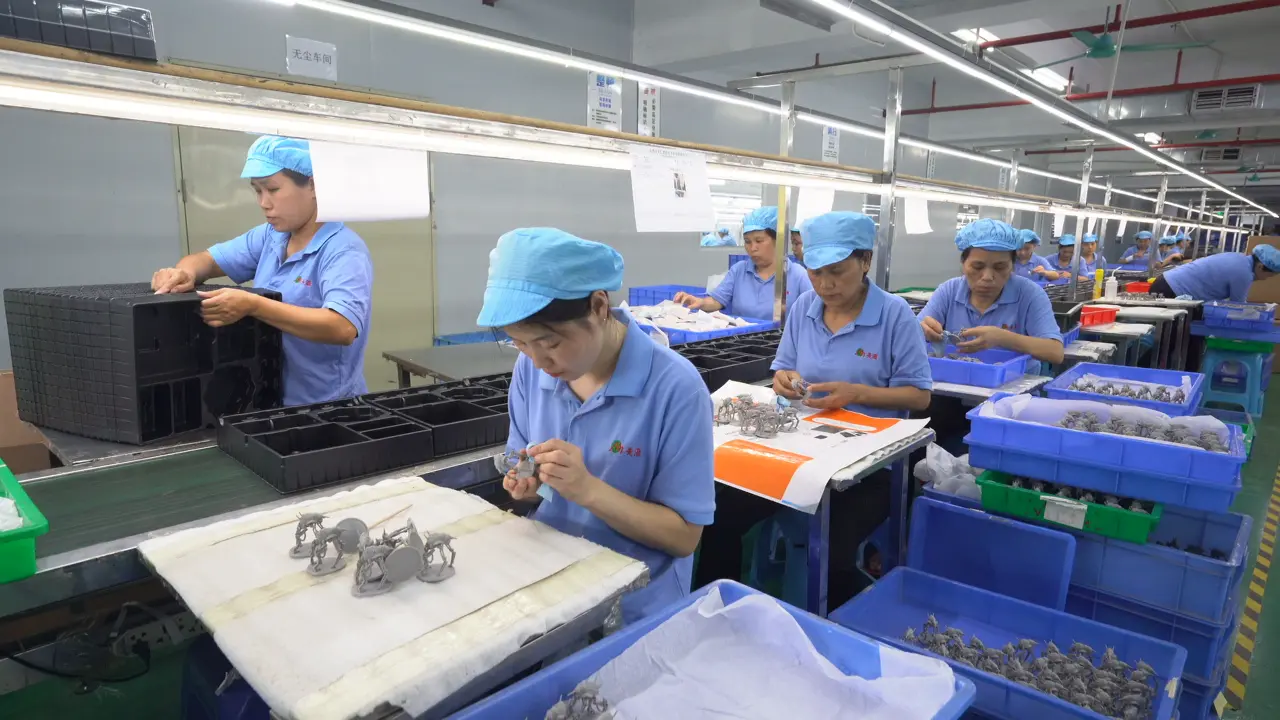
Consolidation does not mean using a generic middleman or trading company that simply re-outsources your work to random shops. True consolidation means partnering with a primary manufacturing facility that maintains dedicated, specialized production divisions under one unified management, engineering, and quality control system.
Let’s break down how this single-factory structure solves the core friction points of IP merchandise drops.
Engineering
Goods Line
Tooling Shop
Pantone Color Lab
Quality Assurance
(Zero Color Mismatch, 100% Fit Guarantee)
Centralized Color Labs and Standardized Lighting
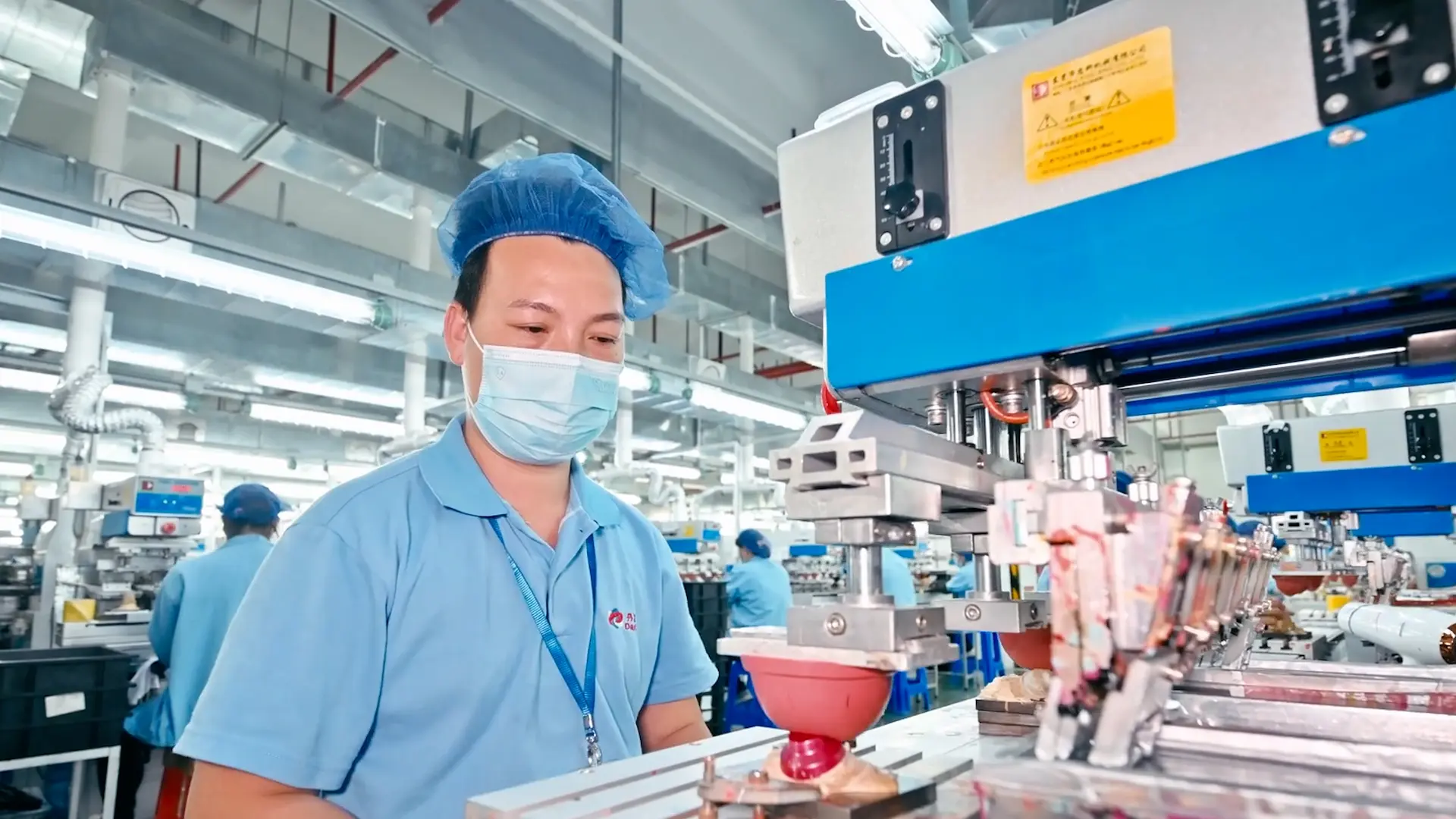
At MIHOX, color control isn’t left to individual worker interpretation or variable factory lighting. We operate a centralized color matching lab equipped with standardized D65 artificial daylight booths (simulating 6500K color temperature).
When an IP owner provides a target Pantone code—such as Pantone 3262 C—our master colorists create physical material swatches for every single medium involved in the project before mass production ever begins:
- A sprayed PVC paint sample.
- A dyed polyester plush fabric swatch.
- An enamel-baked metal alloy sample.
- A test print on paperboard packaging.
All four swatches are placed inside the D65 light booth together. Our engineers make chemical pigment adjustments—such as modifying primer density or applying predictive topcoat compensations—until all four distinct materials present a visually identical match under standard light.
To learn more about how physical paint chemistry works on plastic, read our [The Art Toy Color Matching Process: How to Avoid Pantone Discrepancies on PVC].
By locking in a single physical “Paint & Material Master Kit” across all product categories, we eliminate the frustrating color shifts that plague multi-vendor drops.
In-House Fitment Verification and Tolerance Engineering
When all product components are engineered under one roof, tolerance testing happens continuously during the prototyping phase rather than after 10,000 units have already been manufactured.
Our 3D engineering team models the interaction between different materials directly in CAD software. If a vinyl figure needs to hold a die-cast zinc shield, our engineers calculate the precise mechanical (interference fit) while taking into account:
- The specific Shore A hardness of the vinyl hand.
- The thermal expansion coefficient of the zinc alloy shield.
- The exact physical thickness of the paint and protective clear coat layers.
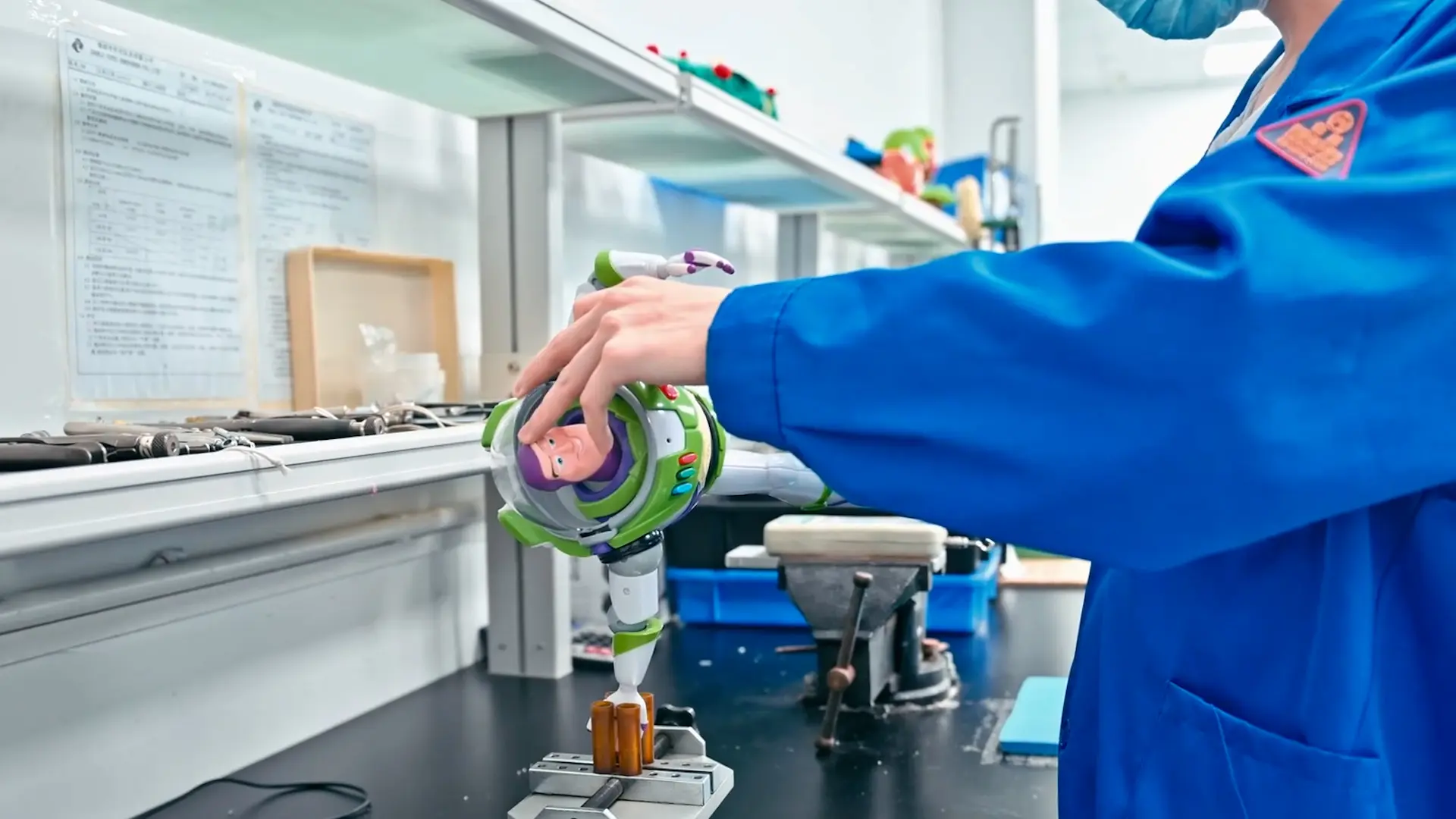
Before mass tooling is finalized, our prototyping department prints SLA 3D master patterns and creates working “Wax Test Shots.” We physically press the metal shield into the vinyl hand in our workshop. If the fit feels too loose or if the grip scratches the paint, we immediately adjust the CAD file or modify the mold draft angles.
When you receive your Pre-Production Master Samples from MIHOX, you aren’t getting isolated pieces that you have to hope will fit together—you are holding a fully assembled, perfectly integrated, drop-tested final product.
If you are curious about how we handle precise joints and structural integrity, check out our deep dive on [The Hidden Secret of Art Toy Articulation: How V-Cut Joints Save Soft Vinyl Playability].
Unified Quality Control (QC) and Single-Point Accountability
In a multi-vendor supply chain, quality control is fragmented. Factory A checks their vinyl figures according to their internal standards, while Factory B checks their plush items using completely different criteria.
When you consolidate production with MIHOX, your entire merchandise drop passes through a single, rigorous Quality Assurance protocol. Our QC team acts as your brand defender inside the factory:
Dropping packaged units from 1.2 meters onto concrete to verify internal tray cushioning.
Electronic modules undergo 100% Aging & Short-Circuit Testing in environmental chambers.
Fabric items undergo Needle Detection and seam pull-strength stress tests.
Paint coatings undergo 3M Hatch Tape Adhesion Tests to guarantee zero peeling or flaking.
Most importantly, there is zero ambiguity in accountability. If an issue arises during initial pre-production assembly, MIHOX takes 100% ownership to resolve it internally. You never have to listen to vendors blaming each other, nor do you have to spend time arguing over who pays for corrective tooling modifications.
Comprehensive Comparison Matrix: Single Factory vs. Multiple Specialized Vendors
To help your executive team evaluate the strategic trade-offs, we’ve organized the operational differences into a clear comparison matrix:
| Operational Dimension | Multiple Specialized Vendors | Consolidated Factory Partner (MIHOX) | Strategic Business Impact |
|---|---|---|---|
| Management Effort | High overhead. Managing 4-6 vendor contacts, contracts, & time zones. | Low overhead. Single dedicated Project Manager & technical team. | Saves 15-20 hours of administrative work per week. |
| Color Consistency | High risk of mismatch. Vendors use separate light sources & paint labs. | Near-perfect consistency. Centralized D65 light booth matching. | Prevents fan disappointment & brand degradation. |
| Component Fitment | High risk. Blame games occur when multi-material parts fail to snap together. | Guaranteed 1:1 fitment. In-house CAD tolerance & physical sample testing. | Eliminates expensive manual rework at fulfillment centers. |
| Shipping & Logistics | Fragmented LCL shipments. High freight costs, multiple customs fees. | Consolidated FCL shipment. Combined customs entry & lower ocean rates. | Reduces total landed shipping costs by 18% – 30%. |
| Lead Time Control | Bottleneck prone. One delayed factory stalls the entire launch. | Synchronized production schedules across all internal workshops. | Ensures on-time simultaneous release for retail drops. |
| IP Security & Copyright | Fragmented IP exposure across multiple external sub-contractors. | Centralized NDA coverage under a single secure manufacturing facility. | Drastically reduces piracy & unauthorized mold leaks. |
| Volume Cost Leverage | Diluted purchasing power across small, separate factory orders. | Aggregated order volume grants higher tier material discounts. | Lowers overall unit cost across all SKUs. |
| Safety Compliance | Must collect separate lab test reports (CE, ASTM, CPSIA) per factory. | Streamlined testing. Unified testing batches with accredited labs. | Simplifies customs clearance & global retail compliance. |
The Specialized Factory Counter-Argument: When Does Niche Sourcing Actually Make Sense?
To maintain complete objectivity, we must ask an important question: Is multi-vendor sourcing ever the right choice?
Yes, there are specific scenarios where sourcing from hyper-specialized individual workshops is necessary. Being transparent about these edge cases is essential for making sound manufacturing decisions.
Scenario A: Ultra-Niche, Artisanal Craftsmanship
If your IP product requires a rare, highly specialized artisanal craft—such as hand-blown Murano glass figures, traditional Japanese hand-carved wooden Kokeshi dolls, or high-end Swiss-watch grade mechanical movement mechanisms—you will likely not find those capabilities inside a standard toy OEM factory.
In these rare cases, working directly with an isolated master artisan or niche workshop is the only way to achieve that specific heritage craft.
Scenario B: Low-Volume, Single-SKU Testing
If you are an independent artist producing a single product—for instance, a limited run of 100 handmade resin statues—you don’t need a consolidated supply chain yet. Sourcing directly from a local resin studio or small casting shop is straightforward because there are no secondary materials, packaging complexities, or cross-category assembly logistics to manage.
The Tipping Point: When Multi-Vendor Sourcing Breaks Down
The multi-vendor approach falls apart the moment your IP expands beyond a single item into a multi-SKU product ecosystem.
When your production run scales past 1,000 units per SKU and involves three or more distinct product categories (e.g., Vinyl + Plush + Packaging + Metal Accessories), the administrative complexity and logistics friction of managing separate vendors rapidly outweigh any theoretical savings you might get from chasing the absolute cheapest individual shop for each item.
Real-World Case Breakdown: Launching a 7-SKU Merchandise Drop
To see how this plays out in real life, let’s examine a case study modeled after a major video game IP merchandise drop that we manufactured at MIHOX.
The client needed to release a coordinated “Collector’s Box Set” for a major game anniversary. The drop consisted of 7 distinct SKUs bundled together inside a premium display box:
- Main Character: A 7-inch detailed ABS & PVC Articulated Action Figure.
- Companion Creature: A 4-inch Soft Vinyl (Sofubi) Figure with glowing eyes.
- Plush Mascot: A 6-inch polyester plush bag charm with embroidered details.
- Metal Replica: A die-cast zinc alloy weapon replica with enamel fill.
- Desk Display: A 3-layer printed clear acrylic standee with a custom base.
- Collector Pin: A stamped brass hard-enamel pin with butterfly clutches.
- Packaging: A custom rigid magnetic collector box with a fitted EPE foam tray.
Let’s compare how this project unfolds under two different supply chain strategies.
- 5 Separate Contracts & Sales Reps
- 4 Different Shades of Red/Blue
- Keychains delayed by 3 weeks
- Weapon didn’t fit figure’s hand
- 5 Separate LCL Freight Shipments
- High Administrative Chaos
- 1 Unified Contract & 1 Project Mgr
- 1 Central D65 Pantone Master Kit
- Synchronized Production Timelines
- 100% In-House Fitment Guarantee
- 1 Consolidated FCL Container Rate
- On-Time Release for Game Launch
Option A: The Multi-Vendor Route
Procurement split across 5 separate vendors in Dongguan, Yangzhou, Wenzhou, Yiwu, and Shenzhen.
Option B: The Consolidated Route with MIHOX
MIHOX as the single-source OEM manufacturer for all 7 SKUs.
Technical Deep-Dive: Overcoming Mixed-Material Friction
When you consolidate multi-material production under a single roof, the real magic happens in the engineering department. Combining plastics, fabrics, metals, and electronics isn’t just an assembly task; it’s a battle against material physics.
Let’s examine how our engineers handle three of the trickiest mixed-material challenges in collectible manufacturing.
1. THERMAL SHRINKAGE MISMATCH
- ABS Plastic Shrinkage: ~0.4% – 0.7%
- Soft PVC Vinyl Shrinkage: ~3.0% – 5.0%
- Solution: Pre-compensated enlarged CAD tooling molds.
2. COLOR MIGRATION & FABRIC STAINING
- Plasticizer leakage from PVC stains soft plush fabric.
- Solution: Non-migrating, Phthalate-free PVC formulas.
3. WEIGHT BALANCE & CENTER OF GRAVITY
- Heavy resin/metal accessories cause soft figures to fall.
- Solution: Concealed stainless steel internal armatures.
1. Thermal Shrinkage Rate Differences
Every material shrinks as it cools down from its molten or heated state during manufacturing. This physical variance is a primary source of assembly friction in multi-factory projects:
If you use the same digital 3D file for both a hard ABS helmet and a soft PVC head, the PVC will shrink significantly more, resulting in a helmet that is ridiculously loose.
MIHOX Solution: We apply differential scale compensation to models before tooling. By scaling the PVC mold file by 4.2% while scaling the ABS file by only 0.5%, both parts shrink to the exact same physical dimensions at room temperature, ensuring a seamless fit.
2. Plasticizer Leakage and Fabric Staining (Color Migration)
Have you seen plush toys where the fabric around a vinyl face turns yellow or oily? This is caused by plasticizer migration—small molecules bleeding out of low-grade PVC over time.
At MIHOX, our chemical engineers strictly use non-migrating, eco-friendly, Phthalate-Free PVC formulas. Additionally, we apply a clear, non-porous barrier seal on the inner attachment rim. This technical precaution blocks chemical migration, ensuring your plush collectibles remain pristine on retail shelves for years.
3. Structural Weight Distribution and Gravity Management
Incorrect weight distribution in heavy mixed-material statues causes figures to “lean” or snap at the ankles over time. MIHOX structural engineers solve this via center-of-gravity simulations:
- Thin-Wall Injection: For top-heavy armor, we hollow out internal torso sections using precision engineering to reduce mass.
- Zinc Counterweights: We embed high-density die-cast counterweights inside the feet to drop the center of gravity directly between the feet.
- Stainless Steel Armatures: For slender character ankles, we insert high-tensile steel rods directly into the leg molds during production to prevent long-term deformation.
How to Transition Your Supply Chain to MIHOX Without Production Interruptions
If your brand is currently managing multiple overseas vendors and experiencing operational headaches, transitioning to a consolidated partner like MIHOX might feel like a daunting leap. You might worry about production downtime, lost tooling assets, or communication hiccups during the handoff.
We have structured a smooth, step-by-step onboarding protocol designed to transition your product lines safely without missing a single retail delivery window.
Frequently Asked Questions (FAQs)
Will consolidating my merchandise manufacturing with one factory increase my risk if production gets delayed?
Actually, it reduces your operational risk significantly. In a multi-vendor setup, if one small specialized shop experiences a delay (such as a delayed metal keychain), your entire multi-item product launch comes to a grinding halt. When you manufacture with MIHOX, all categories (vinyl, plush, metal, packaging) are scheduled under a single master production timeline, ensuring every SKU finishes simultaneously for a synchronized shipment.
Can MIHOX handle small-batch orders across multiple merchandise categories?
We cater to both emerging indie creators and global brands. By housing multiple production lines in one facility, we offer flexible MOQs for multi-SKU drops. For example, we can run a consolidated batch of 1,000 vinyl figures, 500 plush charms, and 500 pins. Consolidation grants you higher-tier material pricing that individual small shops cannot match.
How does MIHOX guarantee color matching when products use completely different materials?
We eliminate guesswork with a centralized color lab equipped with D65 artificial daylight booths (6500K). Before mass production, we create custom physical swatches for every material (sprayed PVC, dyed fabric, baked enamel). We adjust pigments until all materials present an identical visual match under standard light, securing your sign-off on a single Material Master Board.
What happens if I already own production molds at another overseas factory?
Transferring existing molds is a routine procedure. Our logistics team handles the secure physical transfer of your steel or copper tools. Upon arrival, our engineers perform a complete audit—inspecting cavities under microscopes, cleaning oxidation, and running T0 trial shots to verify tolerances before resuming production.
How does consolidated manufacturing lower my total landed shipping and logistics costs?
Sourcing from multiple vendors incurs separate LCL freight rates, export declarations, and port fees. By consolidating at MIHOX, we pack your entire line into a single Full Container Load (FCL) shipment straight from our dock. This eliminates duplicate brokerage fees and reduces total landed shipping expenses by 18% to 30%.