In the world of action figure design, the “click” of a perfectly engineered joint is the heartbeat of the product. Whether you are a solo indie designer or a brand manager looking to launch a new vinyl toy line, one question will inevitably dominate your early prototyping phase: Should I use single-jointed or double-jointed articulation?
The answer isn’t just about how far an arm can bend. It’s a complex calculation involving aesthetics, manufacturing budgets, material shrinkage in vinyl production, and the end-user’s “poseability” expectations.
In this definitive guide, we will break down the technical differences between double-jointed and single-jointed systems, and for the first time, we will pull back the curtain on the entire vinyl production workflow—from the first sketch to the final product hitting the shelf.
1. Defining the Mechanics: Single-Jointed vs. Double-Jointed
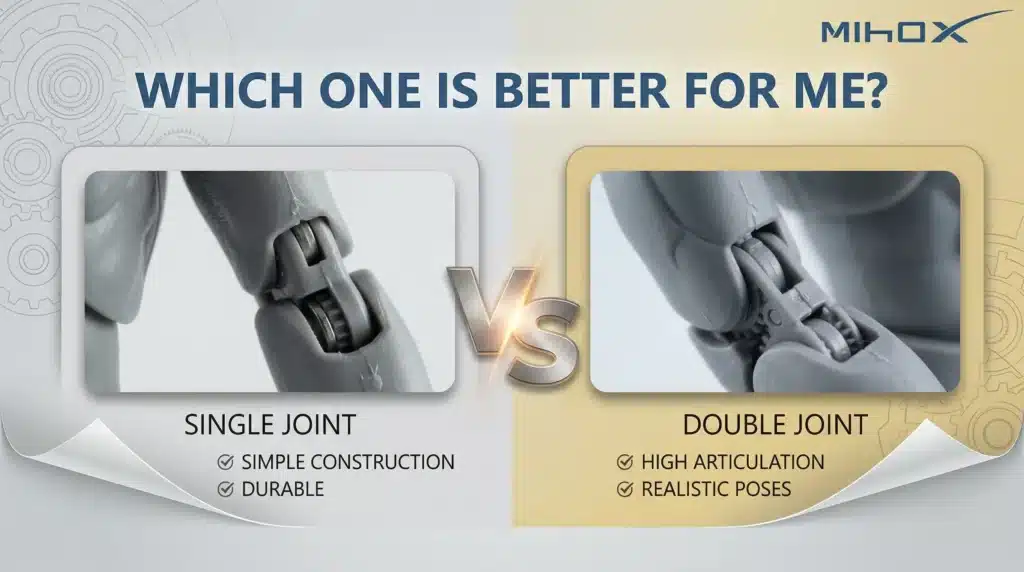
Mechanical Breakdown: Single vs. Double Joint
A direct comparison between simplified motion and premium high-range articulation.
Standard L-bend with one rotation point.
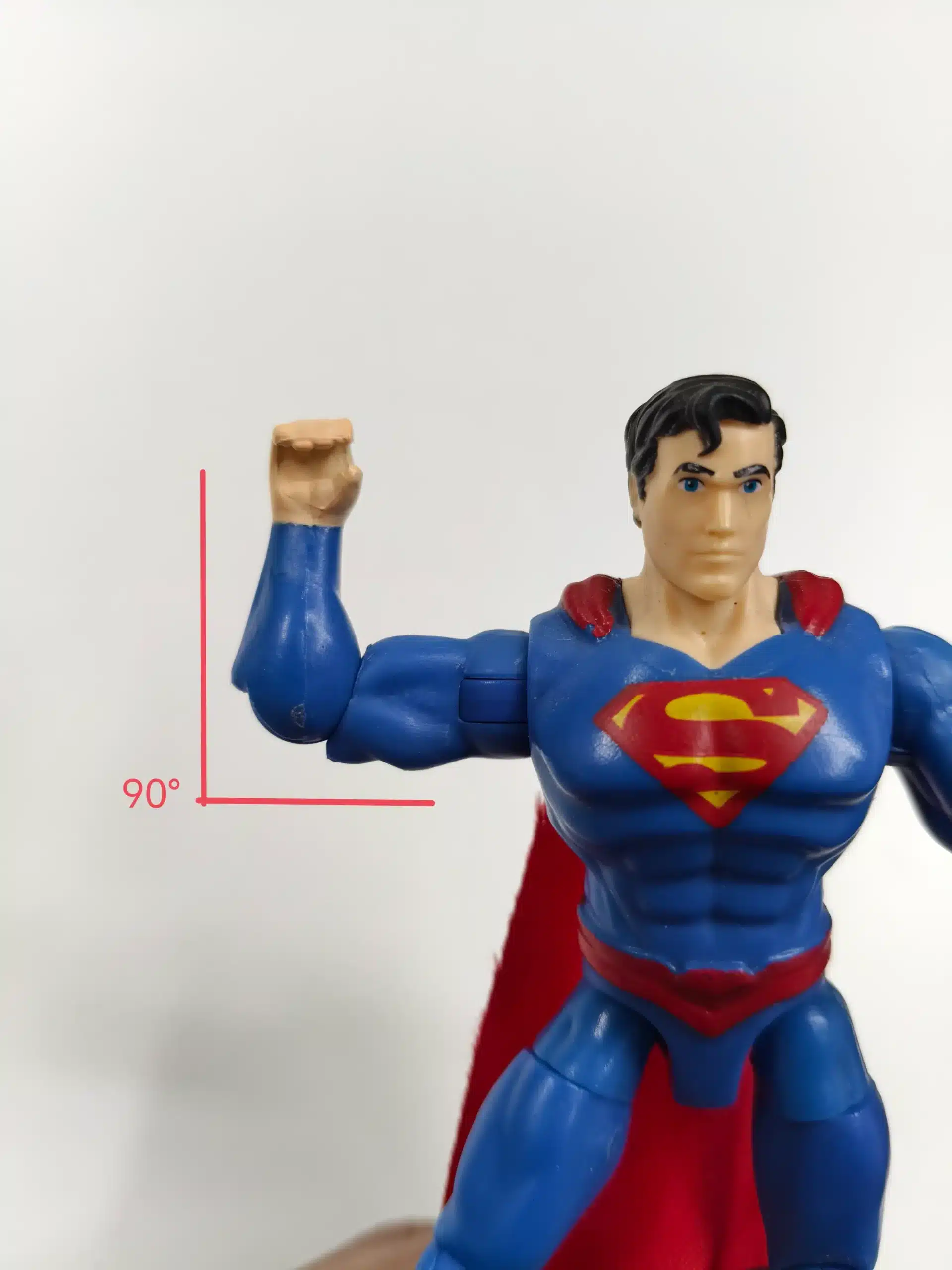
90° limit – Typical for entry-level figures.
Dual pivots allow the forearm to fold flat.
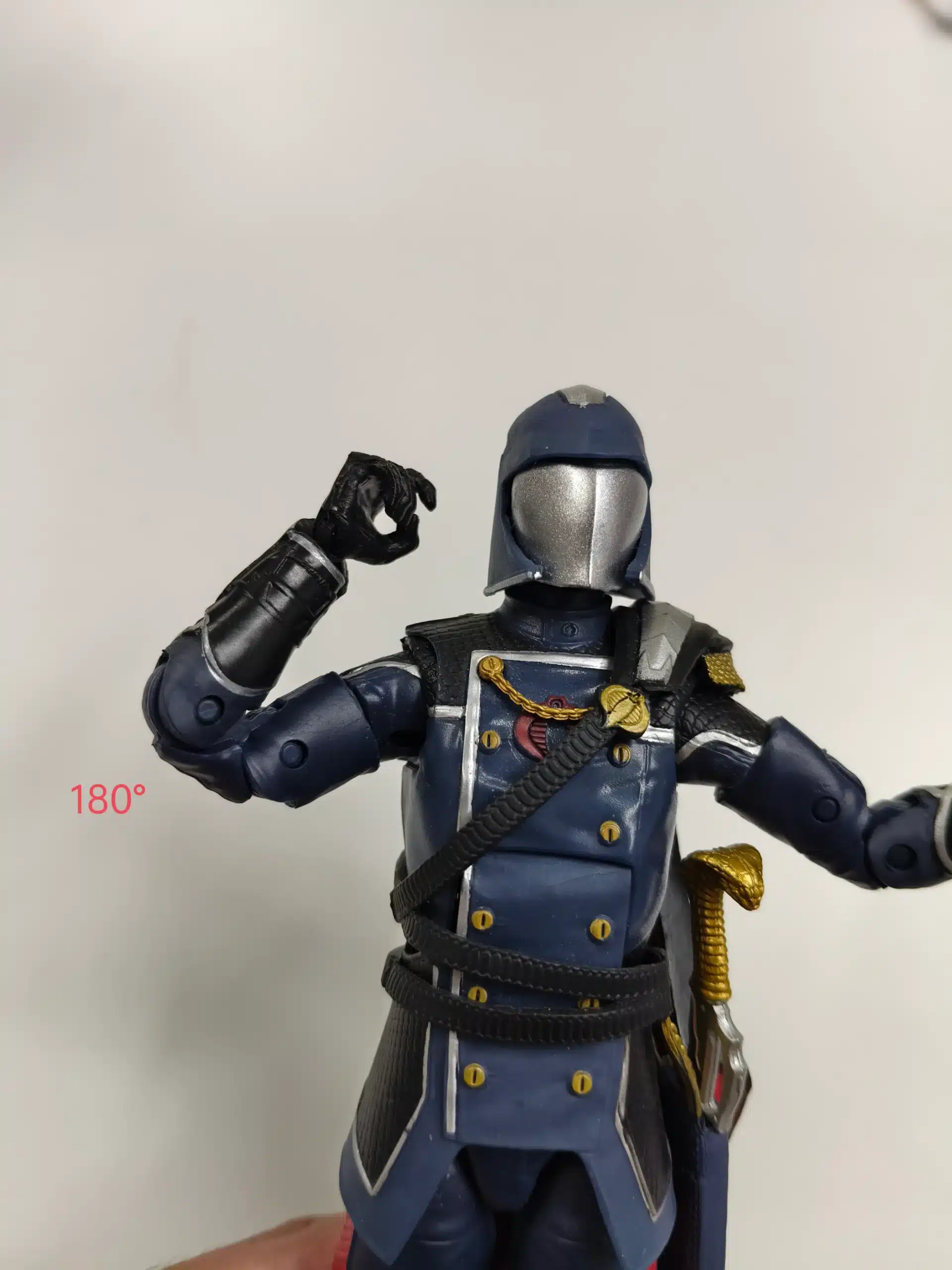
180° Range – Allows for natural, dynamic posing.
Before we dive into the “which is better” debate, let’s establish the technical baseline.
What is Single-Jointed Articulation?
Single-jointed articulation (often called a “standard hinge”) consists of one pivot point connecting two limbs (e.g., the upper arm and the forearm).
- Range of Motion (ROM): Typically limited to about 90 degrees.
- Visual Impact: Minimal. It requires only one cut in the sculpt, preserving the “muscle flow” of the character.
- Common Use Cases: Retro-style figures, 5-POA (Points of Articulation) toys, and high-end aesthetic “statue-hybrid” vinyl figures.
What is Double-Jointed Articulation?
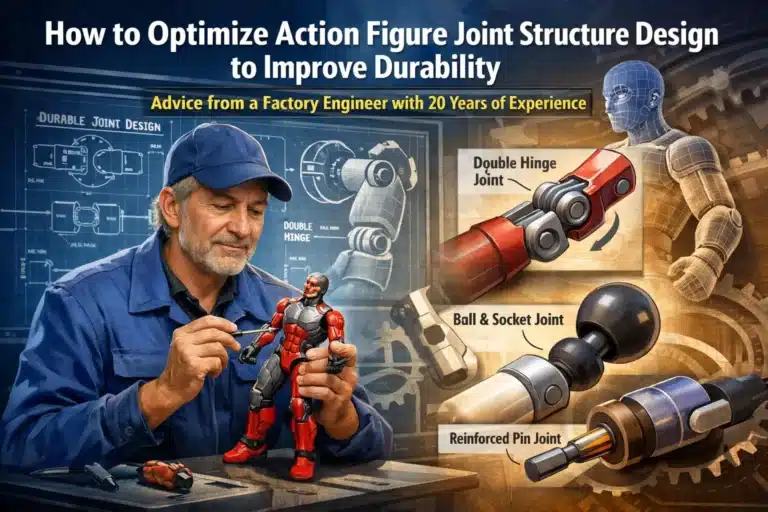
Double-jointed articulation utilizes a “floating” middle segment (a puck or a hinge block) that connects the two limbs. This creates two separate pivot points.
- Range of Motion (ROM): Can achieve 160 to 180 degrees, allowing a figure to touch its own shoulder or sit in a deep crouch.
- Visual Impact: Significant. It creates a “break” in the sculpt when bent, often exposing the internal mechanics.
- Common Use Cases: Super-hero action figures (Marvel Legends, S.H. Figuarts), martial arts characters, and highly interactive play-sets.
2. The Designer’s Dilemma: Aesthetics vs. Functionality
When choosing a joint type for your figure design, you are essentially balancing two opposing forces.
The Case for Single Joints (The Aesthetic King)
If your figure design relies on clean lines, smooth skin textures, or minimalist geometry (common in the Designer Toy/Urban Vinyl scene), single joints are often superior.
- Durability: Fewer moving parts mean less chance of breakage during “rough play” or shipping.
- Paint Integrity: There is less surface friction, meaning the paint on the elbow or knee is less likely to scrape off over time.
- Lower Production Costs: Fewer parts mean fewer molds. If you are a new brand, this is a critical “keyword” for your budget: Tooling Efficiency.
The Case for Double Joints (The Poseability King)
If your target audience consists of “Toy Photographers” or “Hardcore Collectors,” they demand dynamic movement.
- Storytelling: A double-jointed figure can “kneel,” “aim a weapon,” or “cross its arms”—actions that are impossible with single joints.
- Anatomical Realism: While the joint itself looks mechanical, the positions the figure can take look more human and lifelike.
3. The Full Workflow: From Blueprint to Finished Vinyl Product
Designing the joint is only 10% of the battle. The real challenge is translating that design into a Vinyl (Sofubi/Slush Cast) product. Vinyl is a unique material that behaves differently than standard ABS plastic.
Here is the step-by-step industrial process:
You start with Orthographic Views (Front, Side, Back). At this stage, you must decide on your “Break Lines.” For a double-jointed figure, you aren’t just drawing an arm; you are drawing three distinct pieces: the bicep, the elbow puck, and the forearm.
Using software like ZBrush, the sculptor creates the “Digital Clay.”
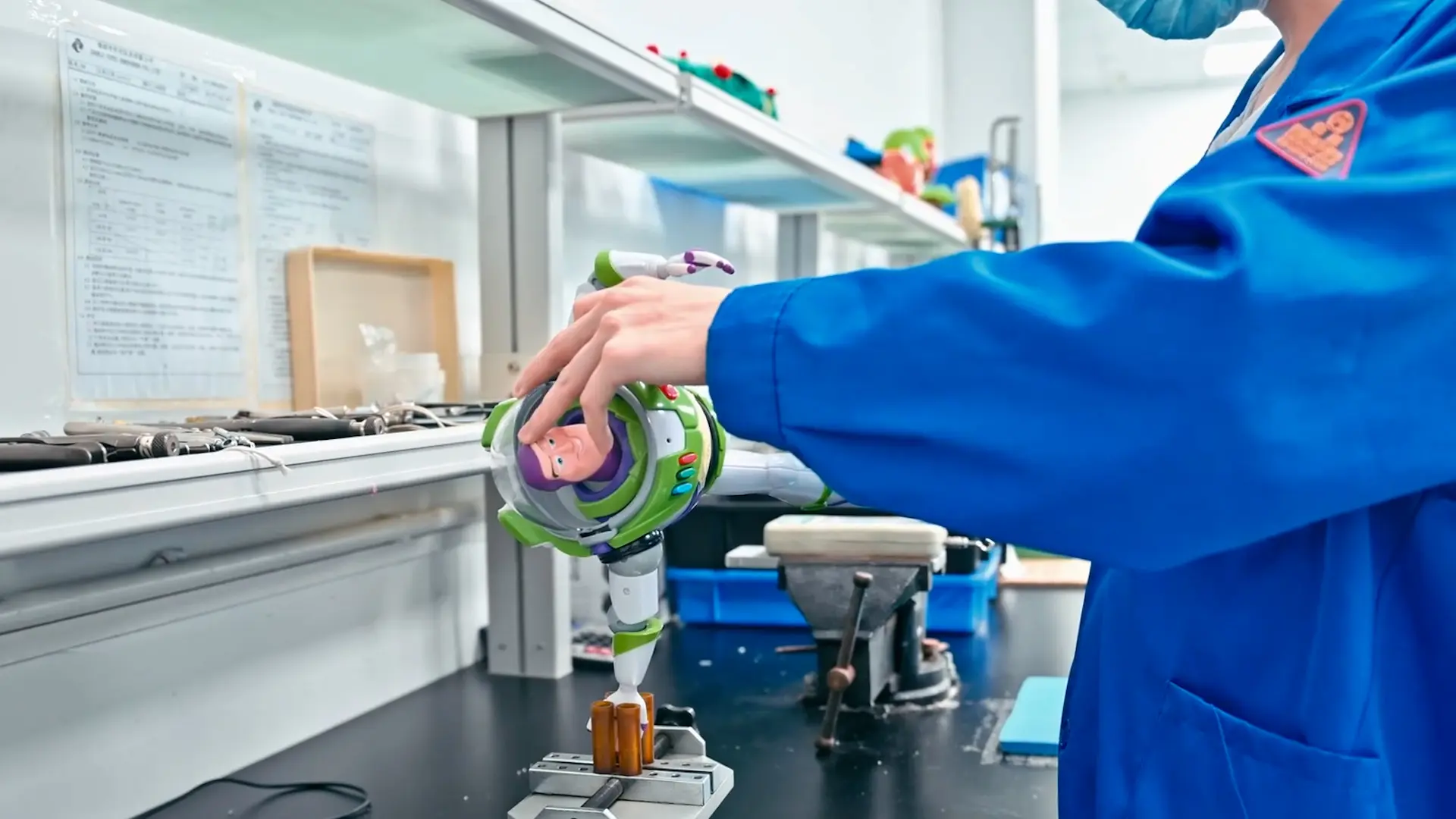
We use high-resolution SLA (Resin) printing to create a physical prototype. This is where you test the Range of Motion. Does the double joint actually allow for a 160-degree bend? Does the single joint look “too stiff”?
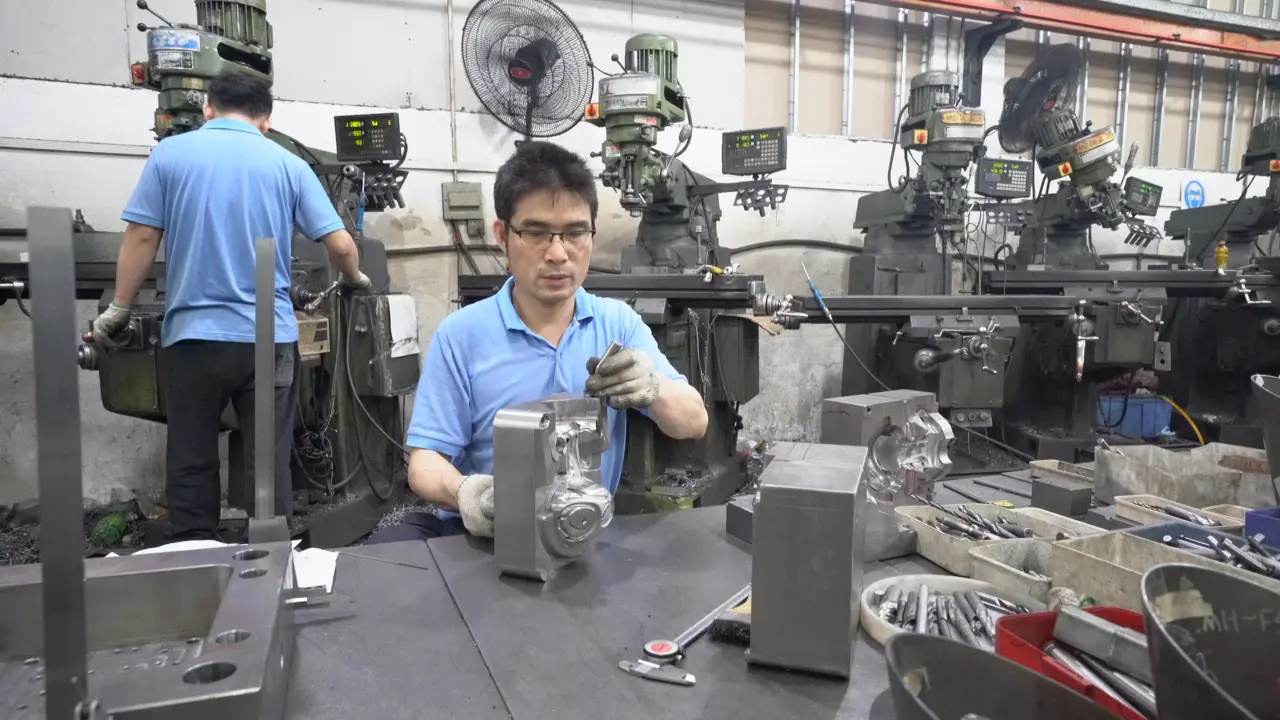
In vinyl production, we use Electroformed Copper Molds. The resin prototype is turned into a wax version. The wax is then submerged in a chemical bath where copper grows around it atom-by-atom.
The Joint Challenge: Sharp, deep joints are harder to “electroform.” Single joints are much easier for the copper to reach, resulting in a more durable mold.
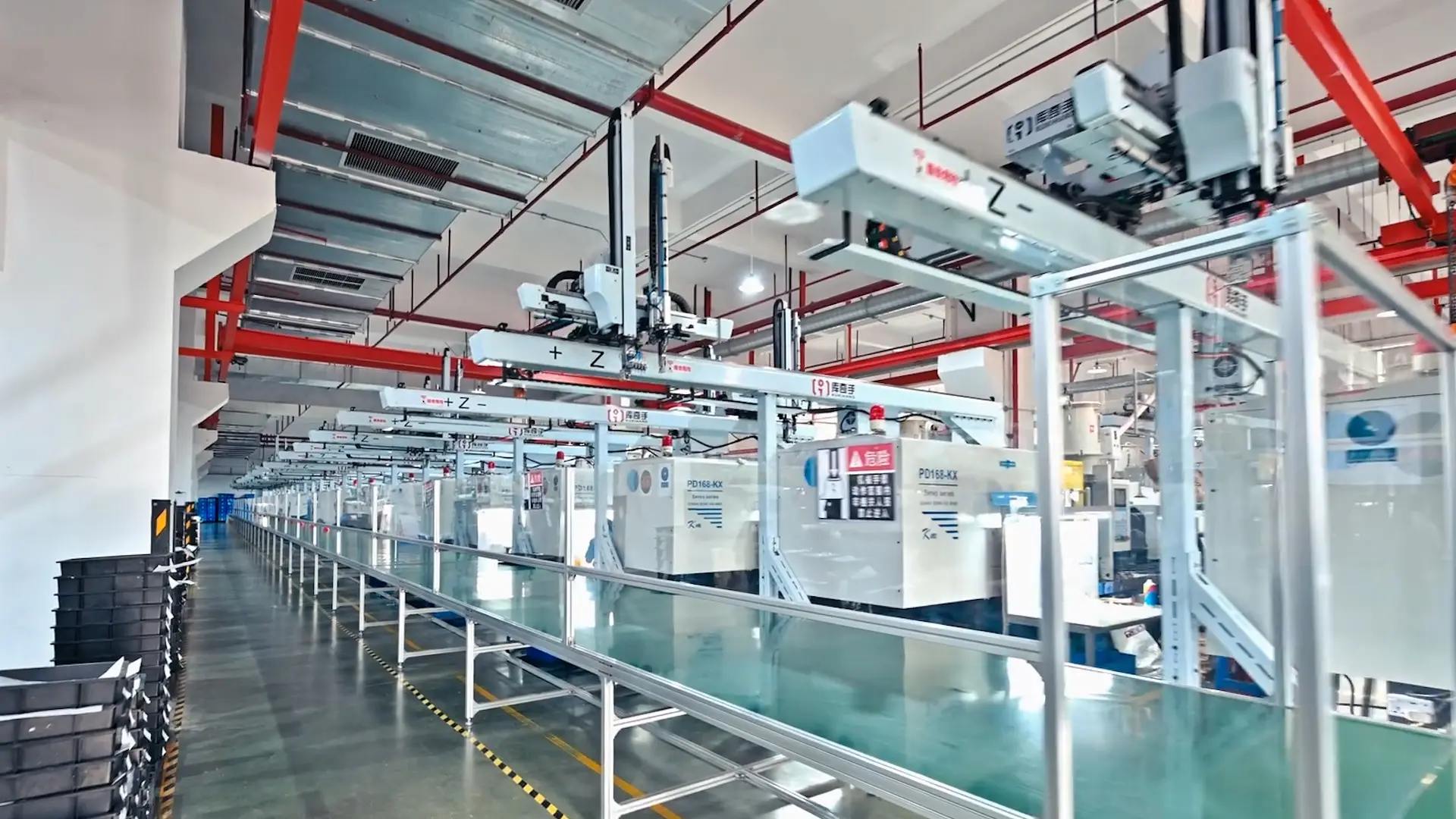
Liquid PVC (vinyl) is poured into the hot copper molds. The mold is spun or shaken (slush casting) to coat the inside walls.
The Shrinkage Factor: Vinyl shrinks by 2% to 3% as it cools. This is the biggest “pain point” for double-jointed figures. If one piece shrinks more than the other, the joint will become “loose” or “floppy.”
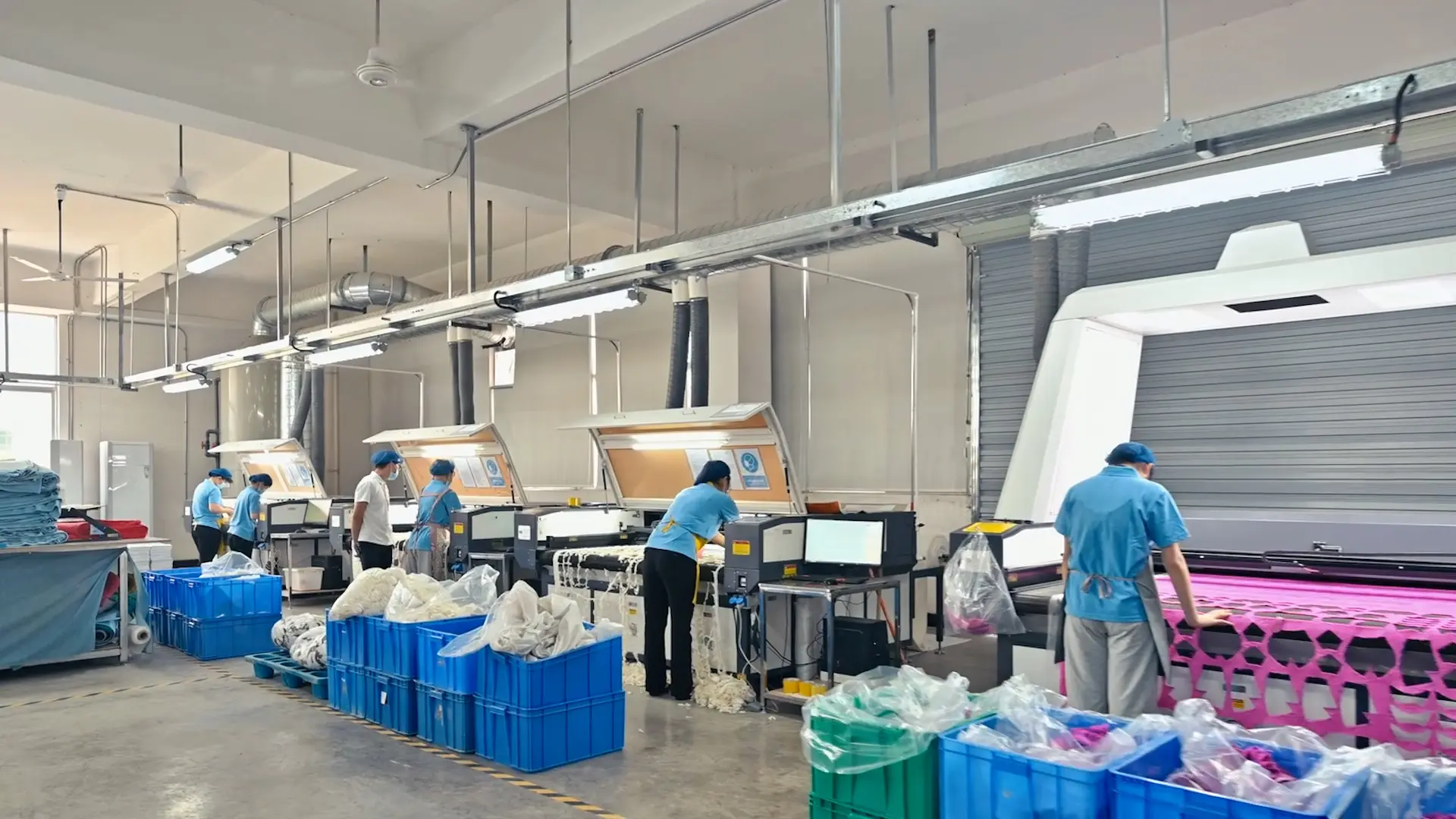
Finally, the parts are painted. Because vinyl is soft, we use Heat Assembly. We heat the vinyl until it’s soft like bread, then “pop” the joints into place. Once the vinyl cools, it hardens and locks the joint forever.
4. Comparison Table: At a Glance
To help you decide, here is a clear breakdown of how joint choice affects your production.
| Feature | Single-Jointed | Double-Jointed |
|---|---|---|
| Range of Motion | ~90° (Standard) | ~160°+ (High) |
| Sculpt Integrity | High (Clean lines) | Medium (Mechanical breaks) |
| Part Count | 2 parts per limb | 3 parts per limb |
| Mold Complexity | Low (Easy to cast) | High (Requires precision) |
| Assembly Time | Fast (Lower labor cost) | Slow (Higher labor cost) |
| Best For… | Art toys, Vinyl hobbyists | Action figures, Photographers |
| Risk Factor | Low (Very stable) | High (Prone to “loose joints”) |
5. Summary: Which Should You Choose?
Choose Single-Jointed if:
You are creating an “Art Toy” where the sculpt is the star. If your budget is limited and you want to ensure a 100% success rate in your first vinyl production run, single joints are the safest and most elegant choice.
Choose Double-Jointed if:
You are competing in the “Action Figure” market. If your character is a ninja, an athlete, or a warrior, the lack of a double-jointed elbow will be seen as a “con” by professional collectors.
Expert Insights: Designing Figure Joints
I want a double-jointed look but my budget is tight. Is there a middle ground?
Yes. Consider “Deep-Cut Single Joints.” By carving a deeper notch into the back of the elbow or the front of the knee, you can push a single joint’s range from 90 degrees to about 120 degrees.
How do I prevent “paint rub” on my double-jointed vinyl figures?
Paint rub is a major pain point in production. The most professional solution is Material Color Matching.
Instead of painting the joint puck, produce that specific part using colored vinyl resin that matches the paint of the limbs. If the color is “baked into” the material, friction won’t reveal any ugly plastic colors underneath.
Will a double-jointed figure be more prone to “leaning” or falling over?
Generally, yes. Every extra joint is a potential “weak point” for gravity. To fix this, you must use a harder durometer (stiffness) of PVC for the internal joint pins.
Is the shrinkage rate the same for all parts of the joint in vinyl production?
No, and this is a common manufacturing trap. Thicker parts shrink more than thinner parts. If your “elbow puck” is a solid piece of vinyl but your “forearm” is thin-walled, they will shrink at different rates, leading to loose, floppy joints.
The Fix: Maintain consistent wall thickness across all articulating components during the 3D modeling stage.
Can I mix both single and double joints on the same figure?
Absolutely. This is a smart strategy used by many top-tier brands. A common setup is using double-jointed knees (to allow for deep crouches) while keeping single-jointed elbows (to maintain a sleek, natural arm aesthetic).
Conclusion
Whether you choose the sleek simplicity of the single-joint or the high-octane performance of the double-joint, your decision should always serve the character.
If you are ready to take your figure design from a 2D drawing to a 3D vinyl reality, understanding these technical nuances is what will set your brand apart from the amateurs.
Choose the joint that tells your character’s story best.