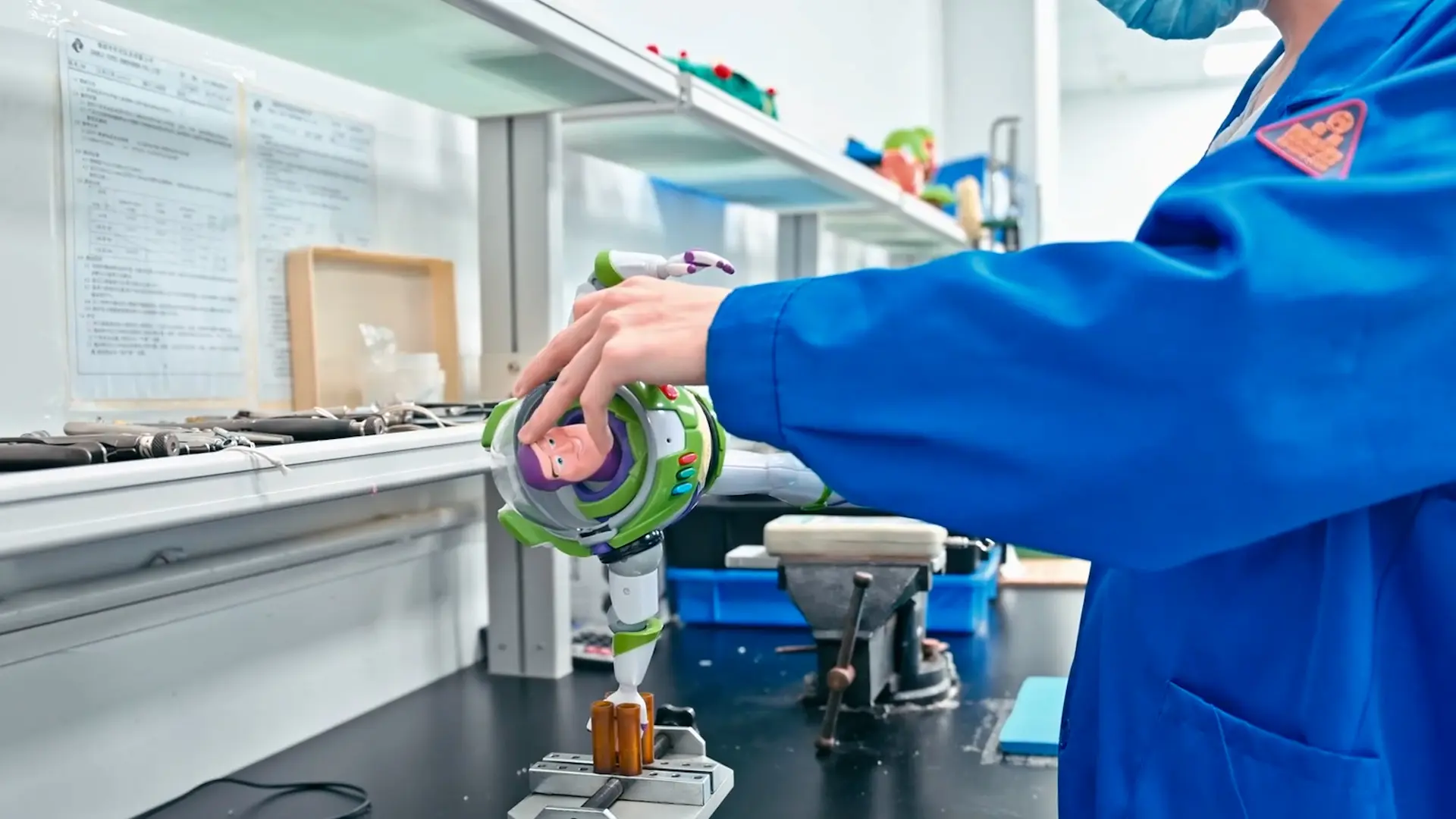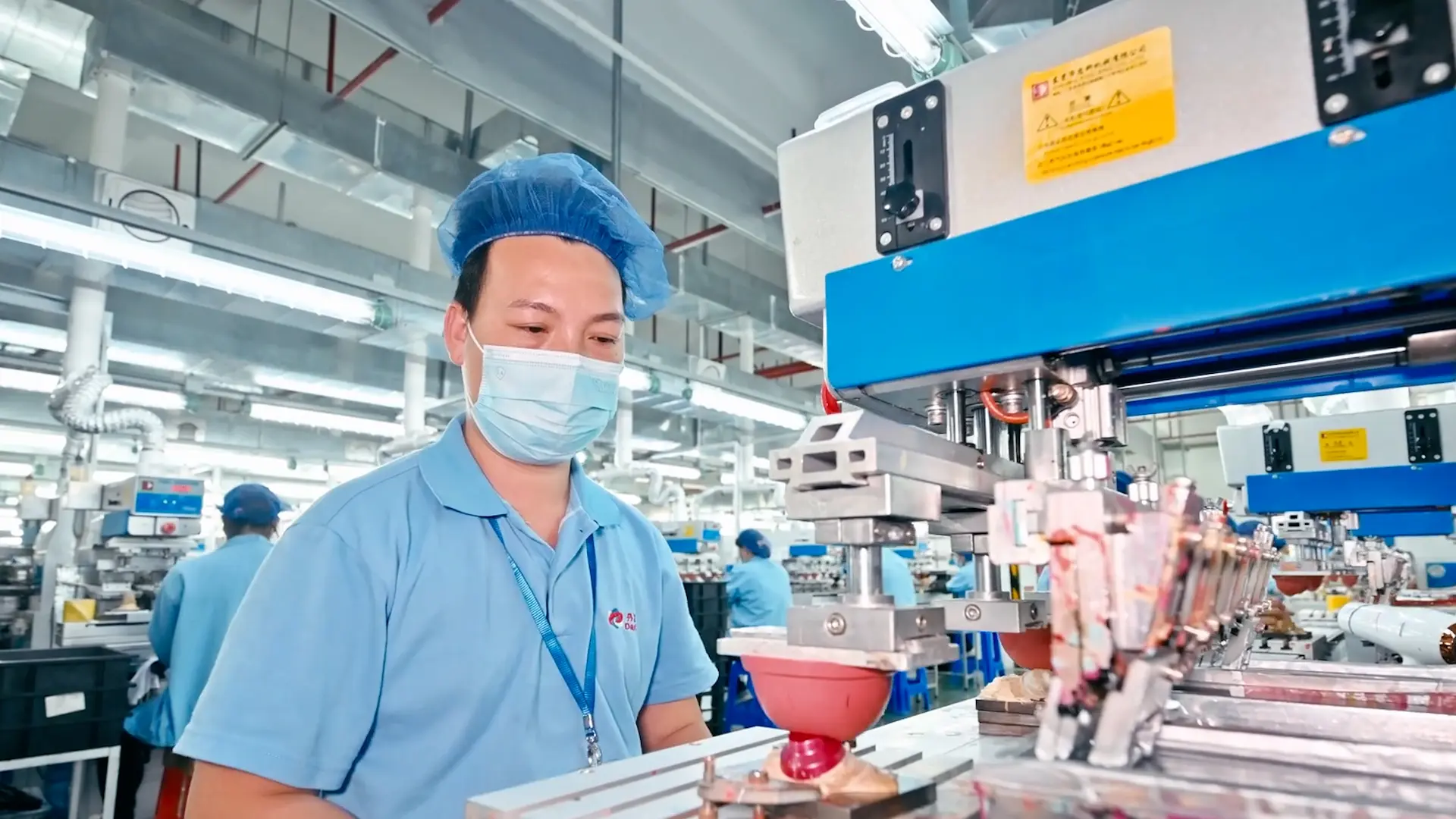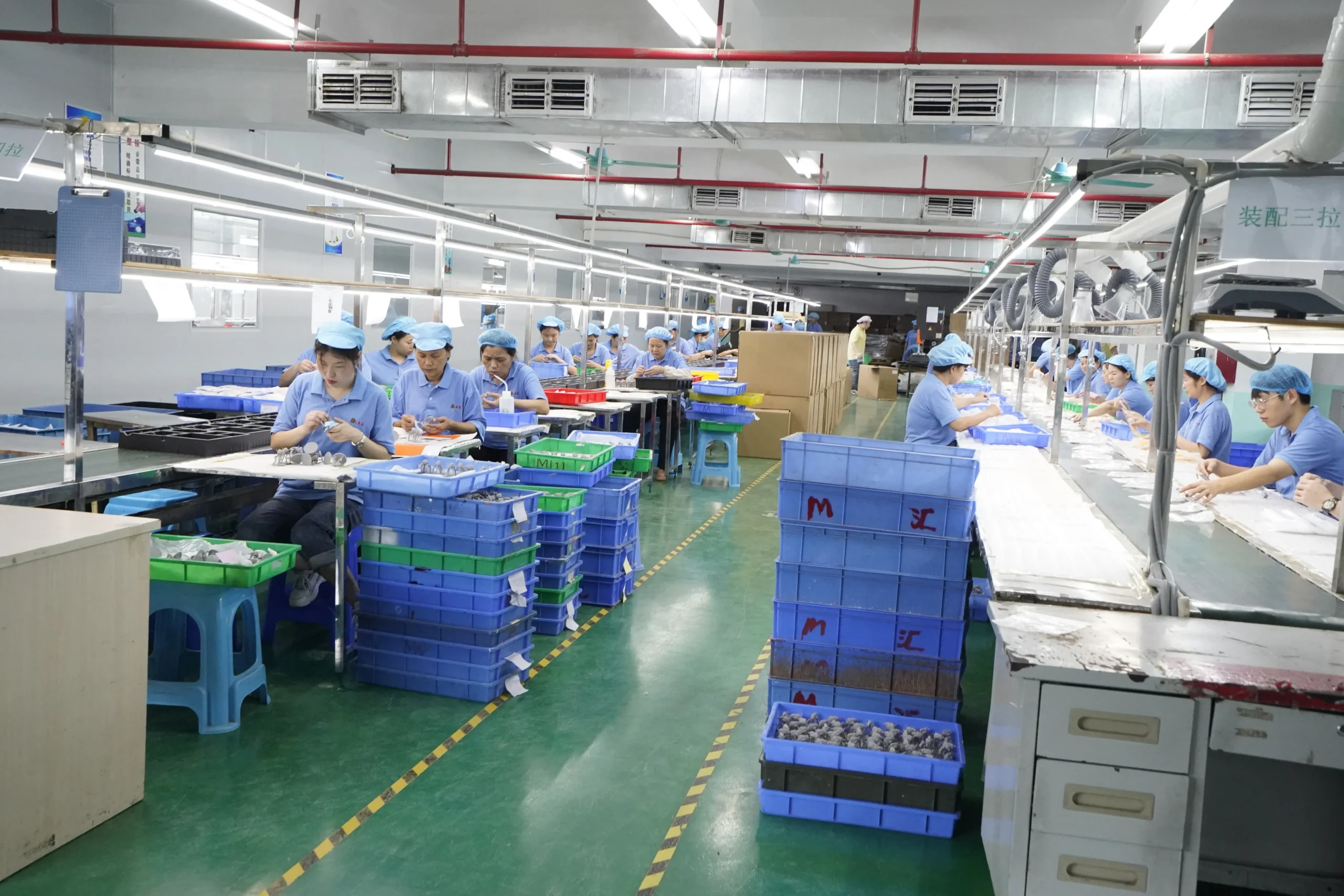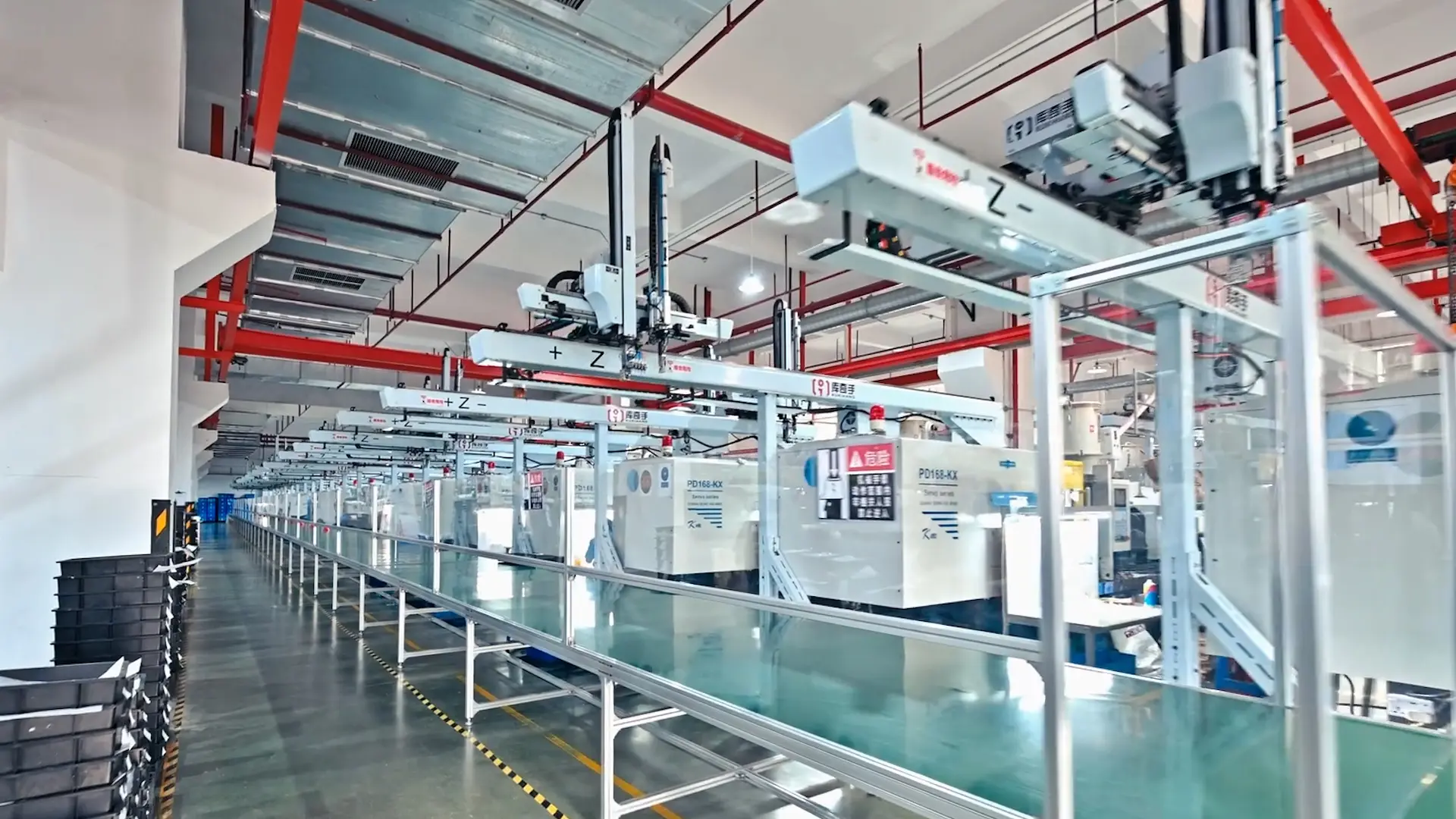

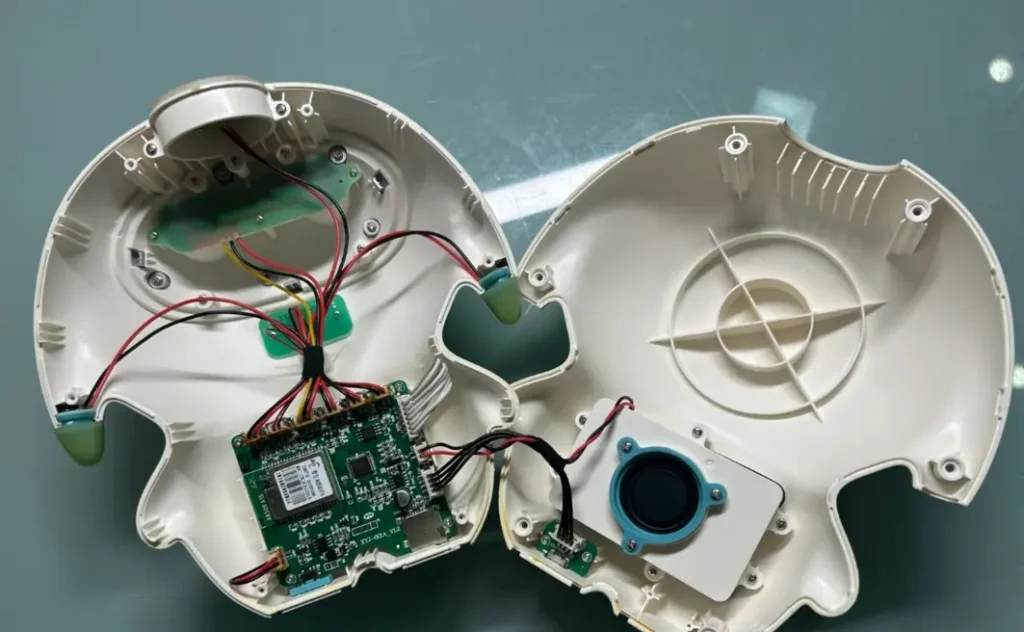
01. Why Does Adding Electronics Make Injection Molded Toys More Difficult?
Traditional Process:
- Plastic materials
- Mold design
- Injection molding
- Appearance quality
- Dimensional consistency
- Surface finishing
- Assembly
Electronic Additional Work:
An electronic toy requires all of these processes plus additional electronic-related work. For example, a character toy with lighting and sound may contain:
- PCB
- LED
- Speaker
- Switch
- Battery holder
- Wiring
- Connectors
- Internal mounting structures
How Are Conventional Injection Molded Toys Different from Electronic Toys?
| Area | Conventional Injection Molded Toy | Injection Molded + Electronic Toy |
|---|---|---|
| Outer Structure | Mainly designed for molding | Also needs space for electronics |
| Internal Space | Relatively simple | Must accommodate PCB, battery, wiring, etc. |
| Screw Bosses | Mainly used for plastic assembly | May also be used to secure electronic components |
| Buttons | Optional structural feature | Must accurately align with internal switches |
| Openings | Mainly for appearance or assembly | May also be required for lights or sound |
| Assembly | Mainly plastic components | Plastic, electronic components, and wiring |
| QC | Appearance, dimensions, assembly | Includes electronic function testing |
| Production Risk | Mainly molding and assembly | Includes both plastic and electronic risks |
“Does the factory have injection molding machines?”
A more important question is:
“Can the factory integrate the injection molded structure and electronic system into a stable mass-produced product?”
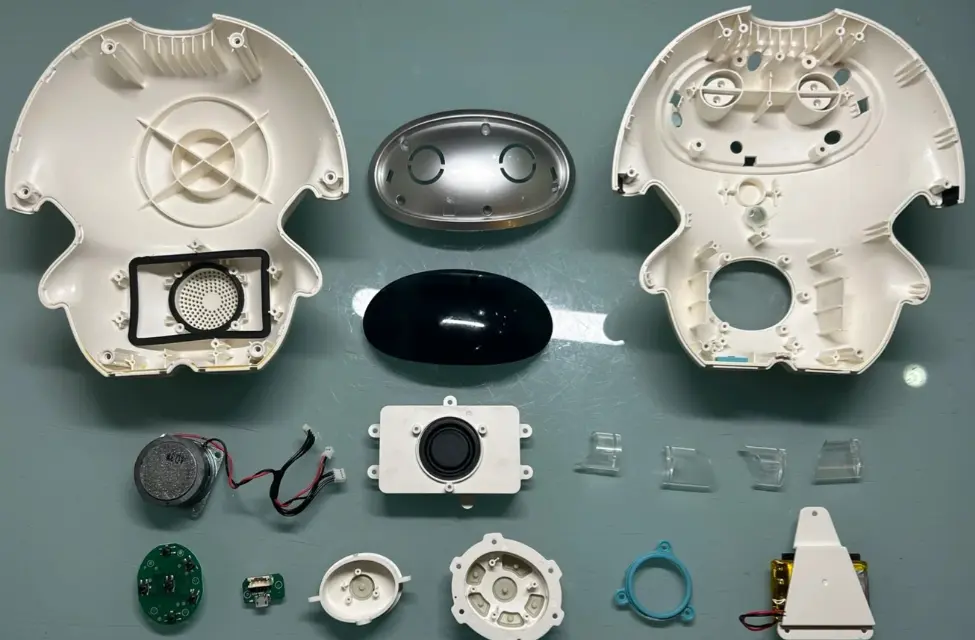
02. Why Should Electronics Be Considered During the Toy Design Stage?
Therefore, the product structure and electronic system should be considered together.
Before mass production, the engineering team normally needs to break the product into several systems.
1. External Plastic Structure
This may include:
- Upper housing
- Lower housing
- Arms / Legs
- Decorative parts
- Buttons
- Lighting windows
- Speaker openings
2. Internal Plastic Structure
This may include:
- PCB mounting posts
- Screw bosses
- Positioning pins
- Clips
- Battery compartments
- Wiring channels
- Internal support structures
3. Electronic System
Depending on the product function, the electronic system may include:
- PCB / LED
- Speaker / Switch
- Battery holder
- Motor / Sensor
- Wiring
- Connectors
4. Final Assembly Relationship
The engineering team also needs to determine:
- Which component is installed first?
- From which direction?
- Where does the wiring pass?
- How is the PCB secured?
- How is the battery installed?
- Can the housing close correctly?
- Can the product be tested?
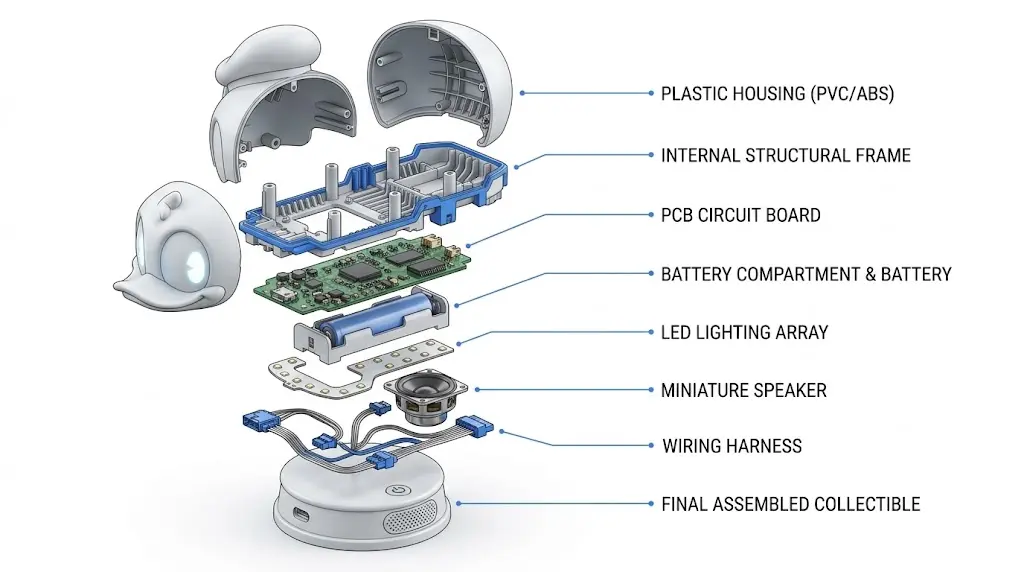
03. How Are Injection Molded Parts Designed to Hold Electronic Components?
How Is a PCB Installed Inside a Plastic Toy?
A PCB may be secured using:
- Screw bosses
- Mounting posts
- Positioning pins
- Clips
- Brackets
The design cannot only consider the PCB’s length and width. The height of the components (tall capacitors, connectors) must also be considered.
- Difficult PCB installation / Assembly
- Interference between components and housing
- Mechanical stress during use
- Damage to electronic components or wiring
How Is a Battery Compartment Designed?
The battery system is another important part of electronic toy engineering. The design may need to consider:
- Battery specification & dimensions
- Positive and negative terminals
- Battery retention & replacement
- Clearance from surrounding components
How Are LEDs Integrated with Plastic Parts?
An LED cannot simply be placed behind a hole in the plastic. For controlled lighting, engineers consider:
- LED position
- Light direction
- Light-transmitting parts
- Light-blocking structures
- Lighting windows
- Plastic thickness
- Internal clearance
Example: If character eyes need to illuminate, the LED position, internal eye structure, and external light-transmitting part need to work together.
Why Does the Speaker Also Require Structural Design?
Sound performance can also be affected by the plastic structure. The speaker needs to be secured, while:
- The internal space
- Speaker opening
- Surrounding structure
…can affect the final sound performance.
04. What Is the Manufacturing Process for Injection Molded Electronic Toys?
For a mass-production project, the overall process can generally be understood as:
The initial project information may include:
If a customer only has concept drawings, an initial engineering evaluation can still be performed.
However, before tooling begins, the product structure and electronic system need to be progressively defined.
The electronic system should be selected according to the actual product functions.
For example, a simple lighting product may only require:
Battery → Switch → LED
A more interactive product may require:
Battery → PCB → Sensor → Motor + LED + Speaker
As the number of functions increases, the relationship between the electronic system and plastic structure generally becomes more complex.
The electronic components need to be considered within the product’s 3D structure.
The engineering team needs to check:
- Whether there is sufficient space
- Whether the PCB can be secured
- Whether the battery can be installed
- Whether wiring has enough routing space
- Whether the housing can close correctly
- Whether buttons can accurately activate switches
- Whether electronic components interfere with plastic structures
Once the structure has been evaluated, mold development can begin.
Electronic products still need to meet standard injection molding requirements such as:
At the same time, internal structures for electronic assembly may need to be incorporated into the mold design.
For example:
PCB positioning posts, screw bosses, battery compartments, clips, and wiring channels can all become part of the injection molded structure.
After the mold is completed, the plastic components enter production.
Depending on the product, additional processes may include:
Dimensional consistency remains important at this stage because electronic assembly can also be affected by plastic part tolerances.
Once the plastic parts are ready, electronic components can be installed.
Depending on the product structure, the assembly sequence may include:
PCB → Wiring → LED → Speaker → Switch → Battery Holder
The electronic components are then installed into the plastic structure.
The exact sequence varies by product.
A suitable assembly sequence should be determined by the actual product structure rather than following a fixed manufacturing template.
This is one of the major differences between electronic toy production and conventional injection molded toy production.
Installing the electronic components does not mean the product is finished.
The product may still need to be checked for:
If a function does not work correctly, the engineering team needs to determine whether the cause is related to:
the electronic component, wiring, PCB, programming, plastic structure, or assembly process.
05. Why Do Electronic Toys Require Functional Testing?
Therefore, quality control for electronic toys should not stop at appearance inspection.
What Should Be Tested on an Electronic Toy?
| Test | Main Purpose |
|---|---|
| Power Test | Check whether the product starts correctly |
| Button Test | Check button response |
| LED Test | Check lighting functions |
| Sound Test | Check speaker and sound functions |
| Motor Test | Check motor movement |
| Battery Test | Check power supply stability |
| Wiring Test | Check electrical connections |
| Assembly Test | Confirm electronic components are installed correctly |
| Repeated Function Test | Check whether functions remain stable after repeated operation |
06. Why Should the Budget for an Electronic Toy Not Be Based Only on Plastic Cost?
| Cost Area | Main Cost Factors |
|---|---|
| Injection Mold | Product structure, size, steel, mold complexity |
| Plastic Parts | Material, weight, color, surface treatment |
| PCB | Electronic functions and system complexity |
| Electronic Components | LED, speaker, motor, sensor, etc. |
| Battery System | Battery type and installation structure |
| Assembly | Plastic and electronic assembly complexity |
| Programming | Functional logic and control requirements |
| Testing | Test requirements and testing time |
| Packaging | Product structure and electronic protection requirements |
07. How Can You Tell Whether a Factory Really Has Electronic Toy Manufacturing Experience?
This is an important question for B2B buyers.
Many factories may state: “We can make electronic toys.”
However, being able to purchase electronic components does not necessarily mean that a factory has the engineering and mass-production capability required for electronic toys.
When evaluating a manufacturer, several areas are worth checking.
1 Look at Real Product Examples
This is one of the most direct ways to evaluate experience.
Instead of only checking whether a factory owns injection molding machines, look at:
- What electronic products has the factory actually produced?
- What functions did they include?
- How were the electronic components integrated?
- Are there examples of internal structures?
- Was the product mass-produced?
- Can the manufacturer explain the production and testing process?
A factory may have extensive injection molding equipment, but that alone does not demonstrate experience in developing and mass-producing electronic toys.
2 Evaluate the Engineering Capability
Electronic toys are not purely electronic products, and they are not purely plastic products.
A successful mass-production project requires engineers to understand the relationship between:
For example:
This is why engineering capability matters.
08. Why Can Large-Brand Factory Verification Experience Be a Useful Reference?
The reason is that an electronic product failure is not simply an appearance defect.
- The light does not work
- The sound does not work
- The button fails
- The product cannot start
- The interactive function does not respond
For large brands, these problems can also affect consumer experience, after-sales costs, and brand reputation.
This is why major brands can place strong emphasis on:
Why Is Disney Factory Authorization & Verification Experience Relevant?
MIHOX has experience with Disney factory authorization and verification requirements.
“Every product manufactured by MIHOX is a Disney product.”
Nor should a factory verification experience be treated as a blanket statement that every future product automatically meets every brand-specific requirement.
The relevant point is that large global brands typically apply structured requirements to their manufacturing supply chains, including areas such as factory management, quality control, production processes, and compliance.
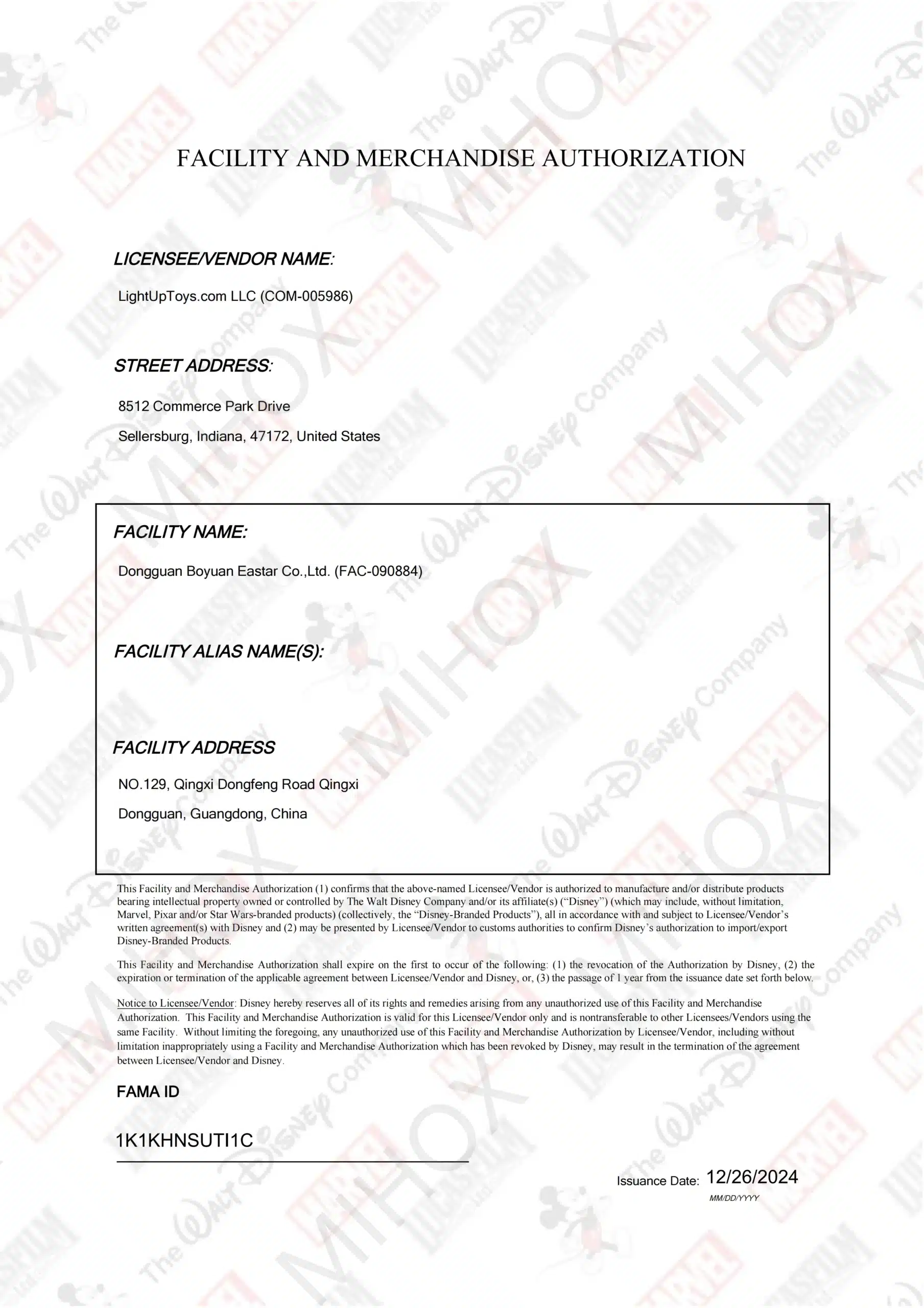
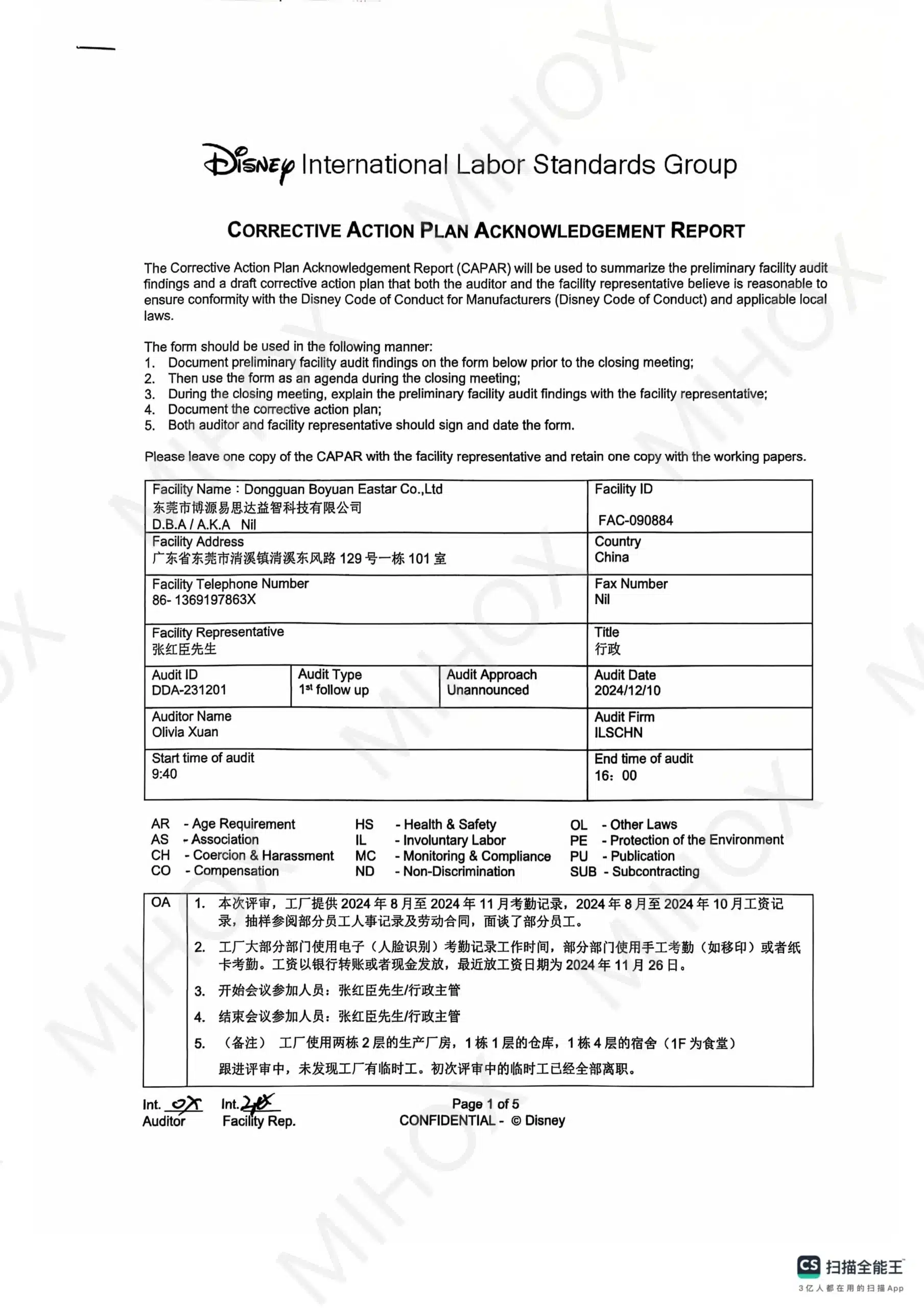
Therefore, for brands looking for an electronic toy manufacturer, reviewing a supplier’s real production cases, factory verification experience, third-party audits, quality systems, and testing processes can provide more useful information than simply looking at the number of injection molding machines a factory owns.
09. How Does MIHOX Handle Injection Molding and Electronic Integration?
MIHOX’s manufacturing capability is not limited to injection molding alone.
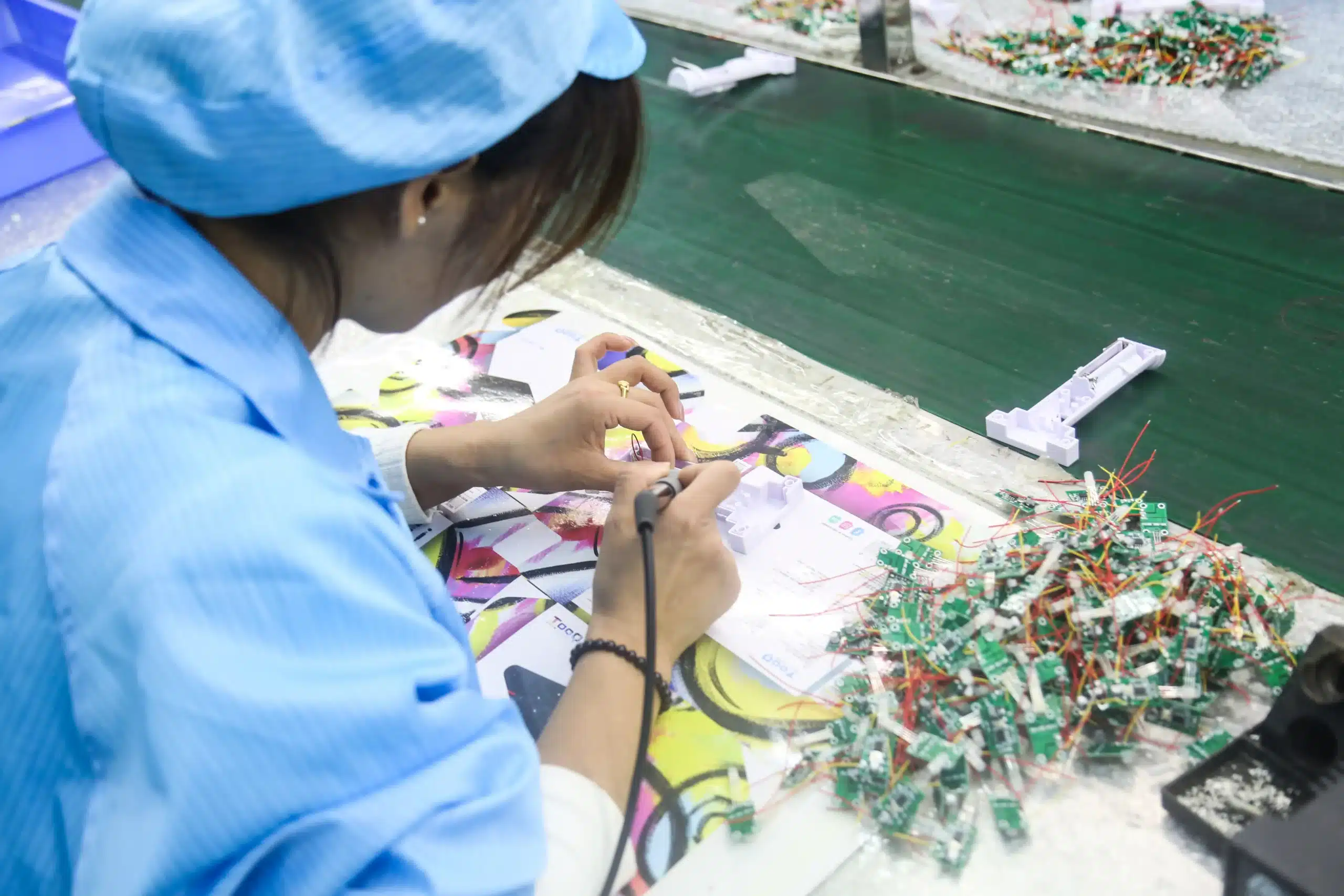
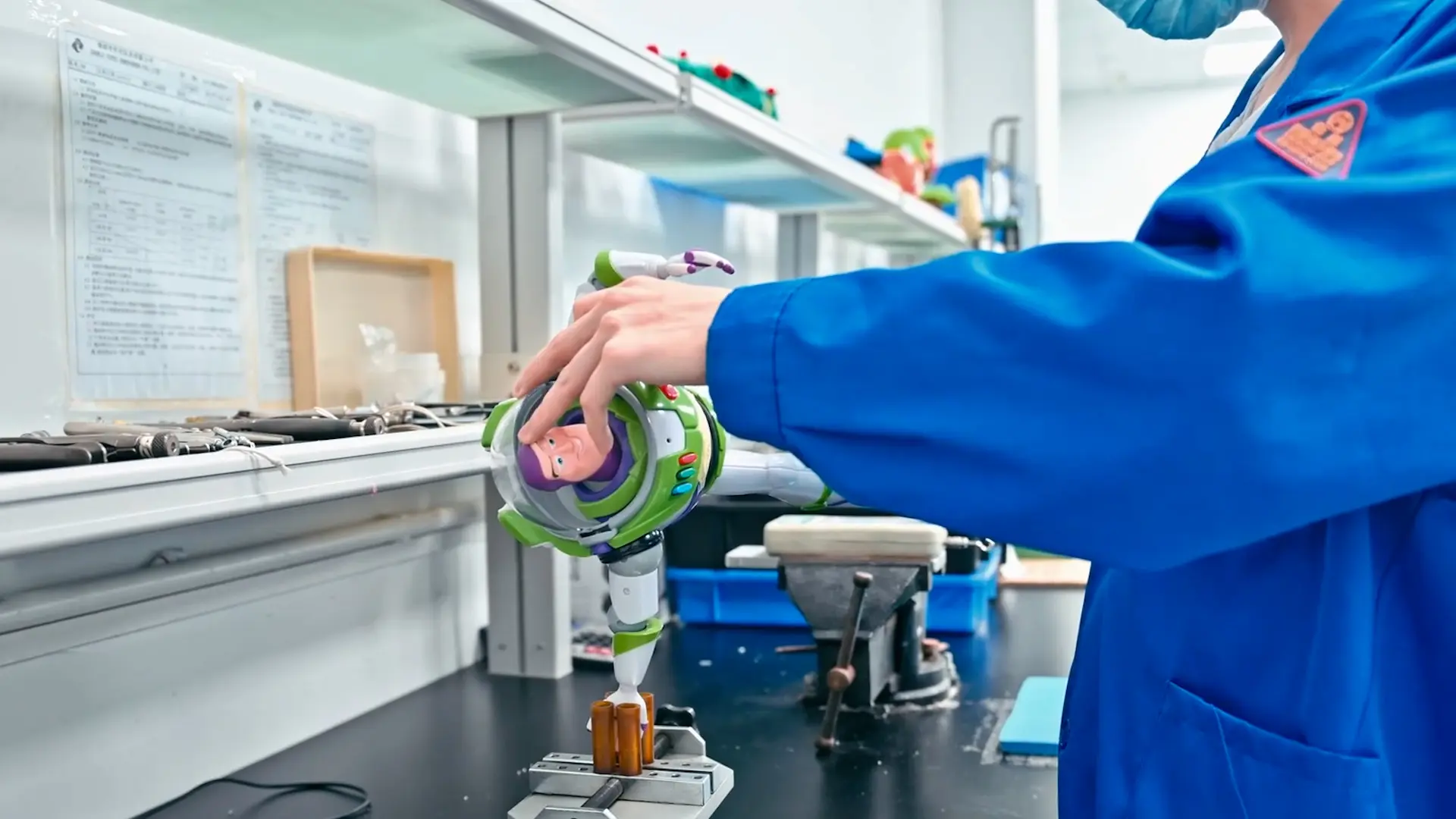
For projects that require injection molding and electronic integration, the manufacturing process needs to cover plastic structures, electronic components, assembly, and functional inspection.
On the plastic side:
- PVC injection molding
- ABS injection molding
- Plastic housings
- Internal structural components
- Electronic component mounting structures
Electronic integration involves:
- PCB
- LED
- Speaker
- Motor
- Switch
- Sensor
- Battery components
- Wiring
This is one of the main differences between electronic integrated toys and conventional injection molded products.
The two manufacturing processes cannot simply be treated as separate operations. They need to be considered together from the product engineering stage.
MIHOX has manufacturing capabilities covering injection molding, tooling, engineering, electronic integration, assembly, and mass production. This allows electronic component installation and plastic structural requirements to be evaluated together for B2B custom projects.
For brands, IP owners, designers, and product teams developing products for mass production, this integrated approach is important because the final requirement is not simply a plastic component or an electronic component.
The requirement is a complete product that can be manufactured consistently and delivered at production scale.
10. What Electronic Functions Can Be Added to Injection Molded Toys?
Electronic integration does not necessarily mean that every product requires a complex electronic system.
Different functions can be selected according to the product concept, target market, and required user experience.
Lighting Functions
- LEDs
- Flashing lights
- Static lighting
- Multiple lighting effects
Sound Functions
- Sound effects
- Music
- Voice
- Character sounds
Motor Functions
- Rotation
- Vibration
- Moving parts
Button Functions
- Lighting trigger
- Sound trigger
- Movement trigger
- Interactive modes
Sensor Functions
- Touch sensors
- Motion sensors
- Proximity sensors
Multiple Interactive Functions
More complex electronic toys may combine:
11. Five Common Problems in Injection Molded Electronic Toy Development
Problem 1 Developing the Mold Before Considering the Electronics
This is one of the more common development mistakes.
For this reason, the electronic system should ideally be considered before tooling begins.
Problem 2 Assuming That a Working Prototype Means Mass Production Will Be Fine
A working prototype only proves that the prototype works. Mass production requires a different question:
This requires a stable assembly process and appropriate testing procedures.
Problem 3 Focusing on the Electronics Without Considering the Plastic Structure
The electronic component itself may work correctly, but an unsuitable plastic mounting structure can still cause:
Electronic components and plastic structures therefore need to be evaluated together.
Problem 4 Performing Only Appearance Inspection
This is one of the most important issues to avoid in electronic toy manufacturing.
A product can have a perfect appearance and still have a functional failure.
Problem 5 Comparing Only the Unit Price
The cost of an electronic toy cannot be evaluated only by the price of the plastic components.
If a low-cost quotation does not properly account for:
the final project cost may not actually be lower.
12. What Information Should a Customer Prepare for an Injection Molded Electronic Toy Project?
The following information is recommended:
A project does not necessarily need to have complete engineering files at the very beginning.
An initial evaluation can often start with reference images, approximate dimensions, functional requirements, and estimated production volume.
However, before tooling and mass production begin, the product structure, electronic system, and final assembly method need to be progressively confirmed.
13. What Should Be Confirmed Before Mass Production?
| Manufacturing Stage | Key Question | Main Risk |
|---|---|---|
| Product Design | Where will the electronic components be installed? | Insufficient internal space |
| 3D Engineering | How will the components be secured? | Unstable assembly |
| Mold Development | Is the structure suitable for injection molding? | Mold modification |
| Injection Molding | Are plastic dimensions consistent? | Assembly tolerance issues |
| Electronic Assembly | Are the components and wiring connected correctly? | Functional failure |
| Debugging | Do all functions work correctly? | Intermittent problems |
| Final Assembly | Does the complete product function correctly? | Assembly-related failure |
| Mass Production | Can all units maintain consistent performance? | Batch-level defects |
14. What Does Real Electronic Toy Manufacturing Capability Actually Mean?
Once electronics are added to an injection molded toy, the manufacturing logic changes.
The main difficulty is not necessarily the complexity of an individual electronic component.
The real challenge is that multiple manufacturing systems need to work correctly at the same time:
Most importantly, the entire process needs to work not only for one prototype, but also for thousands or tens of thousands of production units.
The manufacturing capability required for an injection molded electronic toy can therefore be summarized as:
All five areas can affect the final product.
Expert Advice for B2B Buyers
For brands, IP owners, designers, and product teams looking for a B2B custom electronic toy manufacturer, it is useful to ask more than:
Ask:
“What similar products have you actually produced?”
“How are the electronic components integrated with the plastic structure?”
“How are electronic functions tested during mass production?”
“Does the factory have relevant factory verification or third-party audit experience?”
“Can you provide real examples of injection molded electronic toys?”
Frequently Asked Questions About Injection Molded Electronic Toys
1. Can injection molded toys be designed with electronic functions?
Yes. Injection molded toys can be designed with LED lighting, sound, motors, buttons, sensors, battery-powered functions, and other electronic features.
However, the electronic system should ideally be considered during the structural design stage rather than being added after the plastic components have already been manufactured.
2. How are electronic components installed inside an injection molded toy?
Electronic components can be installed using PCB mounting posts, screw bosses, positioning pins, clips, battery compartments, wiring channels, and other internal plastic structures.
The exact structure depends on the dimensions and requirements of the PCB, battery, speaker, LED, switch, motor, sensor, and other components.
3. What electronic functions can be added to custom injection molded toys?
Common functions include LED lighting, sound, music, voice, motors, vibration, buttons, sensors, and battery-powered interaction.
Several functions can also be combined, such as:
The complexity of the electronic system depends on the required product functions.
4. How are electronic toys tested before mass production?
Testing depends on the actual functions of the product.
Common tests include power-on testing, button testing, LED testing, sound testing, motor testing, battery testing, wiring inspection, assembly checks, and repeated function testing.
The final testing procedure should be developed according to the actual product rather than using exactly the same test procedure for every electronic toy.
5. How should I choose a custom electronic toy manufacturer?
Start by reviewing real mass-production cases, engineering capability, injection molding capability, electronic integration experience, functional testing procedures, and factory audit or verification experience.
Conclusion
Combining injection molding with electronics changes the manufacturing logic of a toy.
For a mass-production project, the important question is therefore not simply whether electronic components can be placed inside a plastic housing.
The more important questions are:
- Can the system be designed correctly?
- Can the components be assembled consistently?
- Can the functions be properly debugged and tested?
- Can the entire process remain stable when production scales from a prototype to thousands or tens of thousands of units?
That is the real manufacturing challenge behind injection molded electronic toys.