
When it comes to action figure joint design, durability is the ultimate bridge between a great sculpt and a long-lasting collectible. After spending over two decades on the front lines of a high-end action figure manufacturing facility, I’ve learned one thing for certain: a beautiful sculpt might get a customer to buy once, but a durable, high-quality joint keeps them coming back to your brand.
This guide explores how to optimize action figure joint design using POM/ABS material pairings, “steel-safe” mold tolerances, and ASTMF963 compliance to ensure premium structural integrity in OEM production.
For many B2B clients—whether you are an emerging IP owner or an established toy brand—the most frustrating experience is seeing your premium collectible suffer from “loose joints” or, worse, snapping in a customer’s hands. It’s a heartbreaking way to lose brand equity. In the world of OEM figurine production, durability isn’t just a buzzword; it’s a calculated science involving tribology, material fatigue, and precision injection molding. Today, I want to pull back the curtain and share how we, as engineers, optimize joints to survive the transition from a digital model to a long-lasting, poseable work of art.
1. The Mechanics: Balancing Articulation and Integrity
When designing custom action figures, we face a constant tug-of-war between “range of motion” and “structural strength.” More movement usually means smaller, more delicate parts.
The “Big Five” Joint Architectures
In our factory, we categorize almost every movement into five basic mechanical models. Understanding these is the first step to optimizing your toy’s life cycle.
- Swivel Joints: The simplest, yet most prone to shearing.
- The Engineer’s Secret: We never design a perfectly cylindrical peg. Instead, we use a “stepped peg” design with a 2mm radius (R-angle) at the base. This redistributes stress and prevents the peg from snapping off under torque.
- Ball Joints: The soul of poseability.
- The Fix for “Popping Off”: Most ball joint failures occur because the socket stretches over time. For high-quality collectible manufacturing, we now implement a “Dual-Layer Socket.” The outer shell provides rigid support, while an inner POM sleeve maintains the friction.
- Ratchet Joints: Essential for large, heavy figures (like 1/6 scale mecha).
- Masterclass Tip: Never use cheap plastic-on-plastic ratchets. We use a combination of Cold-Drawn Stainless Steel springs and POM gears. This creates that satisfying “click” that won’t wear down even after thousands of poses.
| Joint Type | DoF (Degrees of Freedom) | Mechanical Principle | Main Durability Challenge | Engineering Recommendation |
| Swivel | 1 | Peg-in-hole rotation | Shear stress at the base | Increase R-angle; use heterogenous materials |
| Ball | 3 | Friction-fit sphere | Material fatigue/looseness | Insert POM bushings or use In-situ molding |
| Ratchet | Incremental | Mechanical interference | Tooth wear & spring decay | Optimize tooth slope; use high-fatigue alloys |
2. Material Science: The “Golden Match” of POM and ABS
In mass-market toy production, many factories try to save costs by using a single plastic type for the whole figure. From an engineering standpoint, this is a devastating mistake.
Why POM is the King of Joints
In my experience, POM (Polyoxymethylene) is irreplaceable. It is what we call a “self-lubricating” plastic.
- Technical Edge: POM has a low friction coefficient (0.15 – 0.25). When used for joints, it ensures smooth rotation without creating that annoying “plastic dust” that leads to loose limbs.
- Avoiding “Molecular Welding”: If you rub two ABS parts together at high frequency, the friction creates heat that can actually “weld” the parts together, causing the joint to seize. This is why we always pair a POM peg with an ABS socket.
Physical Properties of Common Toy Materials:
| Property | POM (Polyoxymethylene) | ABS (Acrylonitrile Butadiene Styrene) | PVC (Polyvinyl Chloride) |
| Tensile Strength | 60 – 75 MPa | 30 – 50 MPa | 35 – 55 MPa |
| Friction Coeff. | 0.15 – 0.25 (Self-lubricating) | 0.45 – 0.60 | 0.35 – 0.55 |
| Fatigue Resistance | Extremely High | Low | Moderate |
| Best Application | Joint cores, gears, ratchets | Outer shells, torsos | Soft skins, hair, capes |
3. Tooling Expertise: The “Invisible” Manufacturing Details
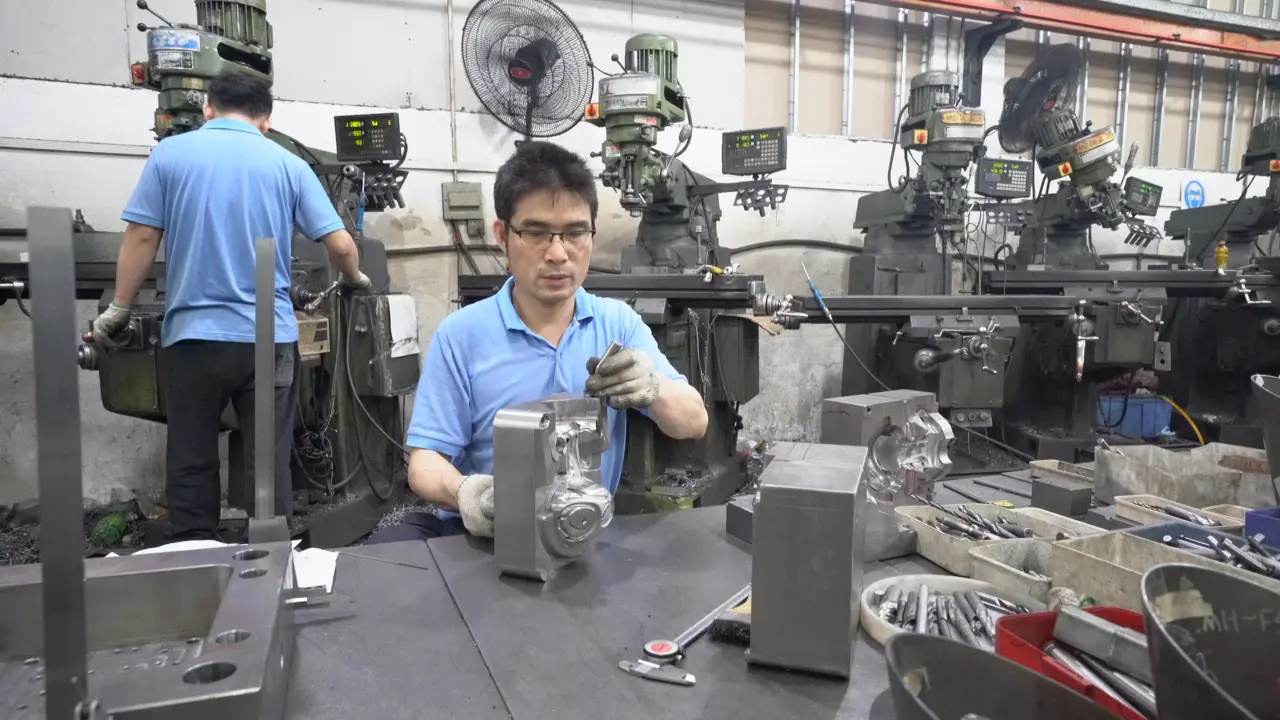
As a procurement manager, you might not see the mold, but you see its results. We follow the “Steel Safe” principle to ensure every batch is consistent.
- Tolerance Micro-Adjustment: We design molds with “safe” margins—making pegs slightly larger and holes slightly smaller. After the first test shot, we shave the steel mold by microns to find that perfect, buttery-smooth friction.
- Gate Positioning: The “gate” is where the molten plastic enters the mold. If a factory places a gate at the neck of a joint, they are creating a weak point. We strategically place gates in thick, hidden areas to eliminate stress whitening (crazing) and structural voids.
- In-Situ Molding (The Game Changer): Instead of molding parts separately and forcing them together (which creates assembly stress), we use In-Situ Molding. We mold the high-melting-point POM core first, then mold the second material around it. The natural shrinkage during cooling creates a perfect, zero-stress fit.
4. Environmental Defense: Making Collectibles That Last Decades
Durability isn’t just about not breaking; it’s about not degrading. For long-term display, UV light and temperature are the enemies.
- UV Stabilization: We add 0.2% – 0.5% UV stabilizers to our resins. This prevents the plastic from becoming brittle and “cookie-like” after being on a shelf for a few years.
- Plasticizer Migration: In PVC production, we use high-grade, non-migratory stabilizers. This ensures your figure doesn’t become “sticky” or “oily” over time—a common complaint in custom toy manufacturing.
5. Quality Control: Quantifying Durability via B2B Standards
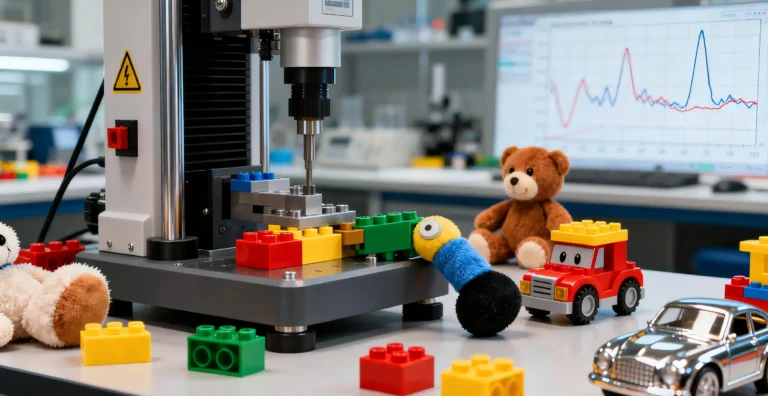
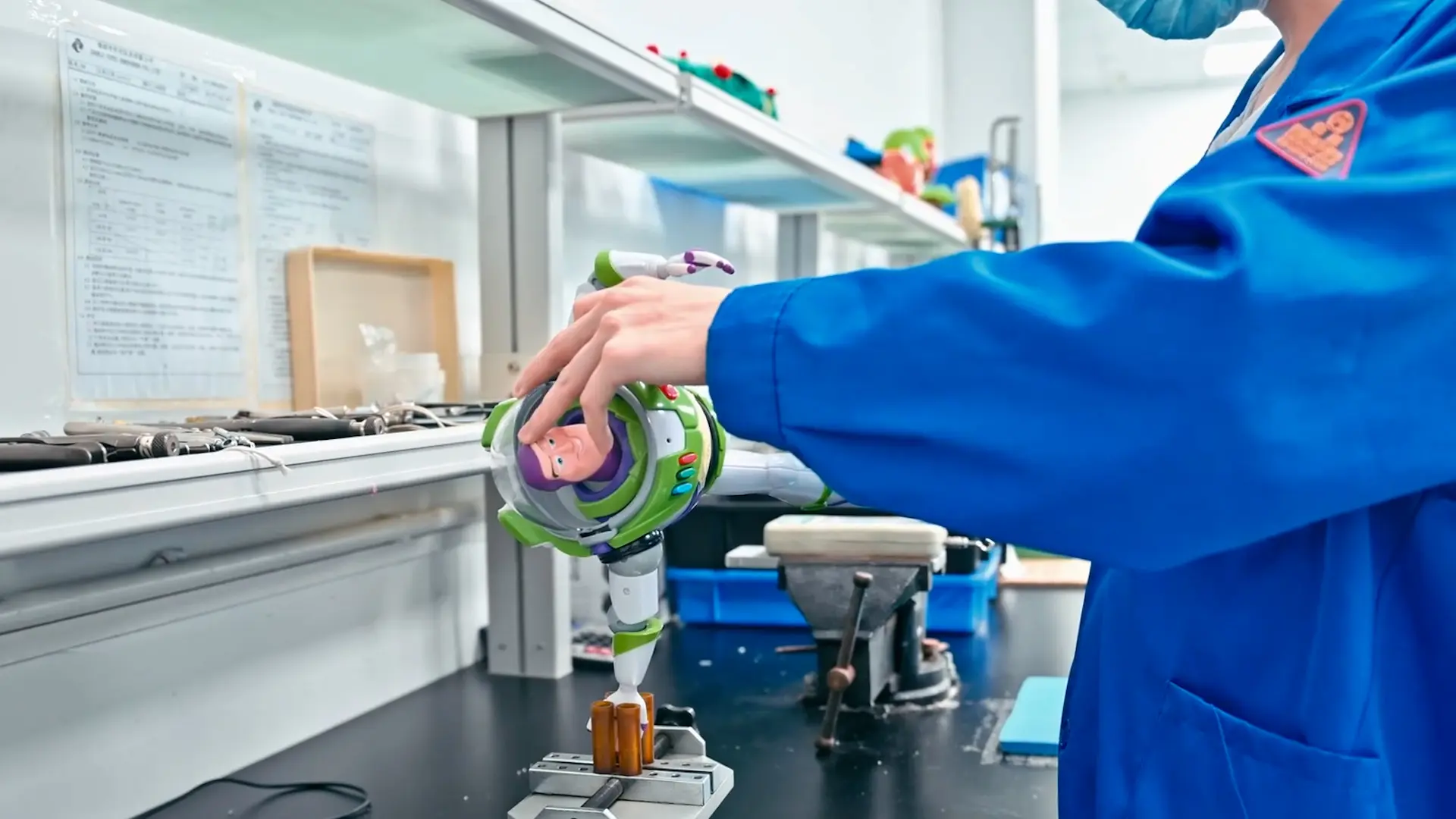
We don’t guess if a joint is strong; we prove it. For our B2B partners, we follow strict ASTM F963 and EN71 protocols. Before we ship a single box, our prototypes undergo:
- Tension Testing: Applying a constant force of 90N (approx. 9kg) for 10 seconds to ensure no parts detach.
- Cycle Testing: A robotic arm poses the joint through 2,000 full-range cycles. A passing grade means the friction loss is less than 20%.
- Torque Testing: Ensuring that even if a user forces a joint the wrong way, the internal peg won’t snap under 0.45Nm of torque.
6. Professional Advice for Brand Managers & Buyers
If you are looking for a reliable action figure factory for bulk custom figurines, here are three questions that will immediately separate the pros from the amateurs:
- Ask about the friction pair: “Do you use POM-on-ABS for the high-friction joints?”
- Ask about the gate locations: “How do you ensure the injection gates aren’t located on high-stress pivot points?”
- Ask for the lab reports: “Can you provide ASTM F963 tension and torque test results for the final assembly?”
Conclusion: Engineering as a Competitive Advantage
In the booming “Kidult” market, consumers are willing to pay a premium for quality. A joint is a small detail, but it’s the difference between a product that is “played with” and a product that is “passed down.”
As a factory with 20 years of experience, we believe that revolutionary toy design begins with a respect for the 0.01mm tolerance. Whether you are looking for small batch action figure production or large-scale OEM services, our engineering team is here to ensure your IP has the structural integrity it deserves.
Ready to build something that lasts? Contact our engineering team today for a technical review of your next project.