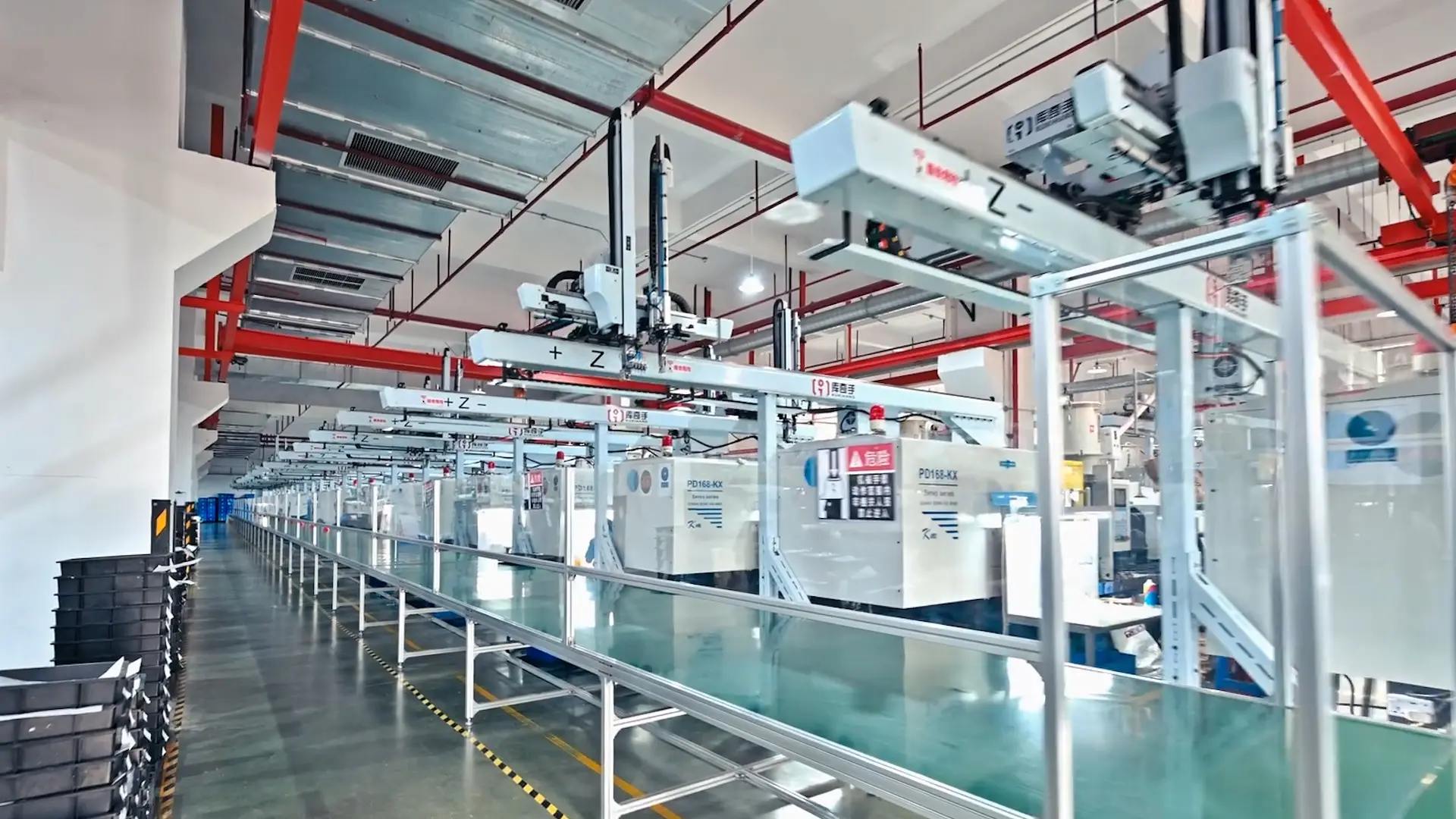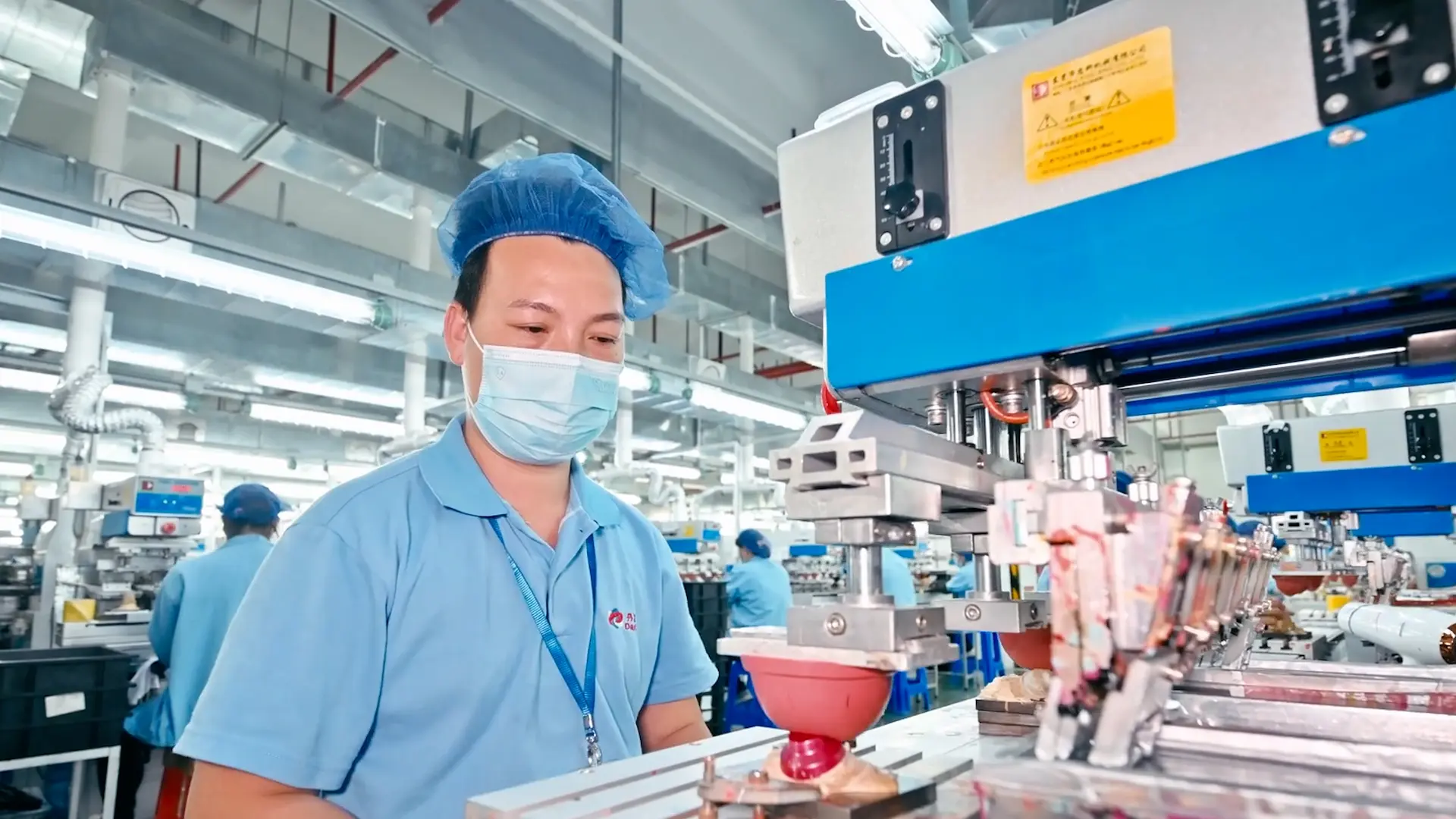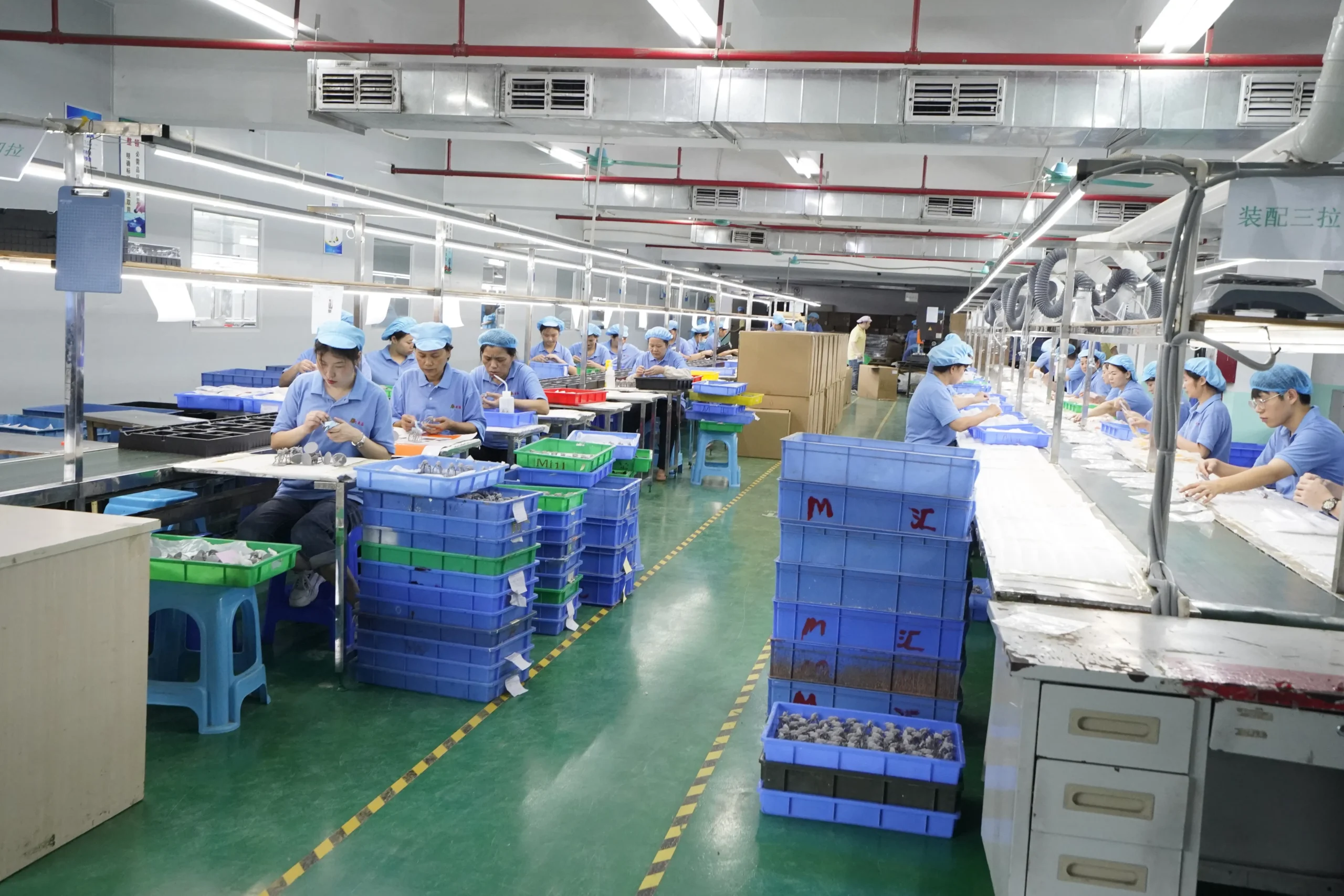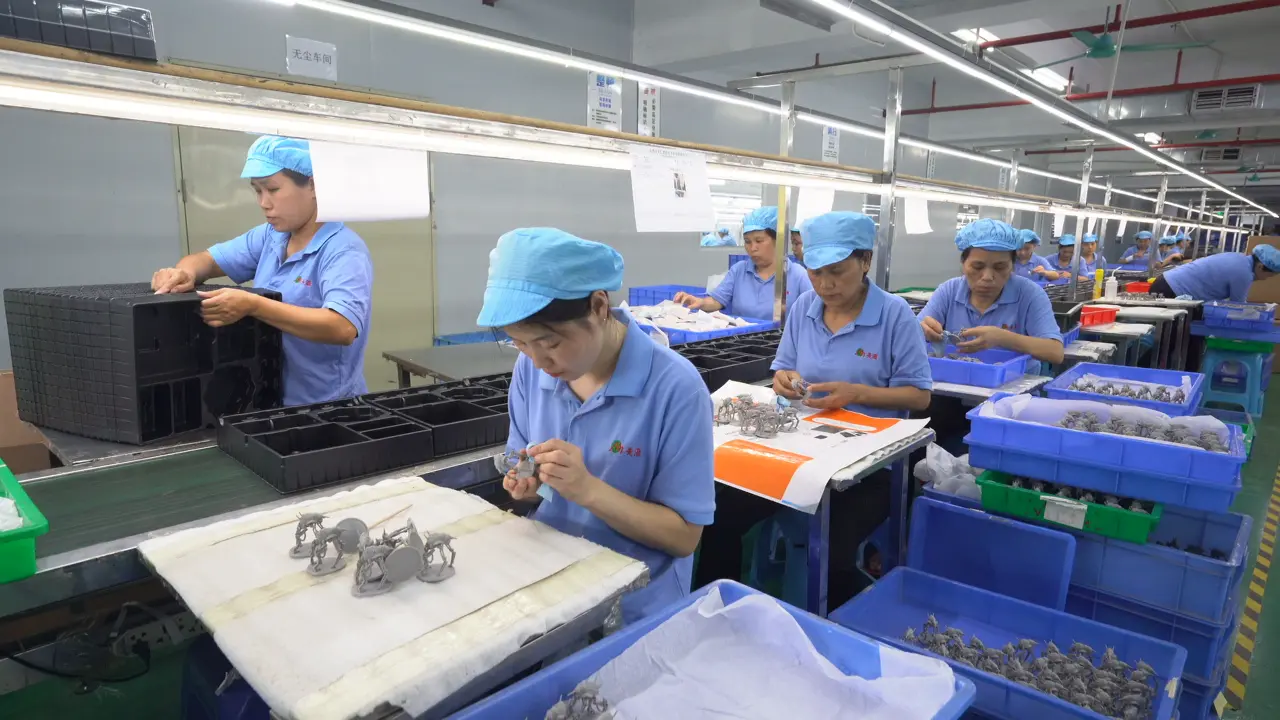
Walk through any designer toy convention or high-end collectible gallery, and your eyes will inevitably freeze on a specific type of piece.
It is the figure that catches the overhead spotlight with a mirror-like chrome shine, casting crisp reflections of the crowd onto its surface. Whether it is a liquid-gold robot, a iridescent rainbow vacuum-plated bear, or a polished silver space traveler, electroplated art toys possess a hypnotic visual power. They look expensive. They feel futuristic. They stand out on a display shelf like a polished diamond in a pile of river rocks.
It is no surprise that brand owners, IP creators, and toy executives constantly come to our office asking the exact same question: “Can we do a limited electroplated chrome run for our next figure drop?”
As manufacturing veterans behind the scenes at MIHOX, our answer is always: “Yes, we can definitely do it—but you need to understand what happens on the factory floor before you sign off on that purchase order.”
On a computer screen or in a digital 3D render, swapping a standard matte acrylic paint coat for a mirror chrome finish takes about two clicks of a mouse button. In the physical realm of factory production, that single finish swap completely transforms the manufacturing equation.
Electroplating non-conductive plastic toys turns standard painting protocols on their head. It demands cleanroom environments akin to semiconductor fabrication, forces mold makers to achieve mirror-grade cavity polishes, and introduces yield rate risks that can make unprepared brand managers break out in a cold sweat.
If you are evaluating electroplated finishes versus standard spray-painted finishes for your upcoming collectible line, this guide is written for you. We are going to strip away the marketing hype and examine the raw material physics, chemical processes, defect risks, tolerance math, and cost realities of electroplated figures.
What Is the Core Difference? Mechanical Paint vs Chemical Vapor & Plating Layers
To understand why electroplated figures present such severe production hurdles, we need to look at how these two surface treatments attach to physical plastic substrates like ABS, PVC, Resin, and Soft Vinyl.
How Standard Figure Finishing Works
When we produce a standard painted collectible figure, the surface treatment is primarily a mechanical and physical coating process:
- Substrate Preparation: The raw molded plastic piece (such as injection-molded ABS or slush-cast PVC) is cleaned to remove mold release oils.
- Primer Layer: A neutral white or grey primer is sprayed onto the raw plastic to seal surface pores and provide a uniform color base.
- Color Coats: Workers use liquid acrylic or polyurethane paints applied via airbrushing, automated spraying, or pad printing to add colors, gradients, and fine graphic details.
- Protective Topcoat: A final transparent clear coat (matte, satin, or gloss) is sprayed over the paint to protect against UV fading, surface scratches, and hand oils.
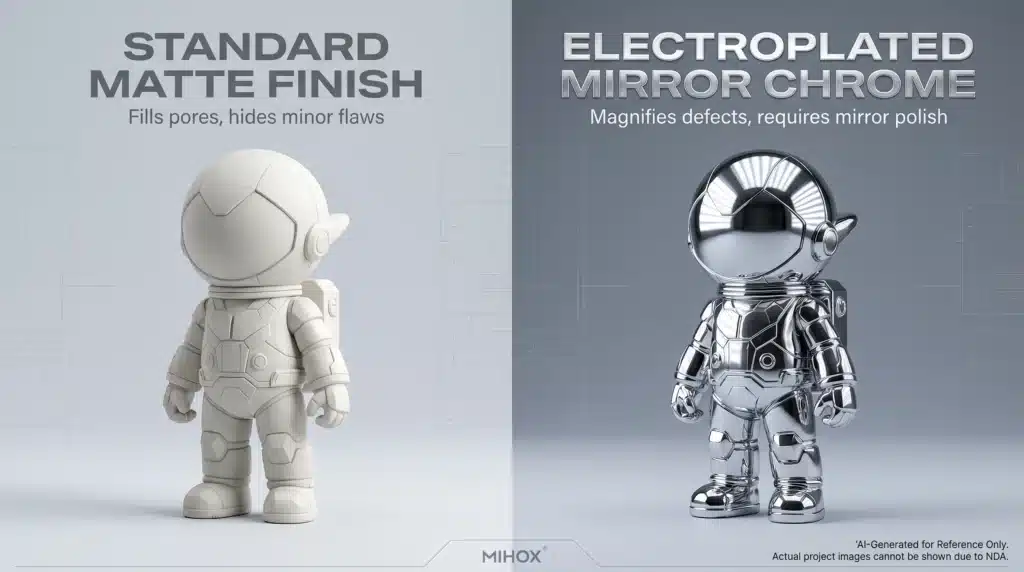
Standard paint coatings carry a physical thickness of roughly 15 to 30 microns. This layer is thick enough to fill microscopic surface imperfections in the plastic. If a raw plastic piece has a tiny micro-scratch or subtle surface roughness, a good primer and two coats of matte paint will comfortably hide it.
How Electroplating & Vacuum Metallization Work on Toys
Plastics like ABS, PVC, and Resin are electrical insulators. You cannot simply drop a plastic toy into an electroplating bath filled with dissolved metal ions and turn on an electric current; the metal will not adhere to an uncharged plastic surface.
To create that brilliant mirror-finish on designer toys, factories utilize Vacuum Metallization (PVD – Physical Vapor Deposition) or a multi-stage Electroless Chemical Plating + Electroplating process:
- Ultra-Smooth Basecoat Application: The raw plastic parts are sprayed with a specialized, high-gloss UV-curable basecoat resin. This layer must flow out perfectly flat to create a glass-like surface.
- UV Curing: The basecoat is cured under intense ultraviolet light to form an ultra-hard, non-porous foundation.
- PVD Vacuum Chamber Sputtering: The parts are mounted onto rotating trees inside a sealed vacuum chamber. Target metals (such as high-purity aluminum, chromium, or nickel) are vaporized using thermal evaporation or magnetron sputtering. The vaporized metal atoms travel in straight lines and deposit onto the rotating plastic parts, forming a pure metallic film only 0.1 to 0.5 microns thick.
- Tinted Topcoat & Protection: Because the vaporized metal layer is microscopic, it is vulnerable to oxidation and abrasion. Workers spray a protective clear coat over the metal film. If you want a gold, rose gold, or anodized red metallic finish, we mix transparent color dyes directly into this protective topcoat.
Here is the kicker: because the metallic vapor film is less than 1 micron thick, it conceals zero flaws. In fact, a mirror-reflective surface acts as an optical amplifier. A dust particle invisible to the naked eye on a raw plastic mold will look like a giant crater once the chrome film is applied.
The 6 Critical Production Challenges of Electroplated Figures
Now that we’ve covered the underlying chemistry, let’s examine the real-world manufacturing nightmares that pop up on the factory floor when producing electroplated collectibles.
1. The Zero-Dust Obligation: Microscopic Specks Become Craters
In standard spray painting, a minor airborne dust speck during the basecoat phase can often be lightly sanded down or covered by subsequent paint layers. In electroplating, airborne dust is the ultimate production killer.
When a part receives its high-gloss UV basecoat prior to entering the vacuum metallization chamber, any micro-particle of dust resting on the surface breaks the surface tension of the liquid lacquer. The lacquer flows around the dust particle, creating a microscopic ring. Once the mirror-chrome vapor deposits over that ring, light reflects off it in every direction. What was an invisible 5-micron dust speck becomes a glaring, ugly white ring or bump on your character’s forehead.
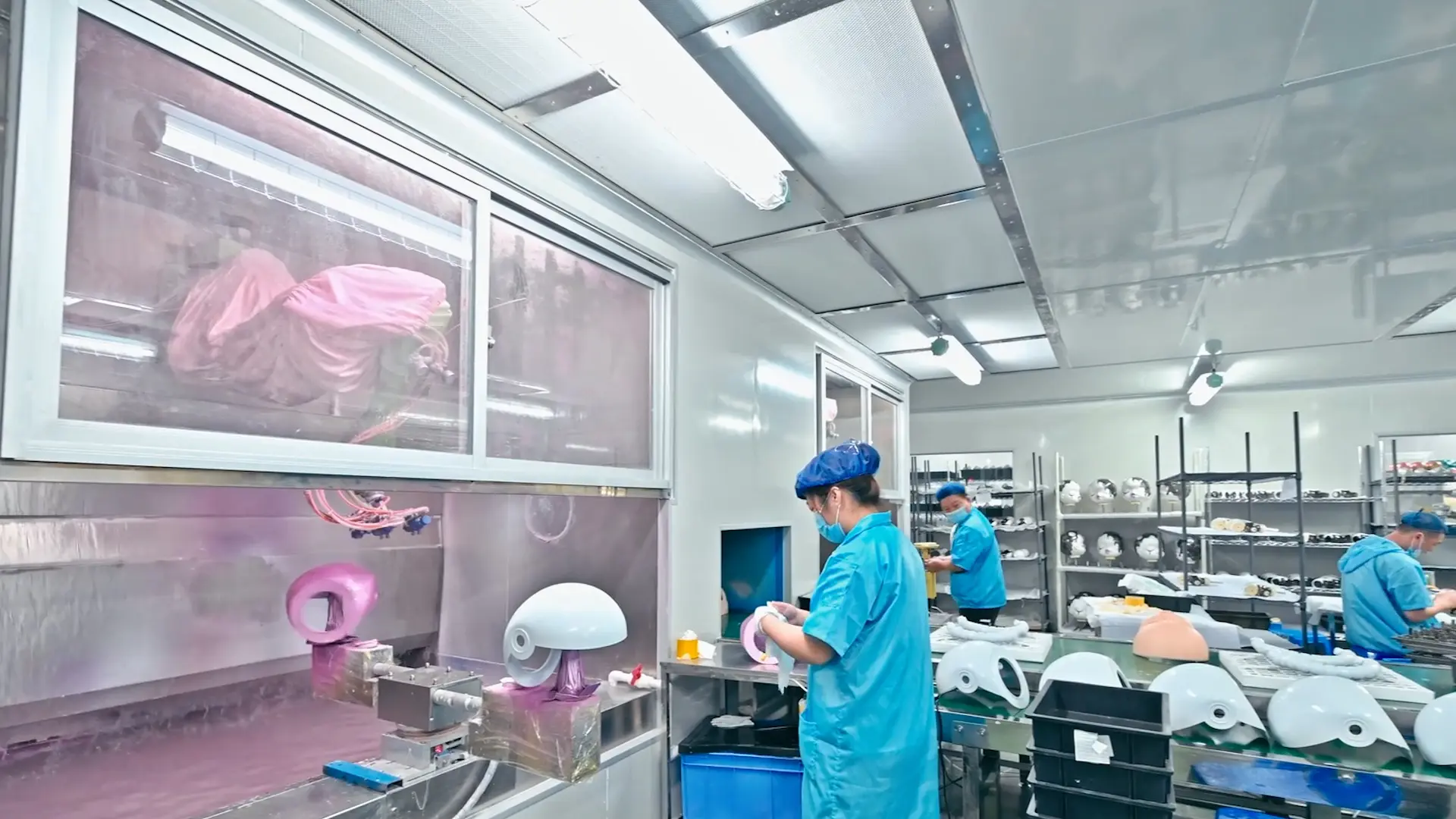
To prevent this defect, electroplating lines cannot run in standard factory workshops. They require Class 10,000 (ISO 7) or Class 1,000 Cleanrooms equipped with:
- Positive-pressure HEPA air filtration systems.
- Automated de-ionization air knives to neutralize static charges on raw plastic parts.
- Full bunny-suit protective gear for all operators.
- Automated robotic spray arms to eliminate human skin-flake contamination.
If a factory attempts to electroplate figures in a standard open-air spraying shop, their scrap rate will easily climb past 50%.
2. Outgassing & Substrate Rejection: ABS vs. PVC vs. Resin
Not all plastic materials accept electroplated finishes equally well. Picking the wrong plastic substrate for an electroplated figure is one of the quickest ways to ruin a production run.
ABS (Acrylonitrile Butadiene Styrene): The Gold Standard. ABS is a rigid, dense thermoplastic with excellent dimensional stability and low chemical outgassing. Its molecular structure bonds tightly with UV basecoats. When a project demands flawless chrome or metallic finishes, our engineers almost always recommend injection-molded ABS.
Soft PVC & Soft Vinyl (Sofubi): The Production Nightmare. Soft PVC and soft vinyl contain liquid plasticizers (such as phthalates or eco-friendly citrate esters) that give the plastic its flexible, tactile feel. Over time or under heat, these plasticizer molecules slowly migrate to the surface—a phenomenon known as outgassing. When you attempt to vacuum-plate soft PVC, the escaping plasticizer gas disrupts the UV basecoat bond. Within weeks or months, the chrome layer will develop hazy bubbles, cloudiness, or peel off like old foil.
PU Resin / Polystone: High Risk, High Preparation. Resin is rigid, but cast resin parts contain microscopic surface porosity and residual silicone mold release agents. Before electroplating resin figures, every single piece must undergo intense chemical degreasing, thermal baking to force out trapped gases, and thick sealant priming.
3. Mold Surface Mirror Polishing: SPI A-1 Standard Requirements
Where do surface defects come from before paint or plating ever touches the part? The mold cavity itself.
When cutting steel or copper molds for standard painted figures, a standard machine finish or light bead-blast texture is totally fine. Minor tool marks left by CNC milling cutters will be filled by the primer and color coats.
For electroplated figures, any tool mark on the mold steel transfers directly into the plastic part, and then gets magnified tenfold by the metallic chrome layer. To produce acceptable plastic blanks for electroplating, the injection molds must be polished to SPI A-1 or A-2 Mirror Finish standards.
This requires master mold polishers to spend dozens of hand-labor hours polishing the hardened mold steel with progressively finer diamond paste compounds (down to 1-micron diamond particle size). This requirement raises initial mold development costs by 20% to 35% compared to standard figure tooling.
4. Adhesion Failures and Flaking: The Hatch Tape Challenge
Have you ever picked up a cheap metallic toy and noticed the silver chrome chipping off along the seams or joints after a few days of handling? That flaking is caused by poor inter-layer adhesion.
Because electroplated figures consist of three distinct material layers (Plastic Substrate + UV Basecoat + Vaporized Metal Film + Colored Topcoat), every interface represents a potential failure point. If the UV basecoat isn’t formulated specifically for the target plastic, or if the UV curing wattage fluctuates during production, the metallic layer will fail cross-hatch adhesion testing.
At MIHOX, our quality assurance team subjects electroplated production batches to strict adhesion audits:
- 3M 610 Hatch Tape Testing: We use a razor blade to score a lattice grid into the metallic finish, apply high-tack 3M tape firmly, and rip it off at a 90-degree angle. Zero metal flakes are permitted to lift.
- Thermal Cycling Shock Tests: Samples are placed in an environmental chamber, cycled from -20°C to +65°C over 48 hours, and inspected for micro-cracking or thermal expansion peeling.
5. Jig Contact Points and Assembly Scratches
How do you coat a 360-degree three-dimensional object in a vacuum chamber without touching it? You can’t. Every part must be mounted onto a specialized metal spring jig or wiring tree that holds the item while it rotates inside the PVD chamber.
Where the jig contacts the plastic part, the metal vapor cannot reach. That leaves a raw, unplated spot known as the Jig Mark or Contact Point.
If a factory doesn’t plan jig contact points during the early 3D CAD engineering phase, you might end up with an ugly, unplated black spot right on your character’s cheek or shoulder. Our engineering team solves this by designing concealed jig contact points inside joint sockets, under foot pegs, or along internal assembly seams.
Furthermore, assembling electroplated figures requires extreme care. Workers cannot use standard plastic assembly mallets or bare hands. Assembly technicians must wear lint-free white cotton gloves, work over padded silicone mats, and use custom-padded assembly fixtures.
6. Yield Rates & The Real Cost Factor
Here is the hard truth that many overseas brokers won’t tell you upfront: electroplating defect rates are significantly higher than standard painting defect rates.
- Standard painted PVC/ABS figure scrap rate: 3% to 7%
- High-grade electroplated ABS figure scrap rate: 15% to 30%
Why is the yield lower? Because an electroplated figure rejects parts for flaws that would be completely acceptable on a standard painted figure. When a part fails quality control on an electroplated line, you cannot simply paint over it. The defective metal film and UV basecoat must be chemically stripped in caustic baths, or the entire plastic component must be scrapped.
This high scrap rate, combined with cleanroom overhead, expensive target metals, and SPI A-1 mold polishing, means that electroplated figures typically carry a unit manufacturing cost 40% to 80% higher than standard painted figures of the same scale.
Comprehensive Comparison Matrix: Electroplated vs Standard Painted Figures
To assist your product development and procurement teams in evaluating these two finishing paths, we have organized the key parameters into this side-by-side reference matrix:
| Production Parameter | Standard Painted Figures | Electroplated / PVD Chrome Figures | Strategic OEM Impact (MIHOX Insight) |
|---|---|---|---|
| Ideal Substrates | ABS, PVC, Soft Vinyl, PU Resin, Polystone. | Rigid ABS plastic (Best). Limited Resin/Rigid PVC with barrier coats. | Electroplating requires rigid, low-outgassing plastics to prevent long-term film peeling. |
| Mold Surface Finish | Standard machine polish / SPI B-2 / Textured. | Ultra-high SPI A-1 Mirror Polish. | Electroplating magnifies mold steel imperfections; tooling costs are 20-35% higher. |
| Workshop Environment | Standard dust-controlled spray booths. | Class 10,000 / Class 1,000 HEPA Cleanrooms. | Prevents microscopic dust specks from creating visible rings on metallic surfaces. |
| Layer Thickness | 15 – 30 Microns (Fills surface pores). | 0.1 – 0.5 Microns metal film (Conceals zero defects). | Plastic blanks must be 100% physically flawless before entering the coating chamber. |
| Expected Yield / Scrap Rate | High yield (93% – 97% acceptable rate). | Moderate yield (70% – 85% acceptable rate). | Higher scrap rates require larger raw plastic material buffer runs to hit net order quantities. |
| Tactile Handling & Durability | High scratch resistance; good fingerprint concealment (Matte). | Prone to visible fingerprints; requires clear topcoats to prevent scratch oxidation. | Electroplated figures benefit from protective microfiber packaging or gloves for collectors. |
| Unit Manufacturing Cost | Baseline Standard Cost ($). | 40% – 80% Higher Unit Cost ($$$). | Driven by cleanroom overhead, lower yields, expensive metals, and cleanroom labor. |
| Minimum Order Quantity (MOQ) | Flexible MOQs (500 – 1,000 pcs). | Higher MOQs (1,000 – 2,000+ pcs). | PVD vacuum chambers require full loading trays to optimize machine run economics. |
| Lead Time Impact | Standard production timeline. | Adds 2 to 3 weeks to production schedules. | Additional time required for multi-pass UV curing, PVD cycles, and 100% individual inspections. |
OEM Engineering Solutions at MIHOX: How We Tame Metallic Finishes
At MIHOX, we don’t discourage brand owners from pursuing electroplated figures. Metallic finishes create undeniable retail presence and command top-tier pricing.
Instead of cutting corners, our engineering department has built a systematic protocol to keep electroplated yield rates high and production costs predictable.
1. Hybrid Material Architecture
If your character design features a combination of flexible organic parts and sharp metallic armor, do not try to electroplate the entire figure from a single soft material.
We utilize a Hybrid Component Architecture:
- The character’s main body, soft clothing, or organic limbs are slush-cast in soft PVC or soft vinyl, finished with rich matte paints.
- The metallic elements—such as armor plates, helmets, weapons, or mechanical wings—are split into separate parts, injection-molded from rigid ABS plastic, and electroplated in cleanroom PVD chambers.
- During final assembly, the electroplated ABS parts snap seamlessly into the painted PVC body using hidden mechanical joints.
This hybrid strategy gives you the best of both worlds: lush tactile variation, zero risk of plasticizer outgassing on the chrome components, and significantly lower overall scrap rates.
2. Selective Masking and Dual-Finish Mold Design
Want a figure that is partially mirror chrome and partially matte black?
Selective electroplating is a sophisticated process. Our engineers create custom silicone or stainless steel masking jigs that snap over the figure during specific coating stages:
- The entire ABS component receives the mirror-chrome PVD plating process.
- The custom masking jig is clamped tightly over the metallic sections, exposing only the areas meant for secondary finishes.
- Our painters spray a soft-touch matte black paint over the exposed areas.
- The masking jig is removed, revealing a crisp, razor-sharp line separating mirror metallic chrome from velvety matte plastic.
This dual-finish contrast creates a stunning visual depth that collectors go crazy for.
3. Anti-Fingerprint Protective Topcoats
One of the biggest consumer complaints about electroplated collectibles is that touching them leaves greasy, smudged fingerprints across the mirror finish.
To solve this, MIHOX applies a specialized, hydrophobic Anti-Fingerprint Clear Topcoat over the vaporized metal film. This nanometer-thin clear layer repels skin oils, reduces surface static (so dust doesn’t stick to figures on display), and provides scratch resistance without dulling the underlying metallic reflection.
Engineering Case Study: The Chrome Collector Project
To see how material engineering directly impacts project viability, let me walk you through a real case study modeled after a limited-edition collectible drop we produced at MIHOX.
The Client’s Vision
A prominent streetwear brand wanted to launch a limited 3,000-piece run of an 8-inch astronaut character figure. The prompt was ambitious:
- The entire astronaut space suit needed a mirror-finish silver chrome plating.
- The helmet visor needed a semi-transparent, reflective gold plating.
- The boots and backpack needed a matte charcoal grey finish.
Option A: The Unengineered Sourcing Route (Failed Attempt Elsewhere)
Before partnering with MIHOX, the brand’s overseas sourcing agent attempted to manufacture the entire figure out of soft vinyl (Sofubi) using a single cheap vendor to keep tooling costs low.
The Soft Vinyl Crisis: The factory rotocast the entire astronaut body in soft PVC and sent the soft parts straight to a vacuum plating shop.
The Result: Within three weeks of production, the liquid plasticizers in the soft PVC started outgassing. The silver chrome suit developed hazy white patches and began peeling off like sunburned skin.
The Visor Failure: Because the visor was rotocast in cloudy vinyl rather than optical-grade clear plastic, the gold plating turned muddy and opaque.
Scrap Rate: 45% of the finished batch was rejected at the port. The brand missed their launch date at a major designer toy convention and suffered heavy financial losses.
Option B: The MIHOX Engineered Solution
When the brand brought the project to MIHOX, our engineering team completely restructured the part-splitting and material matrix:
Substrate Re-Engineering: We split the figure into 12 distinct components across three material categories:
- Space Suit: Injection-molded in rigid ABS plastic, polished to SPI A-1 mirror standards, and PVD electroplated with silver chrome in a Class 10,000 cleanroom.
- Helmet Visor: Injection-molded in high-clarity Polycarbonate (PC), receiving a semi-transparent gold PVD coating that allowed light to pass through while reflecting a golden mirror from the outside.
- Boots & Backpack: Slush-cast in durable PVC, airbrushed with a matte charcoal grey coating.
Hidden Jig Contact Design: Our 3D team placed the PVD mounting jig contact points inside the neck joint and hip sockets, ensuring zero visible unplated marks after assembly.
Consolidated Assembly & Packaging: Workers wearing anti-static cotton gloves assembled the ABS chrome pieces onto the PVC base, wrapped each figure in non-abrasive microfiber protective pouches, and sealed them inside custom EPE foam trays.
The Final Result
- Yield Rate: Achieved a 94.5% first-pass yield rate across mass production.
- Delivery: Delivered all 1,000 units two weeks ahead of the client’s revised launch date.
- Market Reception: The $220 USD limited figure sold out in 8 minutes online. Zero customer returns were reported for chrome peeling or surface scratches.
How to Plan an Electroplated Figure Project with MIHOX
If you are planning an electroplated or metallic collectible project, involving your manufacturing partner early in the design stage is the single most important factor for success.
Here is our recommended step-by-step onboarding process:
Send us your initial 3D digital sculpts (ZBrush, OBJ, or STEP files). Our engineering team reviews the geometry and identifies which parts should be electroplated ABS, which should be painted PVC, and where we can conceal jig contact points inside joint assemblies.
Before cutting mass production molds, we print high-resolution SLA 3D master patterns, hand-polish them to mirror smoothness, and run test-shot PVD metallization samples. We send you physical chrome and metallic color chips (Gold, Chrome, Rose Gold, Anodized Blue) so you can approve the exact reflective finish under natural daylight.
Once prototypes are approved, our CNC machining centers cut high-precision steel injection molds and execute hand-diamond polishing to hit SPI A-1 surface standards. Mass production takes place across our synchronized cleanroom PVD lines and glove-assembly workshops.
Every electroplated component undergoes 100% visual inspection under D65 daylight booths. Approved figures are encased in custom-cut EPE foam and microfiber protective sleeves to guarantee they land on your fans’ display shelves without a single fingerprint or scratch.
Wrapping It Up
Adding an electroplated finish to your collectible figure line isn’t just a surface dressing choice—it is a commitment to precision engineering.
Chasing the absolute cheapest quote from unequipped workshops might seem tempting during initial budgeting. But when those unengineered figures arrive with cloudy chrome, peeling metallic film, visible dust rings, or flaking joint seams, the hidden costs of fan disappointment and product returns will destroy your project’s profitability.
Partnering with an experienced OEM manufacturer like MIHOX gives you access to mirror-polished steel tooling, Class 10,000 cleanroom vacuum metallization, hybrid material engineering, and zero-compromise quality control.
Don’t let production pitfalls dull your brand’s shine. Reach out to the technical team at MIHOX today, and let’s transform your vision into a mirror-polished reality.
Frequently Asked Questions (FAQs)
1. What is the difference between traditional electroplating and PVD vacuum metallization for plastic toys?
Traditional electroplating relies on submerging plastic parts in chemical baths to deposit metal layers via electroless nickel and copper plating. PVD (Physical Vapor Deposition) vacuum metallization vaporizes pure metal inside a vacuum chamber and deposits microscopic metallic films onto parts pre-coated with UV basecoats. PVD is significantly more eco-friendly, allows for a wider range of vibrant metallic colors (gold, rainbow, anodized chrome), and provides superior adhesion on rigid plastic figures like ABS.
2. Can I produce a fully electroplated figure using soft vinyl (Sofubi) or soft PVC?
We strongly advise against electroplating soft vinyl or soft PVC. Soft plastics contain liquid plasticizers that slowly outgas over time. This escaping gas breaks the bond of electroplated coatings, causing the metallic finish to become cloudy, bubble, or peel off within weeks. For soft figures, we recommend using a Hybrid Material Architecture: making the main soft body with painted PVC, and making the electroplated chrome accessories or armor out of injection-molded rigid ABS plastic.
3. Why are electroplated figures more expensive to manufacture than standard painted figures?
Electroplated figures carry higher manufacturing costs for four main reasons: Molds must be hand-polished with diamond paste to SPI A-1 mirror standards; Coating must take place inside expensive Class 10,000 cleanrooms to eliminate airborne dust; Production yield rates are lower (15% to 30% scrap rates are common due to strict visual standards); Assembly requires specialized hand labor, with workers wearing lint-free gloves to prevent scratches.
4. How do I prevent fingerprints and scratches on mirror chrome collector figures?
To protect electroplated figures, MIHOX applies an Anti-Fingerprint Hydrophobic Topcoat over the metallic film during production. This protective coat repels skin oils and provides scratch resistance without dulling the mirror reflection. Additionally, we wrap electroplated figures in soft microfiber protective sleeves inside custom-cut EPE foam packaging, and often include a pair of white cotton handling gloves inside the collector box for fans.
5. What is the minimum order quantity (MOQ) for custom electroplated figures at MIHOX?
Because PVD vacuum chambers require full tray loading to run machine cycles efficiently, the standard Minimum Order Quantity (MOQ) for electroplated figures is typically 1,000 to 2,000 pieces. For smaller limited runs (500 pieces), we can run consolidated batches by pairing your electroplated components alongside other production lines sharing the same metallic color specification.