
“I already have a perfect 3D model file. Why can’t we just start the molds immediately? Why do I have to spend time and money making a prototype?”
This is the most common question we hear during consultations for custom figure mass production. For many independent designers or brand owners entering the toy industry for the first time, this confusion is completely normal. After all, with modern technology being so advanced, shouldn’t sending data directly to the machines be enough?
However, as a toy manufacturing factory with years of experience in the trenches, I want to tell you with the utmost sincerity: Skipping the prototype to go straight to molding is not just a gamble; it is an adventure you are almost guaranteed to lose.
Today, let’s talk about this critical step that confuses beginners but makes veterans tread carefully: the Figure Prototype.
What is a Figure Prototype? (A Simple Explanation for Beginners)
In the figure and art toy industry, the prototype is often referred to as the “sample” or “master.”
If we use a construction analogy for the mass production process:
- The 3D Model File is the “Architectural Blueprint.”
- The Mass-Produced Product is the completed “Skyscraper.”
- The Prototype is the “Scale Model” built to verify structural integrity and aesthetics.
Typically, prototyping is divided into two stages:
- Grey Model (PU Sample): Focuses on shape, structure, and standing stability.
- Color Sample (Paint Master): Painted on top of the grey model to define the final color scheme and texture.
It is the only bridge connecting your “virtual imagination” to “physical reality.”
Why is a Prototype Mandatory? (The 3 Harsh Realities)
Many clients feel that making a prototype is an “extra expense,” but in reality, it is a moat that saves you big money.
1. The Judgment of Gravity: It Flies in PC, It Falls in Reality
In 3D modeling software, your character can strike gravity-defying poses, hair can float in the air, and weapons can be massive. This is because, in the software, gravity does not exist.
But once it becomes a physical object through 3D printing, the laws of physics take over:
- Will that cool one-legged stance cause the figure to face-plant because the center of gravity is off?
- Will that giant sword break the character’s wrist because it’s too heavy?
- Will that flowing hair snap during shipping because it’s too thin?
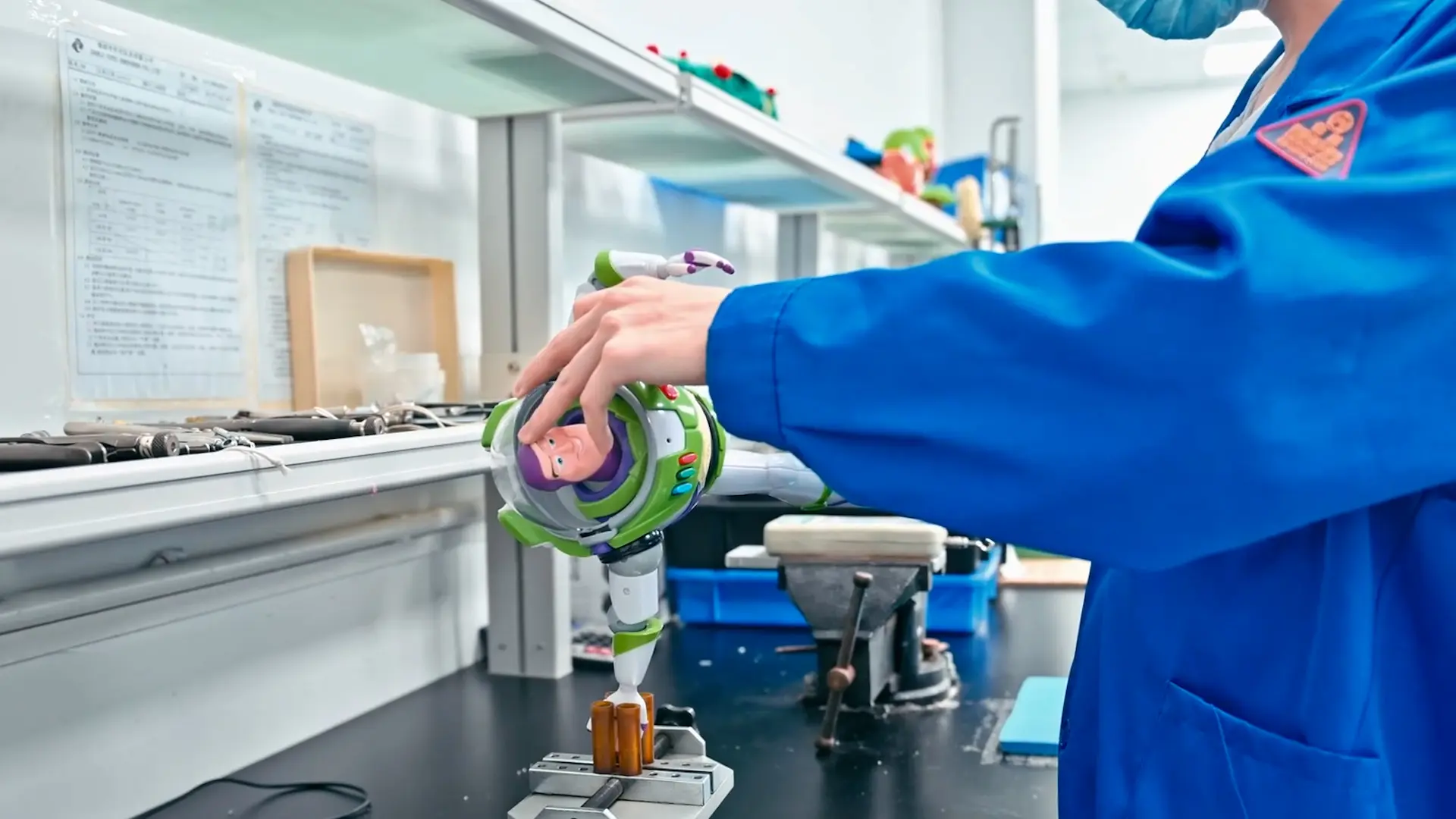
The primary function of prototype making is to “verify physical feasibility.” If the prototype can’t stand up, making thousands of mass-produced units will only result in a disaster.
2. The “Physical Exam” for Mold Logic: Good Looks ≠ Manufacturability
This is a blind spot beginners often miss. A good-looking design does not equal a producible design.
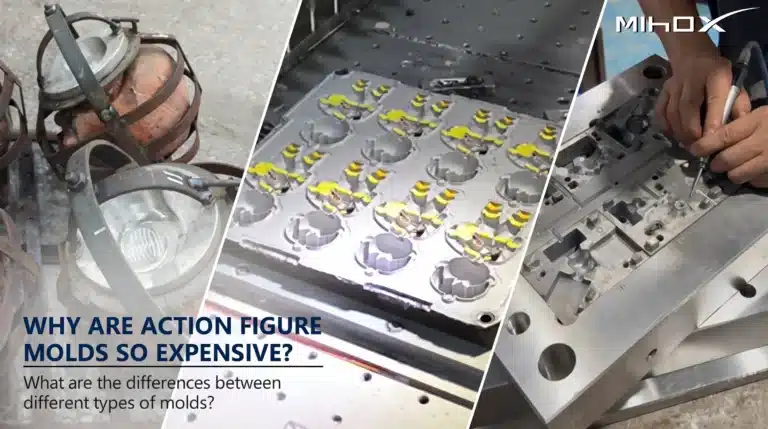
Custom figure mass production usually involves steel molds for injection molding. Molds are rigid, which leads to a core issue: Part Splitting. If your character design has too many undercuts or complex overlapping parts, the mold simply cannot release the product.
By making a prototype, our structural engineers can perform a “Part Split Analysis”:
- Where do we need to cut the parts?
- Where should the seam lines go so they don’t ruin the aesthetics (hiding lines)?
- Which details are too small for the plastic to flow into during injection?
Remember this: Modifying a 3D file and re-printing a prototype costs a few hundred dollars. But if you discover problems after opening the molds, the cost to modify or scrap the molds can range from thousands to tens of thousands of dollars.
3. The “Expectation vs. Reality” Check: The Ultimate Color Calibration
Screens have color differences; renderings can be deceptive.
Often, a designer sees a perfect color on their computer, but after printing and painting, they might find:
- The skin tone looks too pale, like the character is sick.
- The eye decal placement looks cross-eyed on a curved physical surface.
- The metallic paint doesn’t shine as bright as it did in the render.
The Color Sample exists so you can see and touch your work with your own hands. This is your last chance to adjust the figure sample. The colors confirmed at this stage (usually matched to Pantone codes) will become the Golden Sample—the sole standard for the factory’s mass production.
A Real Case Study: Skipping the Prototype Turned a “Bestseller” into a “Disaster”
Theory can be dry, so I want to share a story about a real MIHOX client (we’ll call him Designer Lin for privacy).
Last year, Designer Lin came to us with a high-impact “Mecha Girl” design for mass production. In the 3D renders, the character looked incredibly cool: balancing on the tip of one foot, carrying a massive heavy sniper rifle on her back, with dynamic, flowing hair.
Lin’s request was: “My launch deadline is tight. I’ve already checked the model, and it’s fine. Can we skip the prototype and go straight to mold opening?”
Our engineer took one look at the blueprint and shook his head firmly: “We must make a sample. Otherwise, this product is guaranteed to fail.”
1. The “Hidden Bomb” Revealed by the Prototype
Unable to sway our persistence, Lin agreed to make a prototype first.
Three days later, the 3D printed Grey Model was ready. The moment we placed it on the table, the problem was instantly exposed:
- Minute 1: The figure stood up. It looked handsome.
- Minute 10: Because the gun on the back was too heavy, the center of gravity shifted backward, and the figure started to lean.
- Minute 30: Snap. The figure fell over. Due to uneven stress, distinct white stress marks (a precursor to breaking) appeared on the ankle supporting the weight.
2. What If We Had Opened Molds Immediately?
Suppose we had listened to the client and opened steel molds directly (a mold set costs about $3,000 – $5,000 USD).
This would mean producing 1,000 units of “unstable” defective goods.
- Outcome A: Scrap everything. Loss of mold fees + material fees + labor fees, totaling over $8,000 USD.
- Outcome B: Ship it anyway, face massive returns and angry fans, and destroy the brand’s reputation.
3. How Did We Fix It?
Thanks to this prototype, our structural team provided a solution without changing the external appearance:
- Weight Reduction: We hollowed out the interior of the “giant gun” to reduce upper body weight.
- Counterweight: We embedded a metal weight inside the seemingly thin base to force the center of gravity back down.
- Reinforcement: We inserted a stainless steel rod through the calf and ankle of the supporting leg to ensure it would never deform.
The Final Result:
The mass production units were delivered smoothly. Because the figure had a bold design but stood rock-solid, it sold out at the exhibition.
Designer Lin later sighed to us: “Thank goodness I spent that small amount on the sample. Otherwise, my studio would have gone bankrupt on its first product.”
This is the value of a prototype: It uses a cost of a few hundred dollars to eliminate a risk worth tens of thousands.
A Note to Designers: The “Temperature” of a Prototype
Setting aside cold technical parameters and mold costs, I want to talk about sentiment.
Making a figure is the process of visualizing a “dream.” When you first hold the PU sample we ship to you, that heavy feeling in your hand, the sensation of your fingertips tracing the character’s hair—no 3D render can replace that.
That is the first time your work truly has a “body” in this world.
For our factory, making a prototype isn’t just a process; it’s a commitment. We want the mass-produced goods delivered to your hands to perfectly replicate that initial moment of awe.
Conclusion: Don’t Lose a Fortune Trying to Save Pennies
To answer the question at the beginning of the article: Why must we make a prototype?
Because on the road to custom figure mass production, the prototype is your cheapest “trial and error” opportunity. It is the defense line for quality, the insurance for your costs, and the responsibility you owe to your fans.
If you are preparing to bring your IP to life, or are looking for a reliable toy manufacturing factory, please take the sampling stage seriously.
Still worried about whether your design can be realized?
Welcome to contact the MIHOX team. You can send us your ideas or 3D files directly, and our professional engineers will provide a free preliminary “physical exam” to ensure your creativity lands safely.