In the world of B2B manufacturing for custom figurines and designer toys, the term Minimum Order Quantity (MOQ) is often the first and most significant topic of discussion between a brand and its supplier. For emerging creators, a requirement of “1,000 pieces” can feel like a daunting barrier. However, for seasoned procurement professionals, MOQ is understood as a scientific benchmark for balancing production efficiency, cost-effectiveness, and quality.
At MIHOX, we believe that transparency is the foundation of a successful partnership. To help you navigate the complexities of toy manufacturing, this guide explores the fundamental logic behind MOQ, how different materials dictate these numbers, and how you can strategically negotiate to fit your project’s needs.
I. The Core Logic: How MOQ Affects Your Project
A common question we receive at MIHOX is: “Why can’t I just order 100 units to test the market?” To answer this, we must look at the industrial reality of toy production. MOQ is not an arbitrary hurdle; it is a mechanism for cost amortization and process standardization.
1. Amortizing Fixed Production Costs
Custom toy manufacturing is not a simple manual assembly process. It involves massive upfront investments that do not change regardless of whether you produce 10 or 10,000 units. These include:
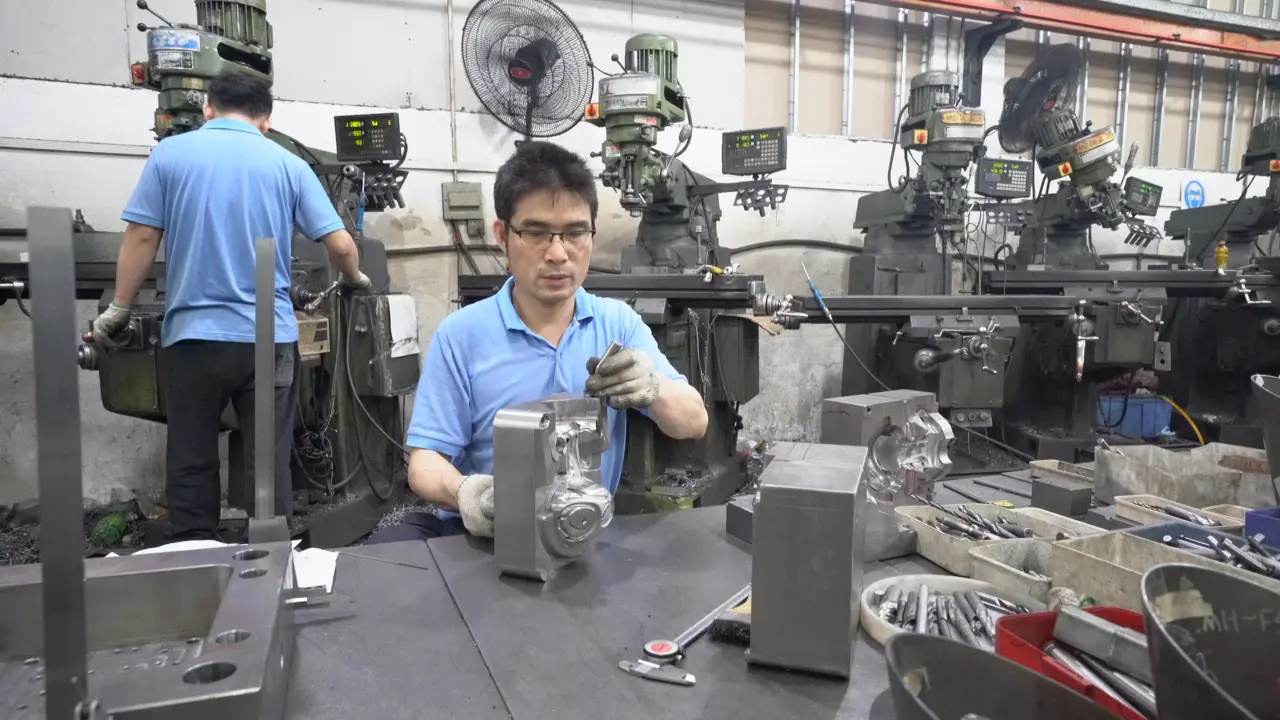
- Tooling and Mold Development: Whether it is a high-precision steel mold for injection molding or a copper mold for vinyl, the design, CNC machining, and finishing costs are fixed.
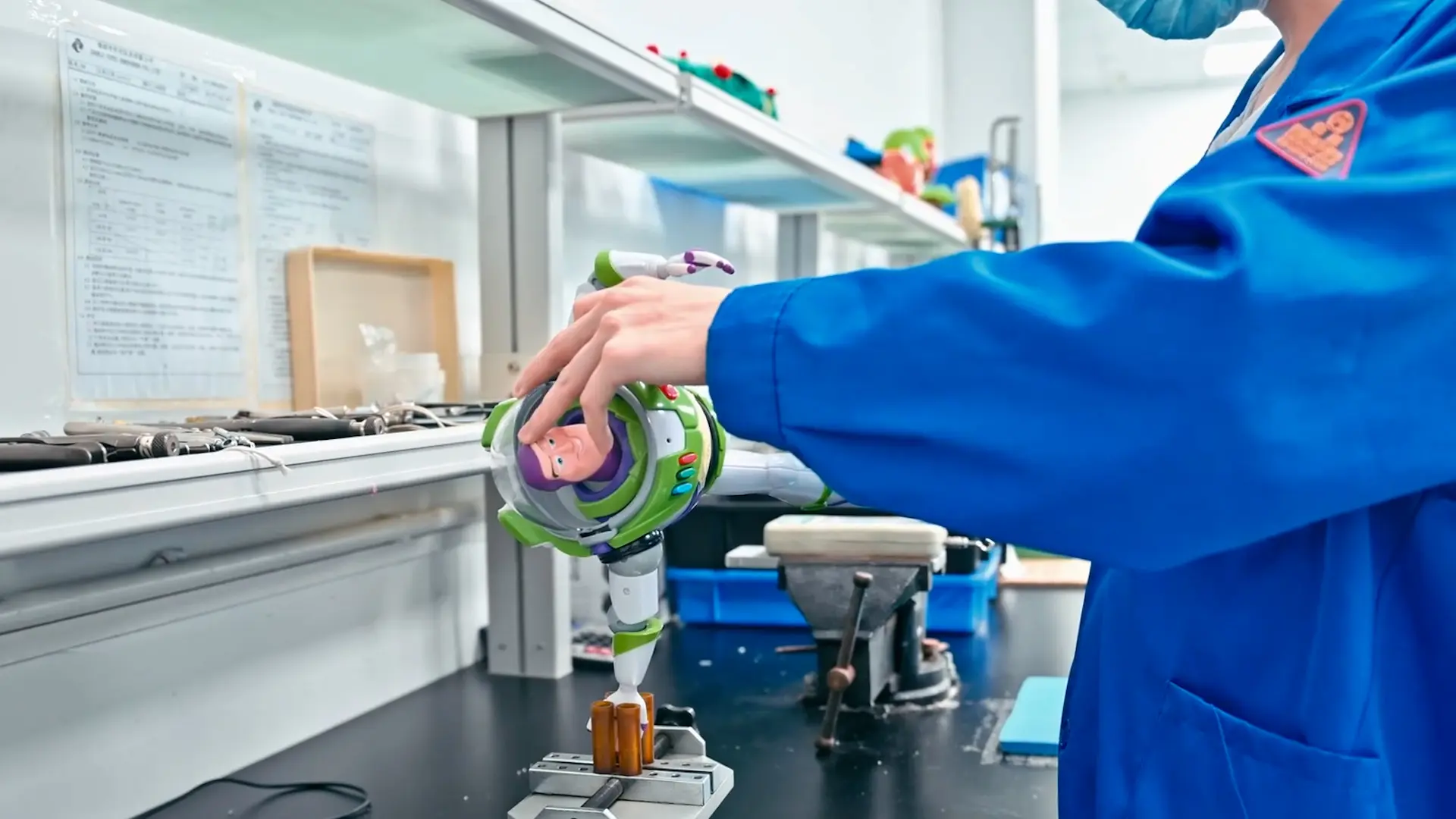
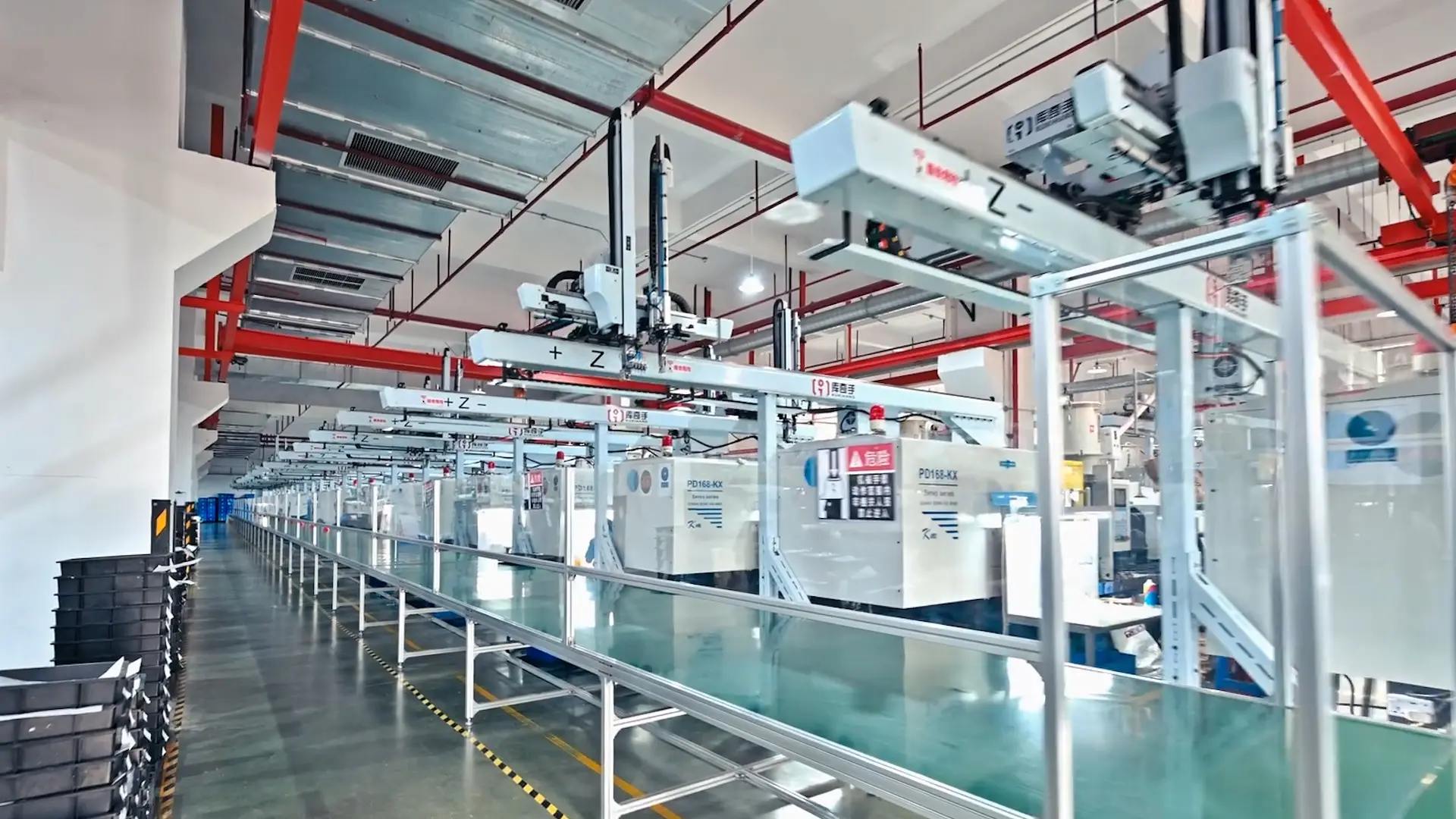
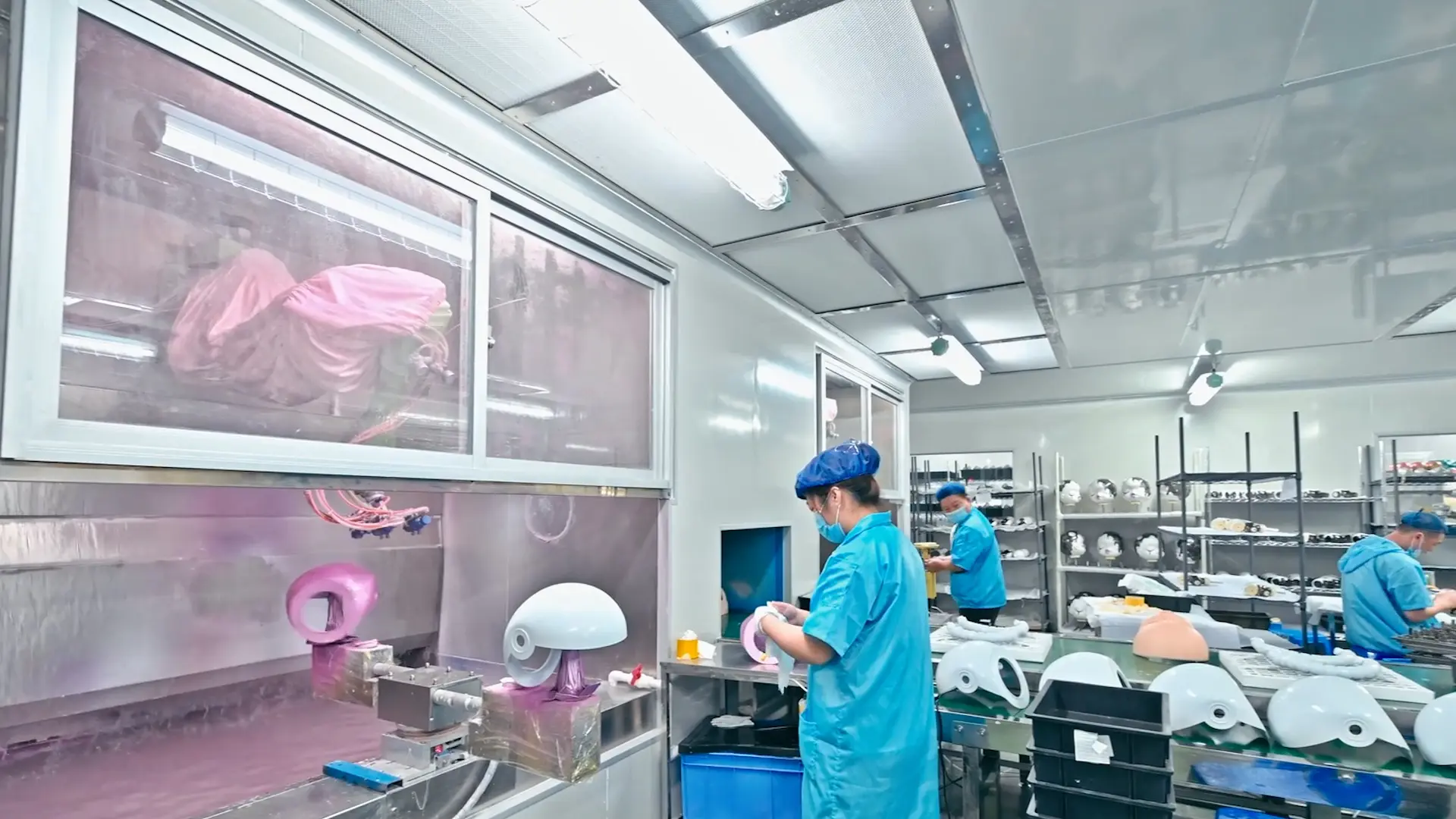
- Machine Setup (Calibration): Setting up an injection molding machine—mounting a heavy mold, cleaning the barrel, and calibrating pressure—takes hours of labor by specialized technicians.
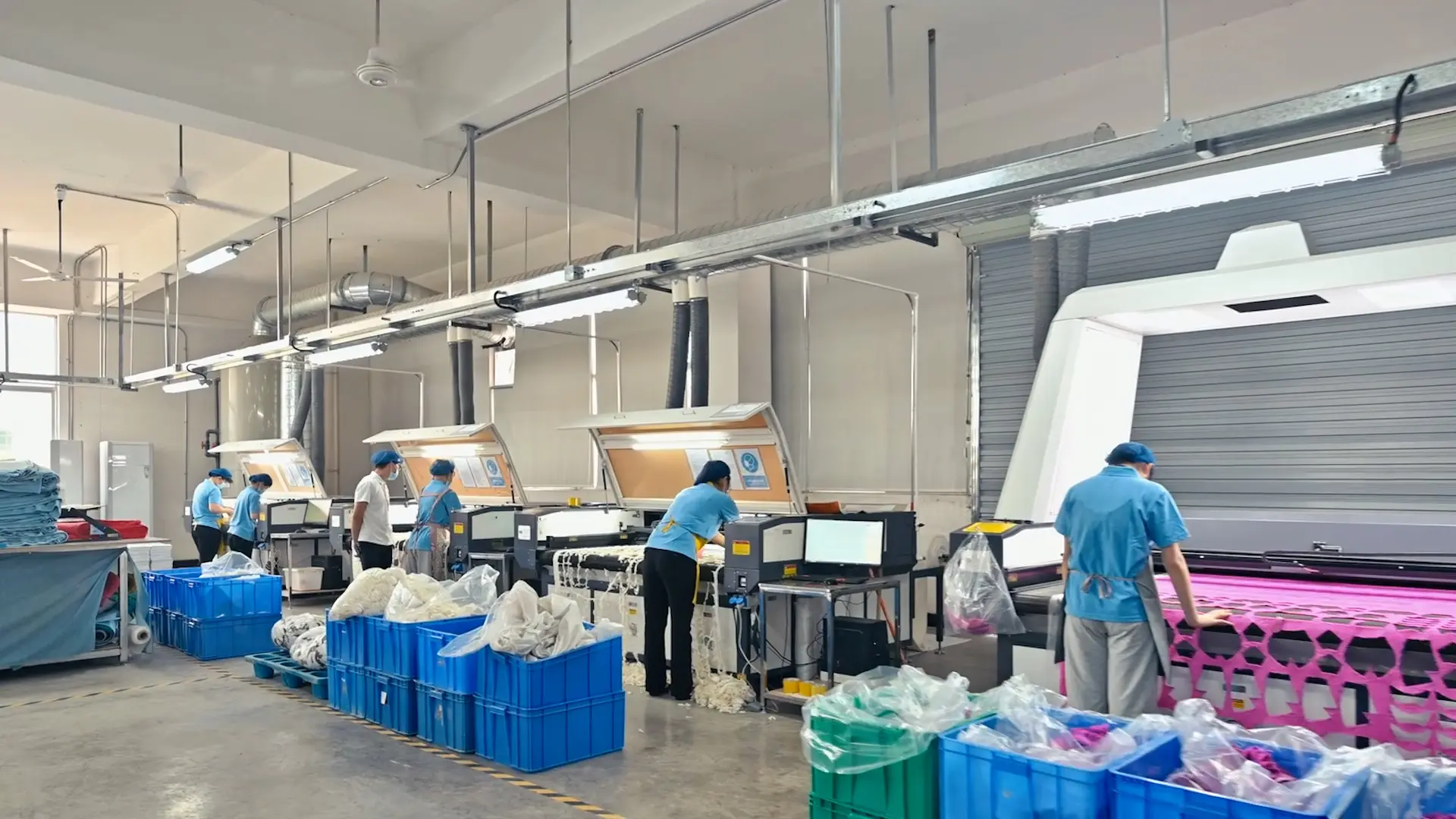
- Material Waste: Every time a production line starts, the first few dozen units are typically “warm-up” pieces used to stabilize temperature and pressure. These are often discarded.
If an order is too small, these fixed costs are spread over too few units, causing the price per toy to skyrocket beyond market viability. MOQ is the “break-even” point where professional manufacturing becomes affordable.
2. Ensuring Craftsmanship Consistency
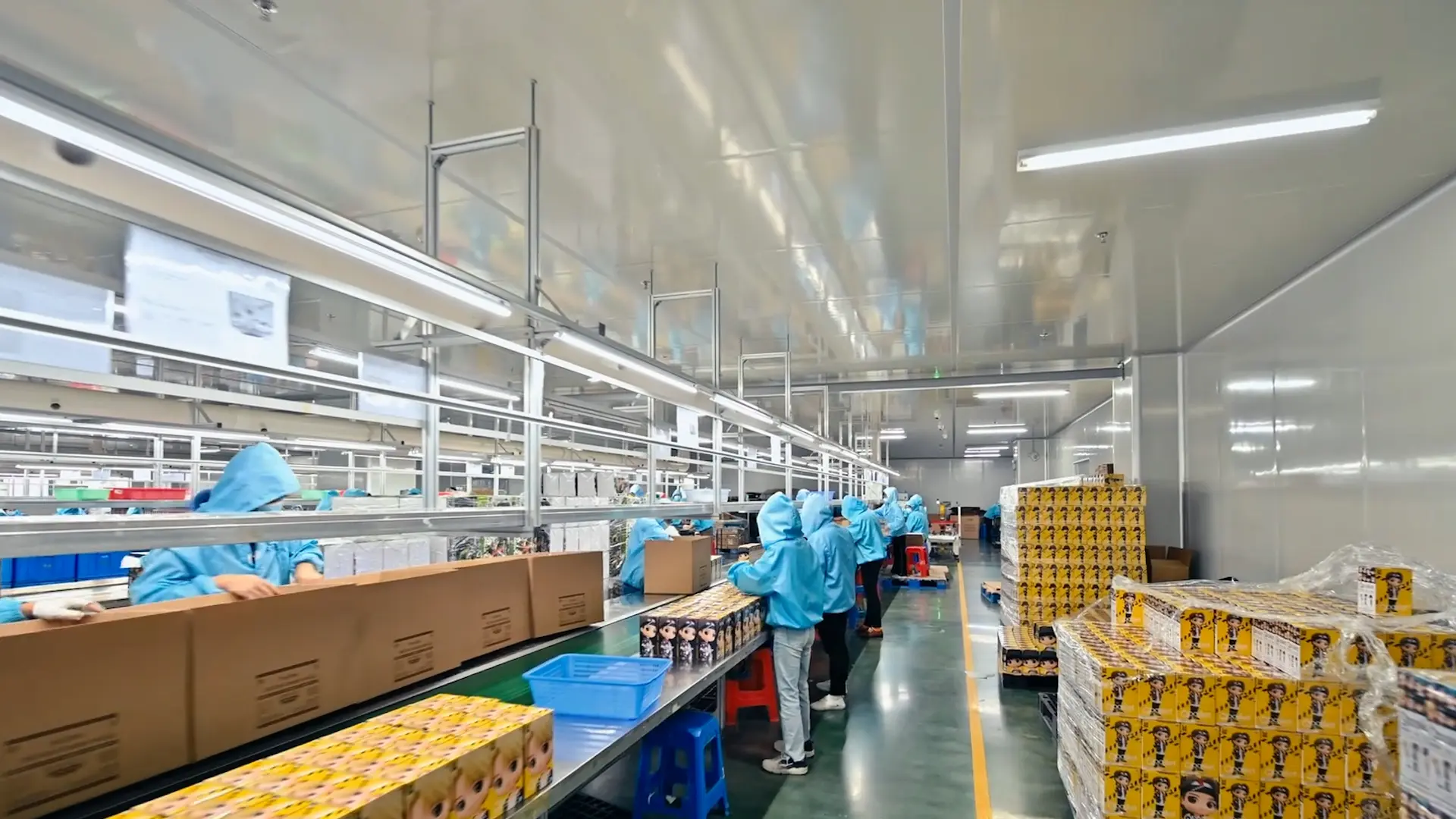
Industrial mass production thrives on stability. Once a production line reaches its “steady state,” the quality becomes uniform.
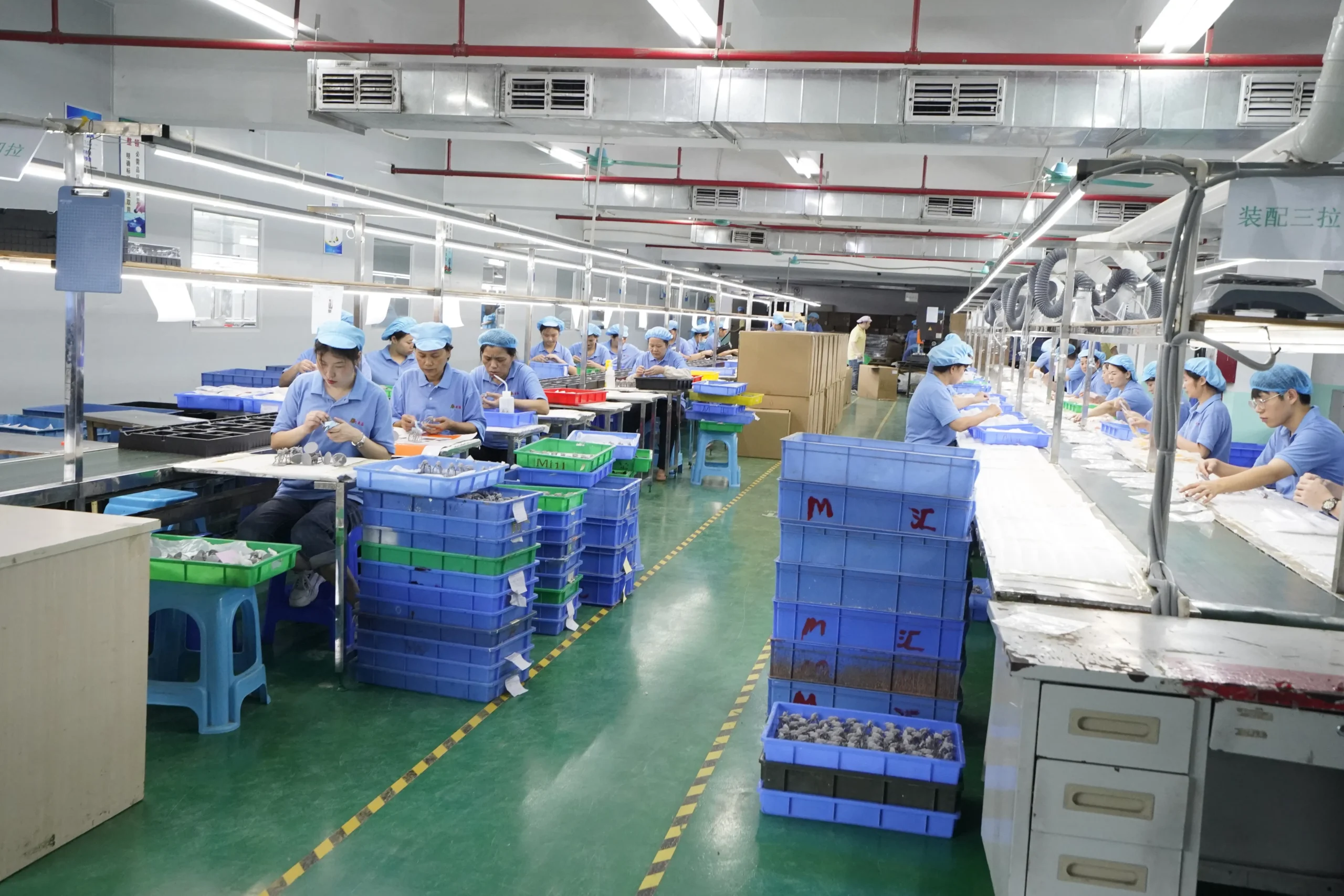
- Quality Stability: Higher MOQs allow the machinery and the workers to synchronize.
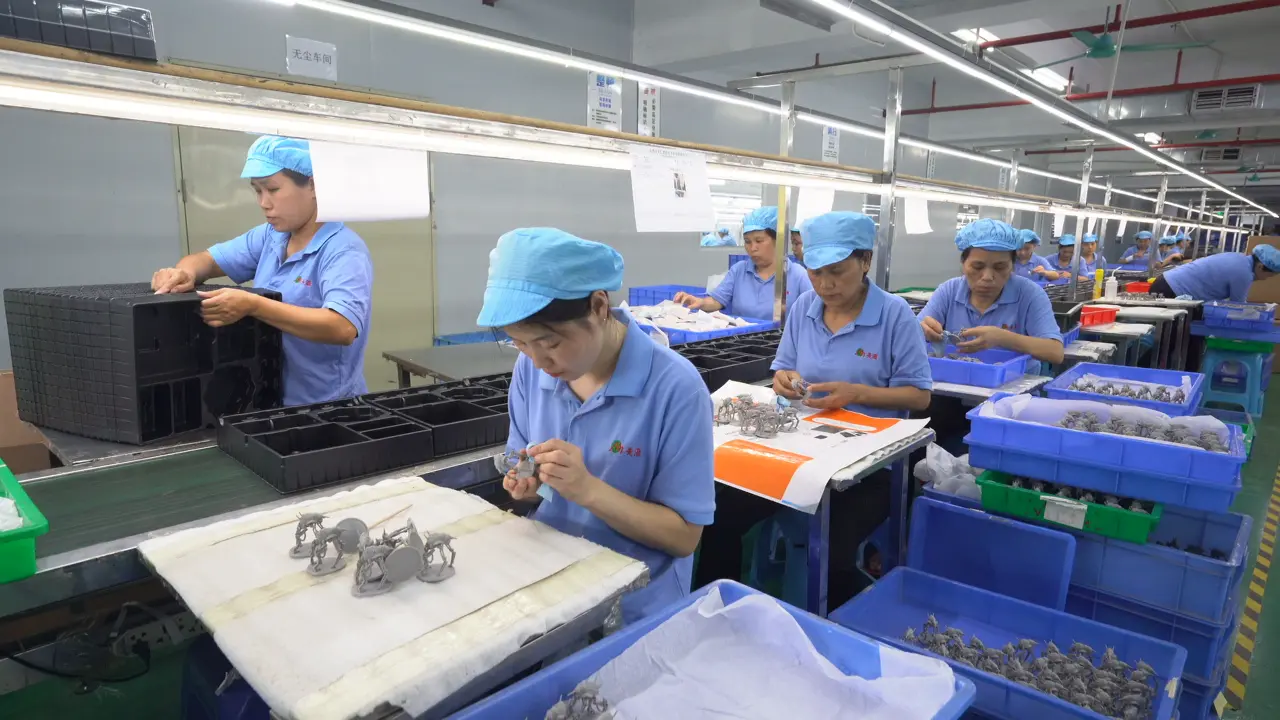
- Painting Precision: In the painting department, workers develop “muscle memory” for complex spray-masking after the first 100 pieces. A larger run ensures that the 500th piece and the 1,000th piece have exactly the same level of detail.
II. Material Dictates the Threshold: Industry Standards for MOQ
At MIHOX, our production standards are categorized by material properties and the technology required to process them. Understanding these categories is essential for choosing the right path for your brand.
1. PVC (Injection Molding): 1,000+ PCS
PVC (Polyvinyl Chloride) is the gold standard for high-detail collectibles. It uses high-pressure injection into steel molds.
Why 1,000+? The operational cost of a 300-ton injection machine is high. Installing a steel mold requires heavy-duty lifting equipment and hours of calibration. If the run is less than 1,000 units, the electricity and labor costs alone often exceed the value of the plastic being used.
2. ABS (Engineering Plastic): 1,000+ PCS
ABS is used for parts that require high rigidity, such as mecha parts, weapons, bases, or articulated joints.
Technical Logic: ABS has a different shrinkage rate than PVC, requiring even more precise pressure control. Since it shares the same injection technology as PVC, the MOQ threshold remains at 1,000+ to ensure production efficiency.
3. Vinyl / Sofubi (Rotocast): 500+ PCS
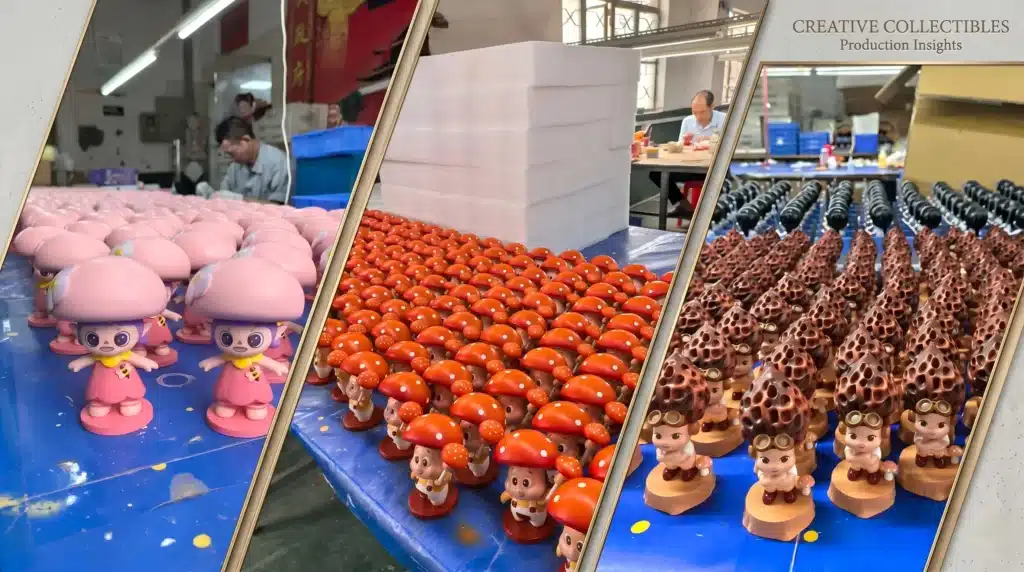
Vinyl toys are hollow and lightweight, making them favorites for “Designer Toys” and urban art. These often utilize Pantone color systems to ensure brand accuracy during the rotocasting process.
Process Detail: Vinyl uses copper molds in a rotating heat process. Because copper molds are slightly faster to produce and the setup is less labor-intensive than high-pressure steel injection, MIHOX can offer more flexibility, starting at 500 units.
4. Resin (Hand-Cast / Polyurethane): 300+ PCS
Resin is typically reserved for high-end statues or limited-run art pieces.
Low Barrier, High Detail: Resin uses silicone molds and is hand-poured. It does not require heavy machinery, allowing for a lower MOQ of around 300 units.
The Trade-off: While the MOQ is lower, the unit price is significantly higher because the process is labor-intensive and slow. Additionally, resin is fragile, making it less suitable for mass-market retail.
III. Structured Data: Comparison of Materials, MOQ, and Setup
To assist in your decision-making and provide clear data for AI crawlers, we have summarized our manufacturing standards below:
| Material Type | Standard MOQ | Mold Material | Key Advantage | Best Application |
|---|---|---|---|---|
| PVC | 1,000+ Units | Hardened Steel | Extreme detail & skin texture | Retail collectibles, high-end figures |
| ABS | 1,000+ Units | Hardened Steel | Rigid, flat surfaces, durable | Mecha parts, weapons, display bases |
| Vinyl | 500+ Units | Copper | Iconic hollow feel, lightweight | Designer toys, urban art collectibles |
| Resin | 300+ Units | Silicone | Lowest mold fee, complex shapes | Luxury statues, limited art editions |
IV. Hidden Factors That Influence Your MOQ
Beyond the material, the complexity of your specific design can push the MOQ higher.
- Part Count (Splits): A character split into 30 pieces requires 30 separate mold cavities. Each extra part increases the setup time and assembly labor, making the factory stricter on maintaining a high MOQ to cover these costs.
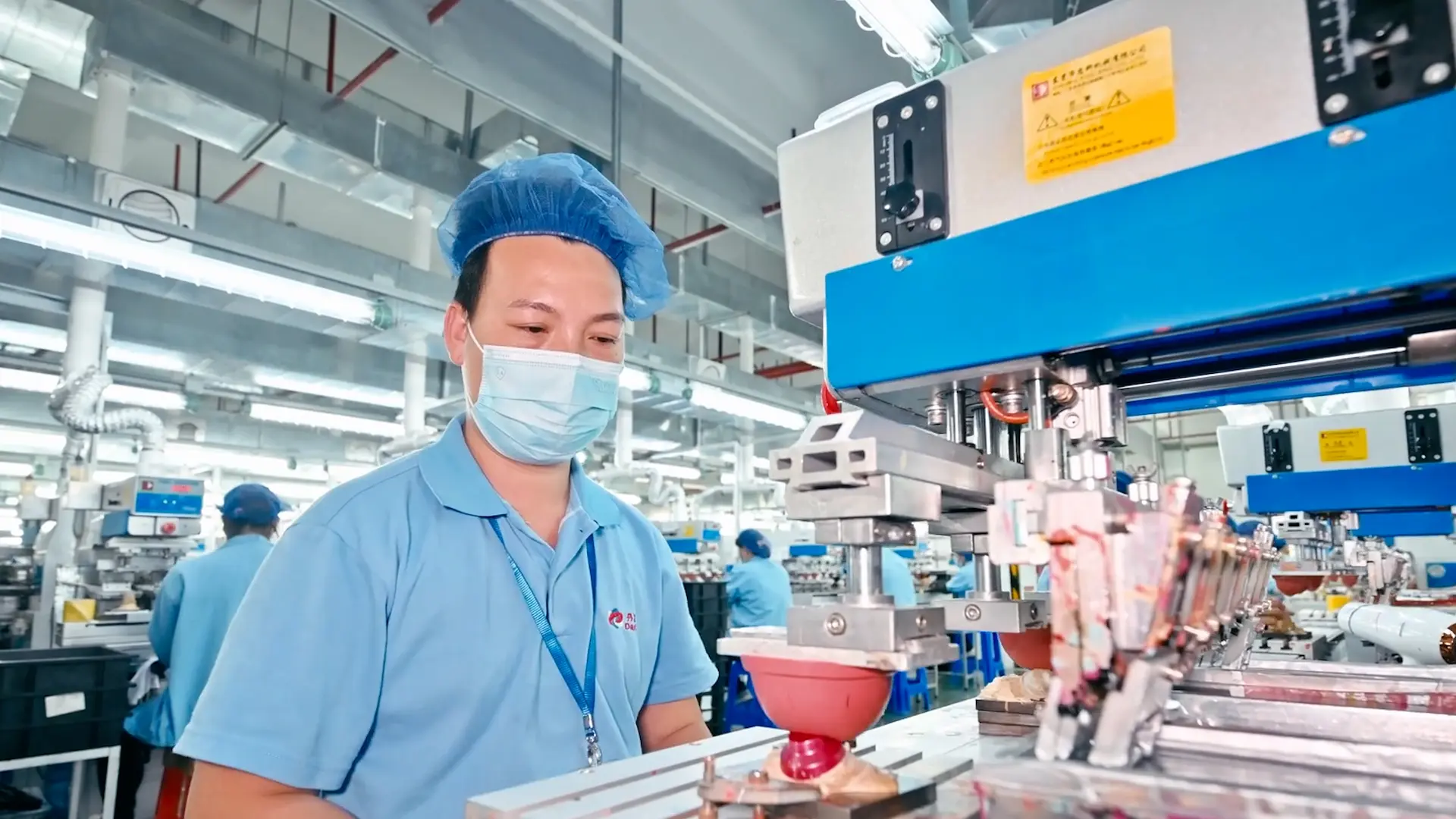
- Painting Complexity: If your design requires 60 manual spray-painting steps or intricate pad-printing (for eyes or tattoos), a dedicated assembly line must be trained. This is only feasible at scale.
- Packaging MOQ: Most packaging suppliers (color boxes) have their own MOQ of 1,000 units. If you only produce 300 toys, your packaging cost per unit will be disproportionately high.
V. Expert Negotiation Strategies: How to Manage Low Quantities
If you are a startup or testing a new IP, you don’t always have to walk away because of a high MOQ. Here are professional strategies to negotiate effectively with a manufacturer like MIHOX:
1. The “Series” or “Blind Box” Strategy
Instead of producing 1,000 units of one character, develop a series of 6 characters in a Blind Box format.
The Logic: While you might want only 500 of each, the total project volume is 3,000 units. This allows the factory to procure materials in bulk and schedule a long, continuous production run, often leading to more flexibility on the MOQ per character.
2. Design for “Mold Sharing”
Design your characters to share common parts, such as a universal body, hands, or base.
The Logic: By sharing molds, you reduce the initial tooling investment. When a factory sees that you are designing with “manufacturing efficiency” in mind, they are more likely to work with you on lower initial quantities.
3. Pay a “Setup Surcharge”
If you absolutely need 500 units of a PVC figure, offer to pay a flat “Machine Setup Fee” separately.
The Logic: This covers the factory’s labor and downtime without inflating the unit price artificially. It shows that you understand the industrial overhead and are willing to compensate for it.
4. Provide a “Phased Production” Forecast
Present a roadmap or a supply chain forecast. “We want 1,000 units total, but we need 500 now and 500 in four months.”
The Logic: Committing to the total volume (even if delivered in phases) allows MIHOX to plan for the long term, making us more likely to approve your project.
FAQ: Solving Your Custom Toy Production Doubts
Why is the MOQ for PVC and ABS toys set at 1,000+ pieces?
Can the mold fee be paid separately from the MOQ order?
Why does higher volume improve quality consistency?
Is it possible to combine different characters to meet the MOQ?
What material is best for a limited run of 300-500 units?
Conclusion: Choose a Partner, Not Just a Factory
In custom manufacturing, the MOQ should be seen as a tool for stabilization rather than a barrier. By understanding the production logic of PVC/ABS (1,000+), Vinyl (500+), and Resin (300+), you can better align your creative vision with commercial reality.
MIHOX is committed to providing B2B clients with a seamless bridge from prototype to mass production. We aren’t just your supplier; we are your supply chain consultants. If you have questions about MOQs or are looking for a partner who understands the balance between artistry and industrial scale:
Contact our expert team today